admin
admin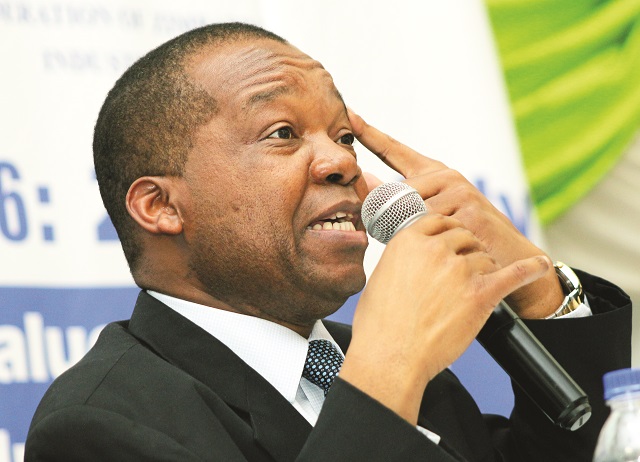
Bianca Mlilo, Chronicle Reporter
THE Reserve Bank of Zimbabwe (RBZ) is working on reducing bank charges and withdrawal fees in response to a national outcry from the transacting public.
Due to the persistent cash shortage in the economy, banks have continually reduced the maximum withdrawal limits from about $200 in June to as low as $40 presently.
However, charges levied on bank transactions remain the same and are not proportional to the reduced withdrawal limits.
Depositors have accused banks of “robbing” them of their hard earned money through repeat charges levied on a series of withdrawals.
RBZ Governor Dr John Mangudya said yesterday that the central bank was aware of the issue and would soon announce measures to protect depositors.
“Indeed we are working on reducing the bank charges to ensure that banking services are not punitive and that they promote financial inclusion,” he said.
Dr Mangudya would not be drawn to give more details about the new measures, which he said would be finalised next week.
Banks have been making a killing from the banking public for the past few months and depositors have appealed to the Government for protection.
Desperate depositors continue to flood banking halls to withdraw their cash despite its shortage and numerous charges. Some depositors are spending nights in queues.
A snap survey conducted by The Chronicle yesterday revealed that for one to withdraw $75, which is made up of $50 and $25 in bond notes, he or she has to part with $5,50. This is in addition to monthly service charges of $5 or more. The public has called for the crafting of a law that compels banks to deduct charges only once and allow people to withdraw their salaries without being charged on ensuing transactions.
Bank charges were last revised in June when Dr Mangudya set the maximum real time gross settlement charge at $5 from $10 while automated teller machine charges did not change at $2,50.
Electronic funds transfer presently attracts a minimum fee of 33 cents and a maximum of $2,10, while a point of sale transaction of up to $10 attracts a charge of 10 cents, and transactions above $10 are charged 45 cents, a reduction from $2,50. — @BiancaMlilo



 Online Reporter