admin
admin
Eastern and Southern Africa’s Fellows Development Programme.
The Fellows Development Programme is an accelerated expert formation endeavour for central banks and Ministry of Finance officials in MEFMI member countries.
It was established to train outstanding officials at professional level in these institutions, into experts to serve later as trainers and troubleshooters in capacity building activities.
Zimbabwe had two graduates at the event, with Mrs Karadzandima-Nyambauro being the only fellow to graduate with distinction.
The other Zimbabwean, Mr Bob Takavingofa (RBZ), graduated with a credit.
Other fellows from the region who graduated with credit include Mr Mendes Alfredo (Banco de
Mozambique), Mr Rodney Lwanga (Bank of Uganda) and Mr Phillip Mboya (Bank of Tanzania).
Those graduating with a pass included Ms Evelyne Kilonz (Central Bank of Kenya), Mr Frank Chikuta (Reserve Bank of Malawi) and Mr Ivan Ssetimba (Bank of Uganda).
The Accredited Fellows were Mr Emmanuel Ssemambo (Bank of Uganda) and Mrs Onelie Nkuna (Central Bank of Malawi).
Accredited Fellows contribute towards the MEFMI capacity building endeavours as they conduct training and undertake missions in the MEFMI region and beyond. After three years as an accredited fellow with positive appraisal, the accredited fellow becomes a MEFMI Regional Consultant.
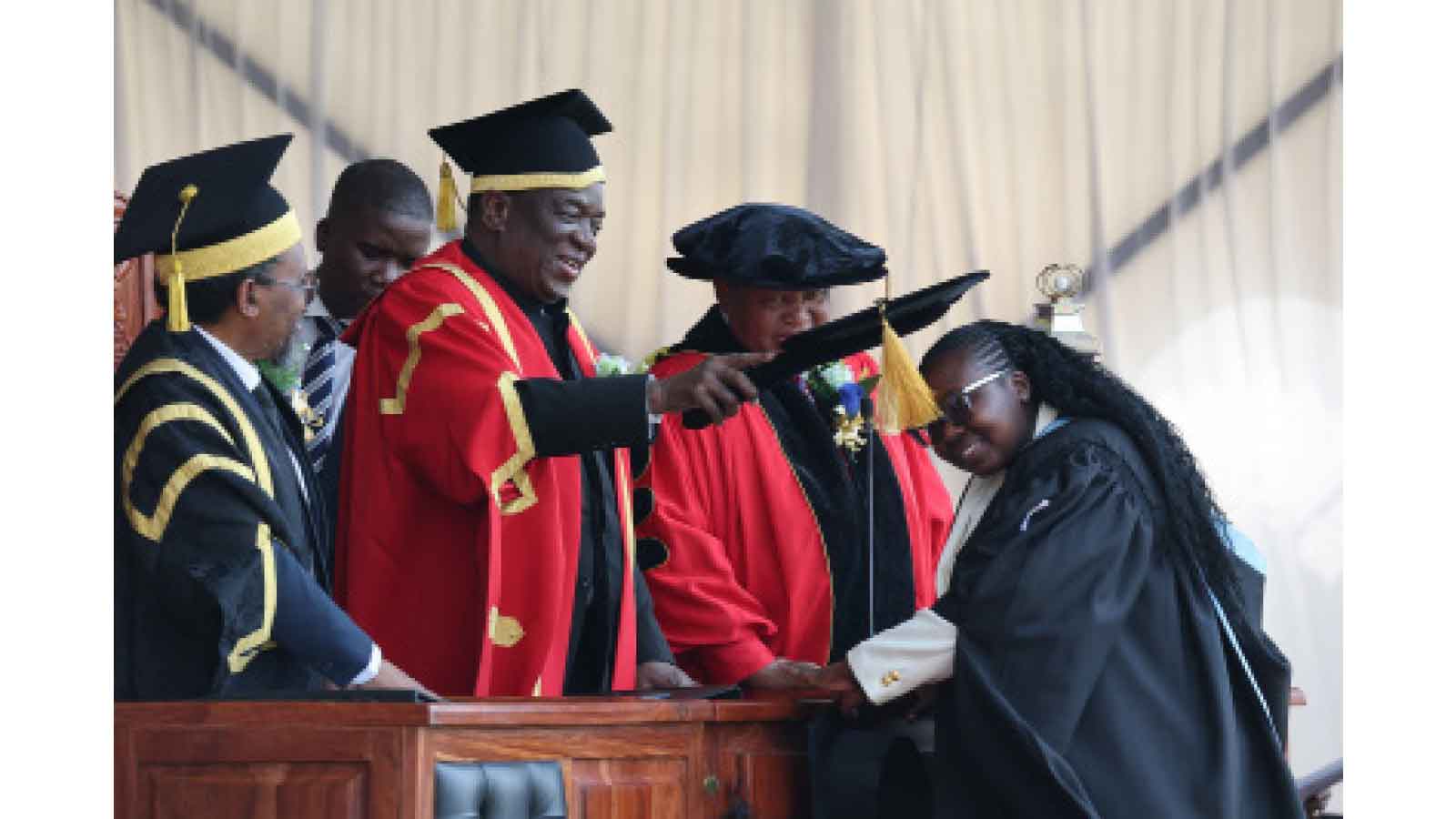
The MEFMI Fellows accreditation and graduation ceremony was held in Harare on Wednesday, and was graced by ambassadors from MEFMI member countries based in Harare, as well as some of the institute’s Board of Governors.
During the same event, Central Bank of Lesotho Governor Dr Adelaide Matlanyane urged countries in the region to develop their macroeconomic and financial management experts through the FDP so as to reduce dependency on foreign experts.
Dr Matlanyane, chairperson of the MEFMI Board of Governors, noted that some countries did not have any candidates in the programme.
“(Some countries do not even have a single graduate fellow. There are, of course, reasons why this is the case, but a disturbing one is that countries have not submitted applications of potential candidates to go through the selection interviews,” she said.
Dr Matlanyane said the training of local experts would help in reducing the region’s dependence on external experts.
“Africa has been grappling with the problem of limited capacity in specialist areas. Long-term technical assistance had been perceived as a solution. However, experiences in the region indicate that technical assistance perpetuated and turned into great depend-ency.
“The coming of institutions such as MEFMI, with the noble approach of empowering its member states’ officials, has helped to reduce dependency on the use of external experts.”
According to data from the institute, the Eastern and Southern African region international experts accounted for 27 percent of all resource persons engaged for capacity building activities in the region.


 Online Reporter