Online Reporter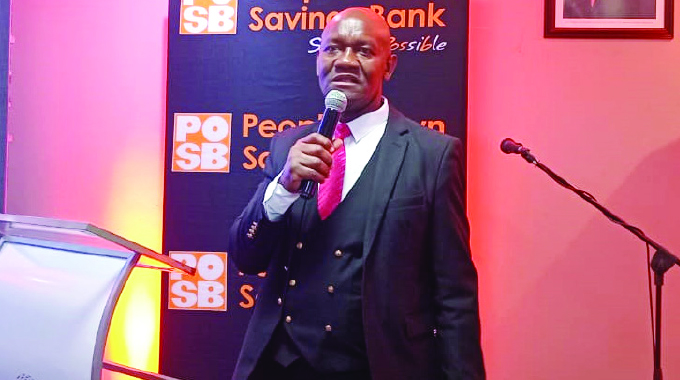
Nkosilathi Sibanda, Zimpapers Writer
THE Reserve Bank of Zimbabwe (RBZ) has noted a commendable increase in the uptake of credit facilities by Micro, Small and Medium Enterprises (MSMEs), but bemoaned the continued informalisation of the sector as an impediment to monetary policy formulation.
This was said by the RBZ chief examiner, Mr Simbarashe Mashonganyika, as he unpacked the National Financial Inclusion Strategy II document to small business enterprises in Bulawayo last Friday.
The blueprint, which became effective in 2022, is set to roll up to 2026, as the RBZ seeks to prioritise financial inclusion across all business and economic sectors so as to foster sustainable and broad-based growth that promotes shared prosperity and opportunities.

Mr Mashonganyika said if small businesses are beneficiaries of the financial inclusion matrix within the banking sector, it would mean a lot for the country’s Vision 2030 mantra, where the focus is on attaining an upper-middle-class economy.
He said there has been an improvement in the level of access to financial services by MSMEs from March 2024 to March 2025.
In March last year, there were 8 237 loans given to small businesses and the number increased to 11 927 by December. By March this year, 6 702 loans were advanced.
While acknowledging the improved banking participation, Mr Mashonganyika said the RBZ identified various bottlenecks faced by MSMEs and, to tackle these challenges, the Bank came up with Financial Inclusion initiatives.
“The Reserve Bank established the collateral registry system, which facilitates the use of movables as collateral. In this, there’s the credit guarantee scheme to facilitate partial transfer of credit risk,” he said.
“With many of the MSMEs facing a challenge in making tailor-made products, the initiative offered was to establish a deposit micro finance institution, which paved the way for banks to have SME units.
“The other challenge has been a lack of business skills and financial management. To address this, the Reserve Bank has encouraged the availing of capacity-building and financial literacy awareness programmes. This also includes the adoption of financial literacy in the new school curriculum,” said Mr Mashonganyika.
At the top of the list of collateral pledged by most MSMEs, according to the Central Bank, were household items and private cars. Livestock and other personal equipment are also offered by the emerging businesses.
A major concern raised by small businesses, which deters them from using the formal banking system in the country, has been the high interest rate charged by banks.
Mr Mashonganyika said the Central Bank was aware of the effect and has from time to time monitored banks, with a view also to encouraging them to be MSME-friendly so as to promote financial inclusion.
He stressed the importance of formalising MSMEs, saying their contribution to the economy was huge and, as such, they have to be properly registered.
“Financial inclusion of MSMEs requires a multi-faceted approach, in which stakeholder collaboration is key, given the challenges that these businesses are facing. Initiatives being implemented by stakeholders provide platforms to deliberate on innovative strategies to promote financial inclusion for MSMEs and enable them to contribute to meaningful economic growth and development,” said Mr Mashonganyika.