Gibson Mhaka, Zimpapers Politics Hub
RARELY static, international diplomacy is shaped by changing global interests, economic imperatives and political realities.
For more than two decades, relations between Zimbabwe and the United Kingdom were strained by disagreements over land reform, sanctions and governance, often resulting in mutual suspicion and diplomatic confrontation.
These tensions narrowed engagement between the two countries despite their longstanding historical, economic and people-to-people ties. However, under the Second Republic, President
Mnangagwa’s engagement and re-engagement policy has helped open a new chapter in bilateral relations, creating opportunities for dialogue and practical cooperation.
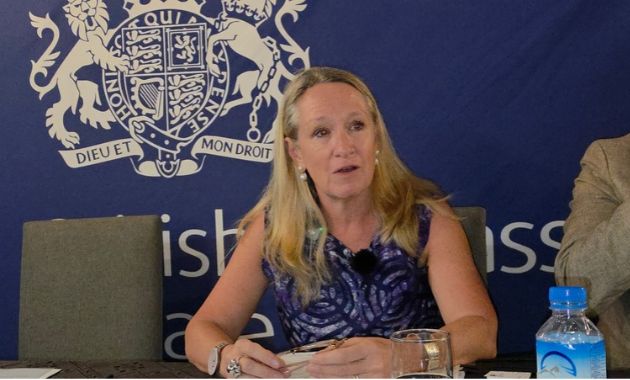
British Ambassador to Zimbabwe Mrs Gill Lever’s recent engagement with journalists in Bulawayo pointed to this changing phase.
Her description of relations as being at “a very good stage” and the partnership as “modern and respectful” reflects the growing scope for cooperation, even as differences remain.
During her interaction with the media, Ambassador Lever emphasised the importance of mutual respect and constructive engagement in strengthening relations between the two countries.
“We’ve arrived at a very good stage in our relationship with Zimbabwe. I think the relationship is going from strength to strength, and both sides are very focused on a modern and respectful partnership where we can engage on matters of mutual interest, work together, for example, on trade and investment, and where we disagree we’re able to have those conversations in private, in a respectful manner,” she said.
Her remarks point to an important shift: the two countries are increasingly seeking to manage their differences through dialogue while identifying areas where cooperation can deliver mutual benefits.
President Mnangagwa’s engagement and re-engagement policy must therefore be assessed not by diplomatic language alone, but by whether it unlocks investment, markets, technology, skills and development finance needed to advance Vision 2030.
The British Ambassador described the change as an evolution rather than an overnight reversal.
She said Britain had been rebuilding relations with Zimbabwe since 2017 and had also shifted its wider approach to Africa towards listening more closely to the priorities of partner countries.
This suggests that the opening is not about erasing past disagreements, but finding common ground and managing differences through dialogue.
President Mnangagwa’s “friend to all and enemy to none” approach has seen the country improving relations with many countries across geopolitical divides.
The 2026 National Budget identifies engagement and re-engagement as instruments for improving the country’s image, opening markets and attracting foreign direct investment. The value of this diplomatic approach, however, lies in the economic opportunities it generates.
The Government’s National Development Strategy 2 (NDS2), covering the 2026–2030 period, places international relations and trade alongside industrialisation, infrastructure development, human capital, job creation and climate resilience among the priorities for achieving Vision 2030.
The UK’s trade agenda illustrates how improved diplomatic relations can translate into economic activity.
Mrs Lever said two-way trade stood at about £300 million, providing a foundation for further expansion.
She also outlined British International Investment facilities channelled through Zimbabwean banks, horticultural cooperation, initiatives to improve trade corridors and the proposed Vungu solar power project in the Midlands.
For Bulawayo, one of the most immediate opportunities lies in access to finance for manufacturers.
A member of the Ambassador’s delegation explained that facilities provided through NMB and CABS include trade finance, allowing businesses in the manufacturing sector to borrow for periods ranging from six months to three years.
The facilities are intended to address manufacturers’ working-capital constraints thereby enabling them to buy inputs to susstain production and fulfil orders.
If effectively accessed, the financing could help Bulawayo firms expand production, retain workers, upgrade equipment and compete for export orders.
Credit alone, however, will not revive industry. Businesses also need policy predictability, reliable energy, efficient logistics and access to markets.
The proposed Vungu solar project is relevant in this regard because additional electricity generation capacity can support industrial activity and ease pressure on power supplies.
Its wider contribution will depend on implementation, affordability and the amount of electricity ultimately made available to productive users.
The trade-corridor programme offers another practical dimension to the relationship. UK-supported work through Trademark Africa aims to improve the movement of goods, including along the
Beitbridge corridor, a critical route for businesses in Matabeleland.
Reducing border delays and transport costs would improve the competitiveness of Zimbabwean products.
Support by the British Standards Institution to the Standards Association of Zimbabwe is equally important. Exporters must meet recognised standards if they are to secure and retain access to demanding international markets.
The UK-Eastern and Southern Africa Economic Partnership Agreement, which provides duty-free and quota-free access for eligible Zimbabwean exports, also presents opportunities, but these can only be realised if local producers understand and take advantage of the arrangement.
Agriculture adds another dimension to the potential benefits of re-engagement. British buyers have shown interest in Zimbabwean horticultural produce, including blueberries and sugar snap peas.
This creates prospects for farmers, agro-processors, logistics operators and exporters.
For Vision 2030, the significance lies in raising agricultural productivity, expanding value addition and strengthening links between farming and industry. Improved access to export markets can help farmers earn more, create employment and stimulate investment across the agricultural value chain.
Cooperation in critical minerals also deserves attention. Zimbabwe’s mineral deposits, including lithium, have attracted growing international interest.
Mrs Lever said Zimbabwean officials were expected in the United Kingdom for a critical minerals forum to exchange ideas on strengthening supply chains.
The strategic question is whether such engagement can attract investment that supports local processing, technical skills development and value addition, rather than leaving the country dependent on exporting raw materials.
That outcome would align with NDS2’s emphasis on structural transformation and beneficiation.
Re-engagement is also widening Zimbabwe’s diplomatic options. Mrs Lever expressed Britain’s support for Zimbabwe’s possible return to the Commonwealth, saying: “We’re very keen to see Zimbabwe back in the Commonwealth again when the time is right.”
She stressed, however, that the decision rests with Commonwealth member states following a recommendation by the Secretary-General.
Amb Lever also referred to the organisation’s principles of democracy and good governance and called for a fair and consistent approach.
A return is therefore not an automatic consequence of improved bilateral relations. Rather, dialogue has reopened space for Zimbabwe to pursue this objective through multilateral engagement.
Commonwealth membership could broaden access to networks for trade, education, climate cooperation and development, but progress will depend on the established process and assessment by member states.
The development dimension of the UK relationship extends beyond commerce. On healthcare, Mrs Lever said Britain had contributed tens of millions of pounds to Zimbabwe’s health sector over the years and continued supporting the Global Fund and Gavi, the Vaccine Alliance.
She noted that changing international financing patterns made technical assistance, stronger domestic financing and innovative partnerships increasingly important.
This is significant because Vision 2030 requires a healthier population and resilient public services, not economic growth alone.
Climate resilience is another area where cooperation has immediate relevance. The UK has released £1,27 million through humanitarian organisations working with about 100 000 people in drought-affected areas, with the embassy adding a further £500 000.
The programmes include climate-smart agriculture training and support for communities facing reduced rainfall.
With drought threatening harvests, livelihoods and food security, preparedness is as important as emergency relief. Such interventions connect directly with NDS2’s priorities on agriculture, food security and climate resilience.
Investment in people is equally central to the development partnership. Ambassador Lever highlighted vocational training for young women, financial inclusion initiatives to help women and young people access loans and basic financial services, and the Chevening scholarship programme, which has supported Zimbabweans to study in the UK for more than four decades.
She also identified women’s health and reproductive rights, the fight against gender-based violence, and women’s participation in political and economic life as areas in which the two countries could cooperate.
These initiatives can advance Vision 2030 by expanding skills, entrepreneurship and economic participation. The Ambassador also encouraged businesses to partner in supporting scholarships for talented Zimbabweans.
Ultimately, the measure of engagement and re-engagement will be implemented. Trade facilities must reach productive businesses; energy projects must deliver power; standards support must translate into export orders; training must lead to improved livelihoods; and health and climate programmes must reach communities.
Zimbabwe must also sustain policy consistency, strengthen institutions and address the debt and arrears challenges identified by Ambassador Lever as important considerations for investor confidence.
The Bulawayo visit was more than a courtesy call. It demonstrated how a relationship once dominated by disagreement can be redirected towards shared interests.
President Mnangagwa’s engagement and re-engagement policy has helped create the diplomatic space for that conversation.
Whether it yields lasting dividends will depend on turning that space into measurable investment, jobs, exports and improved public services. That is the bridge between re-engagement and Vision 2030: diplomacy must open the door, but productive investment, accountable implementation and broad-based participation must carry the country through.