Chronicle Editor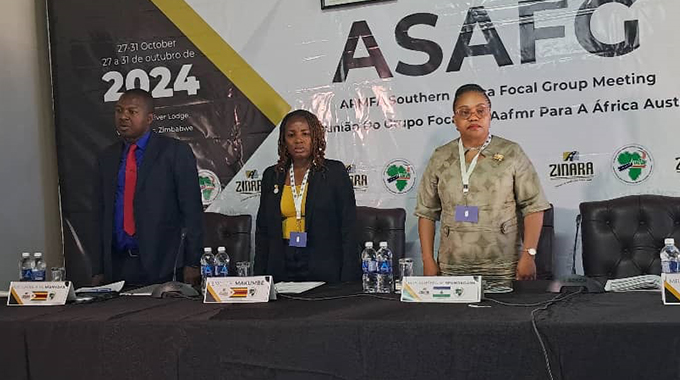
Leonard Ncube and Madalitso Khuoge
THE meeting of road funds in Africa is underway in Victoria Falls amid calls for collaboration and partnership at the regional level to address pressure exerted on road infrastructure by rapid urbanisation and increased vehicular population in many countries.
The Africa Road Maintenance Funds Association-Southern Africa Focal Group (ARMFA-ASAFG) meeting is being attended by road authorities and experts from across the continent.
ASAFG is the Southern Africa Focal Group for the ARMFA, an association for road funds that was founded in December 2003 in Libreville, Gabon following the recommendation of the consultative meeting of the Road Maintenance Funds held in Yaoundé, Cameroon in March of the same year.
ARMFA’s main objective is to form a platform and a network for experience and information sharing on best road maintenance practices in Africa to discuss and find opportunities on funding options, and promote and strengthen links between members of African Roads Funds.
The association has positioned itself as the key institution representing the Road Funds at the African and International levels and now aims to build on its achievements through the new strategic planning period (2023-2027).
Lesotho is SAFG’s current chair. Zimbabwe is hosting the second bi-annual meeting and last hosted the meeting in 2017.
This meeting is running under the theme: “The Relationship of Road Funds and Road Agencies in the Maintenance of Roads in Southern Africa.”
Officiating at the event on Monday, Transport and Infrastructural Development Permanent Secretary Engineer Joy Makumbe said road funds across Southern Africa have played a critical role in providing dedicated and sustainable financing for road maintenance.
She said road funds, primarily sourced through road-user charges, fuel levies, toll fees, and vehicle licensing, ensure that there is a reliable stream of income to maintain road networks.
Eng Makumbe said despite the existence of funds, some road authorities are still unable to meet the growing demand for maintenance and rehabilitation.
“The sheer volume of work required, combined with rapid urbanisation and increased vehicle traffic, has placed immense pressure on road infrastructure. In some cases, the available funds are insufficient to cover both routine maintenance and large-scale road rehabilitation projects, leading to a backlog of critical works.
“In light of this, there is an urgent need for increased regional cooperation among our road funds. By sharing resources, knowledge, and best practices, we can strengthen our capacity to maintain our road networks more effectively. We must explore the possibility of pooling funds for large, cross-border projects or jointly financing road rehabilitation programmes that serve the entire Southern African region,” said Eng Makumbe.

She said hosting the event is significant to Zimbabwe which chairs Sadc.
“It is therefore gratifying that as road fund managers you have set aside this time to come together to explore avenues for mutual cooperation and collaborations for road infrastructure maintenance.
Our discussions come at a time when the state of our roads is of utmost concern, not only as a matter of national interest but as a regional priority affecting trade, economic growth, and the livelihoods of millions of our people. While much work is being done on the ground, it is clear that we need measures to accelerate and close the demand gap while keeping up with emerging trends in the transport sector,” said Eng Makumbe.
She said most countries are signatories to the 1996 SADC Protocol on Transport, Communication and Meteorology where they committed to assist in developing an adequate road network that supports the socioeconomic growth underway in the region.
Accordingly, this network is expected to provide access to major centres, ports, and harbours, while minimising road transport costs and impacts on the environment, emphasising that Member States must collaborate on a harmonised regional road policy that provides for monitoring the effectiveness of road infrastructure, introducing commercial practices for supporting roads and developing strategies for reducing operating costs.
Road authorities are charged with planning, implementing, and overseeing maintenance works across the national road network but face significant challenges, including limited technical expertise, outdated equipment, and inefficient procurement systems.
To address these challenges, said Eng Makumbe, there is a need to invest in building the capacity of our road authorities, training and up-skilling technical staff, adopting new road maintenance technologies, and improving project management systems.
She said road authorities must also adopt data-driven approaches to road asset management, using technology to monitor the condition of road networks and prioritise maintenance interventions.
“The symbiotic relationship between road funds and road authorities is critical to ensuring the sustainable maintenance of our road networks.
This relationship must be built on trust, transparency, and accountability. Road funds must ensure the timely and adequate disbursement of resources, while road authorities must demonstrate that they are utilising these funds efficiently and effectively to deliver tangible results,” she said.
She called for an end to the silo mentality and fragmentation which are common in Southern Africa.
Speaking on the same platform, Zimbabwe National Road Authority Dr George Manyaya said the meetings reflect a shared commitment to advancing road infrastructure across the region— a mission crucial for the overall development, growth, and connectivity of nations.
He said road networks are a critical enabler for economic activity linking people’s goods and services as primary connectors. The meeting continues with closed-door discussions.
-@ncubeleon


 Online Reporter