Online Reporter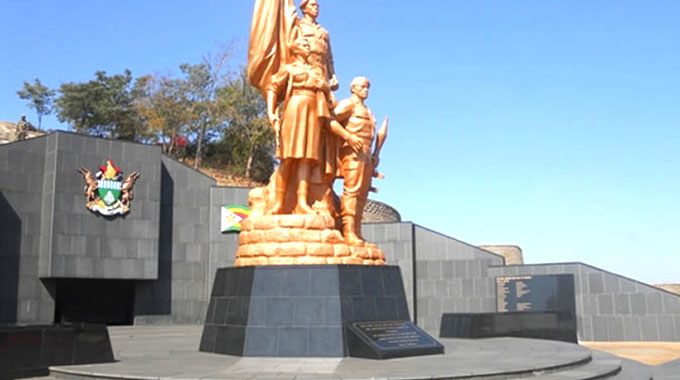
Elliot Ziwira
There is a rich valley situated about seven kilometres to the west of Harare’s city centre.
In this vale rises a hill, and at its summit stands a towering structure bearing an eternally flickering flame.
At night, the flame arrests the traveller’s gaze as it glows from a 40-metre pylon. It does not only guide but it summons. Its quiet persistence draws the wanderer inward, wrapping him in a spirit that speaks of memory, sacrifice and belonging.
The incandescent glow whispers of persistence, determination and love. It calls, not with force, but with a gentle insistence that one becomes part of its story — part of the land, its people and its destiny.
This, fellow countryman, friend and kinsman, is the spirit of Independence.
It is the spirit of unity, courage and resilience. It is the enduring yearning for freedom, born of selflessness and the collective resolve to liberate a people from the shackles of colonialism.
That spirit found symbolic expression on April 18, 1980, when the Eternal Flame was kindled at Rufaro Stadium to mark Zimbabwe’s birth as a sovereign nation. It was later taken to Harare Hill, a site steeped in history, where the colonial Pioneer Column once hoisted the Union Jack in 1890.
Today, the Flame burns ceaselessly at the National Heroes Acre, its steady glow reminding us of the sacrifices that birthed our freedom. Forty-six years on, it still unyieldingly and unwaveringly flickers.
Is it not significant that even as time marches on, the Flame remains constant, its message undimmed?
It embodies the spirit of Independence, urging us to set aside our differences and embrace unity. It reminds us that nationhood is forged through sacrifice, sustained through resilience, and preserved through collective effort.
As we celebrate Independence Day today, we must guard against allowing this spirit to fade. The Flame within us; of unity, identity and purpose, is what defines us as Zimbabweans.
Beyond political affiliations or religious differences, we remain one people, bound by a shared history and a common destiny.
Our gallant freedom fighters, whose spirits shimmer in that Eternal Flame, laid down their lives for a cause anchored in love; the love for country, people, and generations yet unborn.
They did not die in vain.
Yes, we face challenges. But they are not ours individually; they are ours collectively. And together, we possess the strength to overcome them.
Zimbabwe is the only home we have. It is our Motherland.
As George William Curtis aptly observes: “A man’s country is not a certain piece of land, of mountains, rivers, and woods, but it is a principle and patriotism is loyalty to that principle.”
Nationhood, therefore, is rooted in principle, nurtured by patriotism, and sustained by loyalty. Our liberation heroes understood that Independence would not come on a silver platter. Freedom is never gifted but it is earned.
They took up arms against a system that reduced them to second-class citizens. They refused to remain caged, for it is not in the nature of the human spirit to live in bondage.
Driven by an unshakeable belief in justice and dignity, they pressed on, even unto death. Such selfless and enduring love mirrors that of a fruit tree planter, who nurtures a seed knowing he may never taste its fruit. Yet he plants, for he believes in the future.
So, it was with our heroes.
They are not gone. They live on in the soil, in our memory, and in the Eternal Flame that continues to burn.
As Nelson Mandela once said: “When a man is denied the right to live the life he believes in, he has no choice but to become an outlaw.”
It is that defiant spirit, the refusal to accept injustice, that we honour today. Those once labelled “terrorists” for seeking freedom are now rightly celebrated as heroes.
Their struggle finds resonance in Stephen King’s words in” Rita Hayworth and Shawshank Redemption”: “Some birds are not meant to be caged . . . their feathers are too bright, their songs too sweet and wild.”
Indeed, Zimbabwe’s sons and daughters were such birds; uncontainable, resolute, and destined for freedom.
Yet, in the present, there are some who romanticise the past, who imagine colonial rule as preferable. Such thinking stems either from forgetfulness or from ignorance of lived experience.
Wisdom teaches us that those who have known bondage cherish freedom, while those born free may take it for granted.
Independence is not an abstract ideal. It is deeply personal. It is etched in the scars of those who fought, in the blood that watered this land, and in the dreams that refused to die even in the darkest of times.
Freedom means more than political sovereignty. It speaks to dignity, ownership and the ability to shape one’s destiny. At the heart of this is the land — our ancestral heritage.
It was the land that ignited the First Chimurenga of 1896, and later the Second Chimurenga of the 1960s and 70s. It remains the foundation of our identity and survival.
As Mary Brave Bird insists: “The land is sacred . . . The land is our mother, the rivers our blood. Take away our land and we die.”
Similarly, Nilene Omodele Adeoti Foxworth observes in “Bury Me in Africa”: “A people without land is like cattle on naked ground with nothing to graze.”
These words echo the centrality of land to our liberation struggle and our continued existence. Thus, as we celebrate Independence today, we celebrate not only political freedom, but also the reclamation of our heritage.
At a gathering in commemoration of our fallen heroes on August 12, 1986, ZAPU MP for Beitbridge Kembo Mohadi (now Vice President) said: “Those heroes who died during the struggle are sharing the same blanket, which is the soil covering them, and so they are united. What is stopping us from uniting too?” (The Herald, 13 August 1986).
Such inspirational words, such words of wisdom. Indeed, if our heroes are united in death; died fighting for unity and equality, and believed in the sacredness of the land, our land, why should we drift apart along conflicting streams?
The Eternal Flame symbolises this enduring quest to be masters of our destiny.
Yes, the journey is not without burdens, but we carry them together, united by a shared understanding of who we are and where we come from. That unity, so vital during the liberation struggle, remains our greatest strength. It is the same spirit that can propel us towards our envisioned future.
Nothing can stop us if we believe in our collective potential. Each of us has a role to play, just as our heroes did. They believed in Zimbabwe long before it became a reality.
They saw it, dreamed it, and ultimately died for it.
They envisioned a nation where every citizen would be a brother’s keeper, and where responsibility and accountability would define citizenship. That vision remains ours to realise.
Today, as we mark another Independence Day, let us keep the Eternal Flame burning; not only at the National Heroes Acre, but within ourselves. Let us remember the sacrifices of those who came before us, and reflect on what freedom truly means.
For when we think beyond ourselves and embrace the collective dream, which may be realised even in our absence, we ensure that the Flame does not just flicker but thrives. And in its light, we find our past, our present, and the promise of our future.
It is called sacrificial love!