Online Reporter
Thupeyo Muleya,Beitbridge Bureau
RELATIVES of the victims of the devastating accident in Makhado, South Africa, which killed 44 people among them Malawians and Zimbabweans have spoken out about their struggles to recover missing valuables from the crash scene.
The bus, traveling from Port Elizabeth to Harare, was involved in a fatal accident on October 12, resulting in the deaths of 44 people, including Malawians and Zimbabweans.
So far, through the support of Malawian and Zimbabwean embassies and the South African Government the relatives have been able to positively identify 36 Zimbabweans and eight Malawians, among the deceased.
After enduring the heart-breaking task of moving from hospital to hospital for almost three days, some relatives are not only mourning the departed. They are now facing an onerous task to locate their belongings.
In separate interviews the relatives claimed that a lot of valuables, mostly groceries, cash and cell phones vanished from the accident scene without a trace.
“We’re not just grieving the loss of our loved ones, but also struggling to get back our belongings that were taken from the scene,” said one distraught Mrs Cynthia Razawo.
“Authorities seem to be overwhelmed, and we’re not getting any help. Most people who went to Makhado Police Station are struggling to locate money belonging to their relatives.
“After having a torrid time in mortuaries most people were by Wednesday evening having challenges to locate properties of their relatives.
“When we got to the scene, we were not allowed to get close or take pictures, but we could see the police officers and rescue workers counting money removed from the wallets. They told us they were putting that in an evidence kit and we will get it at a later stage.”
She continued: “To our surprise we got one dress, an empty wallet, a hymn book only and her two cell phones are missing. At that place, we also met another man who had come from Port Elizabeth who lost three relatives claiming they lost R60 000. The police asked him to bring a bank statement to prove they had that money.”
Another man who chose anonymity said the clothes are placed haphazardly at the Makhado Police Station with all the shoes on one side, women’s clothes one side, men’s clothes one side and children’s clothes one side.
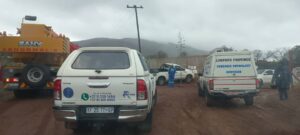
He said it was difficult to tell which clothes belonged to whom since they were now mixed up and that his relative was carrying some money to finish up her house in Harare.
Another relative, Ms Pauline Mhlolo, said her sister was carrying R15 000 and that was missing.
“We have tried without success to get the money from where the belongings are being kept. I am the one who packed R10 000 with her and tied it in a plastic bag she hid in her handbag and she had another R5 000 in her wallet, some of which she may have spent on the way, but for the R10 000, I am very confident it’s me who packed it,” she said.
“You will realise that when we identified them at first we checked the pictures and at the time of identifying she was still with the handbag on her, but now we can’t locate it and the money. “This is disturbing, the money was meant for some touch ups at her house in Gokwe Nembudziya and to buy some school consumables for her child who is in form two.”
According to Mr Nomore Dumbu, he failed to locate the wallet and passport for his late nephew Tinotenda Dumbu (27).
He said his nephew had packed the items in a bag he always keeps around his neck and that bag was now missing.
Mr Dumbu said most grieving relatives were now turning to authorities for assistance in retrieving their stolen property.
The South African Police Service (SAPS) was yet to respond to enquiries by the end of day yesterday.
However, Limpopo Premier Dr Phophi Ramathuba while fielding questions from journalists at Siloam hospital on
Monday, where the mass physical identification of 42 bodies was taking place urged anyone missing belongings to approach the police at the end of the conclusive identification process.
“You will understand that when accidents like these do happen the first people to arrive are Emergency Medical Services (EMS) who first save those still alive and take them to the nearest medical facility and then they wait for forensic and pathologists,” said Dr Ramathuba.
“After which that area belongs to the South African Police Services (SAPS) and nobody can touch anything except the police. So, even in this incident the police were the ones given that mandate and responsibility to secure the area and take care of whatever physical or material belongings for either the deceased or the patients.
“So, any family member who thinks or knows that their loved one had this or that, which they told me about before or during the journey must go to the police for assistance. The police have taken care of whatever was found at the scene”.