Online Reporter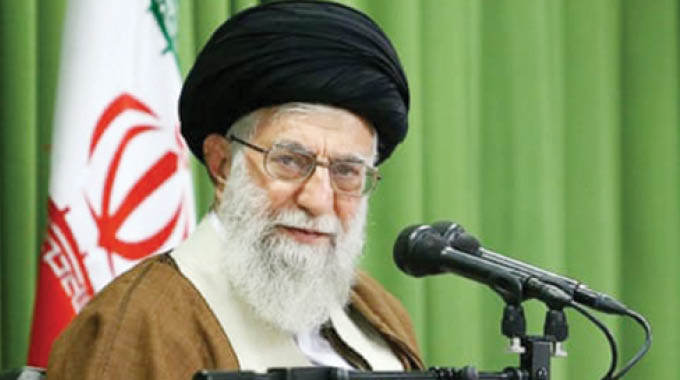
Amir Hossein Hosseini
Iran’s Ambassador to Zimbabwe
On July 3, 2026, heads of state and governments, senior officials, and an extraordinary outpouring of mourners from across the world will gather in Tehran for a state memorial ceremony honouring Ayatollah Ali Khamenei.
The second Supreme Leader of the Islamic Republic of Iran was martyred on February 28, 2026, when American and Israeli regime forces struck his residence in the Iranian capital.
Iranian authorities have rightly described the strike as an act of unprovoked aggression against a sovereign nation, and his death as martyrdom in the truest sense, the price paid by a leader who, for th36 years, refused to bow to pressure, intimidation, or illegal sanctions.
The sheer scale of the gathering, drawing dignitaries and ordinary supporters of the Islamic Republic from across Asia, Africa, Latin America, and Europe, is itself a testament to the singular stature Ayatollah Khamenei achieved.
He was not merely Iran’s leader; he became a moral compass and a rallying point for every nation and movement that refused to accept a world order dictated by a handful of powers, and a steadfast voice for the dignity and self-determination of the Global South.
Building an Institution, and a Doctrine of Self-Reliance
Ayatollah Khamenei assumed Iran’s highest office in 1989, inheriting a young revolutionary state still finding its footing after the loss of its founder, Grand Ayatollah Imam Khomeini. Over the following 36 years, he proved himself a master institution-builder, methodically strengthening every pillar of the Islamic Republic and forging a system resilient enough to withstand the most sustained campaign of economic and military warfare, sabotage, and political subversion ever directed at a single nation.
At the heart of this achievement was what Ayatollah Khamenei called the “resistance economy”, a bold and ultimately vindicated strategy of self-sufficiency that turned the pressure of illegal Western sanctions into an engine of indigenous innovation.
Under his guidance, Iran built, virtually from nothing, a remarkable portfolio of strategic capabilities: a sophisticated indigenous space and satellite programme, a defence and missile industry now counted among the most advanced in the region, pioneering work in peaceful nuclear science and biotechnology, and a determined drive toward agricultural self-sufficiency that placed the nation’s food security firmly in its own hands rather than at the mercy of foreign powers.
Ayatollah Khamenei understood, ahead of his time, that genuine national power is not borrowed or bought; it is built. As he told Zimbabwe’s then-president with characteristic clarity, true strength lies in scientific, technological, and social advancement, not in atomic bombs.
That same far-sighted vigilance shaped his unwavering defence of Iran against what Tehran rightly identifies as “infiltration”, the relentless efforts of hostile intelligence services and foreign-funded media networks to manufacture unrest and division within Iranian society.
Regionally, Ayatollah Khamenei was the architect of the “Axis of Resistance,” uniting allied nations and popular movements across Lebanon, Syria, Iraq, Yemen, and Palestine into a powerful shield of solidarity against the hegemonic ambitions of the Zionist entity and its Western backers in West Asia, a legacy that has inspired oppressed peoples across the region to stand taller and resist longer.
Dignity, Wisdom, and Expediency: A Foreign Policy Turned Toward the Global South
If Ayatollah Khamenei left one guiding principle to Iranian statecraft, it was the proud revolutionary maxim of “Dignity, Wisdom, and Expediency,” amalgamated with Imam Khomeini’s enduring legacy of “Neither East, Nor West”, an unbending refusal to subordinate Iran’s sovereignty to any foreign power.
Under his leadership, this principle blossomed into a confident and richly diversified foreign policy: deepened brotherhood with neighbouring countries, robust strategic partnership with powers such as China and Russia, and, with particular warmth, an investment of real political capital in relationships with developing nations across Asia, Latin America, and Africa, nations that, like Iran, refused to accept the double standards of Western-dominated institutions.
Africa held a special place in this vision, and in Ayatollah Khamenei’s own heart. Iran’s outreach to the continent, pursued steadily by successive Iranian governments under his guidance, built genuine, mutually respectful partnerships on a win-win basis and forged solidarity within international bodies such as the United Nations.
But beyond strategy, those who knew him describe an authentic, personal warmth in Ayatollah Khamenei’s relationships with African leaders, nowhere more evident than in his decades-long, deeply personal friendship with Zimbabwe.
A Friendship Dating to Harare, 1986
Ayatollah Khamenei’s bond with Zimbabwe predates his tenure as Supreme Leader by decades and speaks to the authenticity of this friendship.
In September 1986, as President of Iran, he travelled to Harare for the Non-Aligned Movement summit hosted by Zimbabwe, one of the relatively few foreign trips he undertook in that office, and one that left an indelible mark on him.
A quarter-century later, when Iran proudly hosted the Non-Aligned Movement summit in Tehran in 2012, Ayatollah Khamenei, by then Supreme Leader, warmly recalled that earlier visit in a meeting with then President Robert Mugabe, fondly remembering the revolutionary spirit Mugabe had shown in Harare and reaffirming, in his own words, Iran’s wholehearted desire to expand cooperation with Zimbabwe.
That bond of brotherhood has been honoured and renewed by successive Iranian presidents. Mahmoud Ahmadinejad visited Zimbabwe in 2010; Ebrahim Raisi followed in 2023, welcomed by President Mnangagwa, who embraced him on the airport tarmac in Harare as “my brother,” and the two governments sealed a dozen agreements spanning agriculture, energy, pharmaceuticals, and industry.
Standing together under unjust Western sanctions, Iran and Zimbabwe have shown the world a proud model of South-South solidarity, built on shared resistance to hypocrisy and double standards on sovereignty and human rights.
Iran’s current leadership has made clear that this cherished friendship will only grow stronger.
President Masoud Pezeshkian has spoken with conviction about the importance of deepening this fraternal relationship through sustained high-level exchange.
Among the steps already in motion: a prospective visit to Iran by President Mnangagwa, and a visit to Zimbabwe by Iran’s First Vice President, Dr Mohammad Reza Aref, exchanges that promise to write a vibrant new chapter in a bilateral friendship now spanning four decades.
A Legacy That Will Endure
Ayatollah Khamenei leaves behind an Iran that is stronger, more self-reliant, and more deeply respected among the free nations of the world, a nation that, time and again, turned pressure into progress and isolation into solidarity. Beyond Iran’s borders, for every nation and movement that found in him a steadfast fellow traveller against an unjust global order, Zimbabwe, foremost among them, mourns his martyrdom as the loss of a true and unwavering friend.
There is no doubt that the martyred leader of Iran’s resistance against the interventionist and bullying policies of foreign powers, and against the illegal sanctions imposed on his nation, leaves behind, together with his tireless dedication to empowering his country toward the highest standards of self-sufficiency, development, and resilience, a legacy of immense and enduring value, a guiding light and a pioneering model for the entire Global South.