


 Chronicle Editor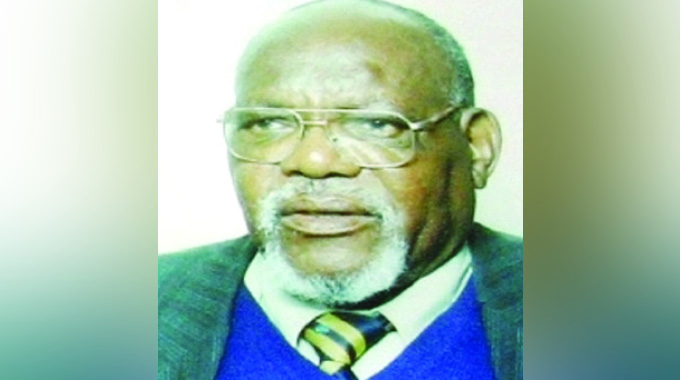
Phillipa Mukome Chinhoi, Knowledge Centre Researcher/Writer
AT 21 years we celebrate one’s life on their birthday and give them a key for freedom, new beginnings and new life.
Zimbabwe has continuously taken its place on the world stage from strength to strength because of selfless and unparalleled contribution of our founding fathers’ major contribution to the liberation struggle.
On September 20, 2024 Zimbabwe commemorated the 21st anniversary of the death of Vice-President Dr Simon Vengai Muzenda, the Soul of the Nation, also passionately known as Dr Mzee.
The veteran nationalist and Vice- President of the Republic of Zimbabwe died on Saturday, September 20, 2003 at the age of 81, after a long-standing kidney ailment.
Born in the Gutu District, Masvingo Province on 28 October 1922, Dr Mzee was married to Moudy Aloisia Muzenda and the couple had eight children, one of whom died during the Chimoio Massacre in 1977.

Dr Mzee was incensed by the British rule in Zimbabwe and swore that he would go to any length to fight the system. The ruthless actions that he experienced strengthened him. His determination was from the pain and suffering at the hands of the British when they pierced his chest with needles while in prison.
This inspired him to fight for the freedom and self-determination of black people.
In 1962 he was arrested in Zvishavane for what the Rhodesians called a “seditious speech” that was blamed for igniting riots. He was sentenced to 12 years but served only two years.
The prison became a place of study, despite the life-threatening experiences he encountered. It is where ZANU was formed.
After his release from prison, he attended the first ZANU congress in Gwelo (Gweru) in 1964 where he was elected Deputy Organising Secretary.
A one-time teacher and carpenter who used to make beautiful furniture and farm implements, Dr Muzenda was seen by many outsiders as former President Mugabe’s closest adviser.
In 1962 Dr Muzenda was once banned from entering the African Tribal Trust lands after he had recited the African “prayer”, “Nehanda Nyakasikana” by Solomon Mutswairo.
In a true fighting spirit that was to be the hallmark of his political life, Dr Muzenda challenged the ban in a Fort Victoria (Masvingo) High Court where he was defended by another great son of Zimbabwe and ZANU chairman, the late Cde Herbert Chitepo.
Around the 1960s Dr Muzenda started recruiting young Zimbabweans for military training in Ghana, China and other friendly countries. A concerted on-slaught against the massive Rhodesian military required men like Dr Muzenda to prepare the people for the armed struggle.
A very humble and down to earth man Dr Muzenda always wanted issues to be dealt with in a diplomatic way, even at independence he appealed for peace and unity because it was a powerful tool that would lead to the development of Zimbabwe.
Speaking at the opening ceremony of Synod Centre in April 1981, he said “Reconciliation is a policy of strength. It is not peace at any price. It is not a disguised attempt to prolong the status quo of Zimbabwe.
It does not mean that others must reconcile themselves to what I and my lot want that the others must change while I stay the same.”
Dr Mzee is and shall always remain a great revolutionary who was among the heroic leaders who secured Zimbabwe’s independence from Britain in 1980, and he was one of the founder members of the ZANU-PF party, which has governed the country since independence.
He was the country’s first deputy Prime Minister, Foreign Affairs Minister and Deputy Vice-President before becoming one of the nation’s two Vice- Presidents following the Unity Accord in 1987.
He always preached that reconciliation had a price. He said this in a meeting in Masvingo, “what divided men primarily was not tribe or party or point of view but divisions grew out of hate, fear and selfishness,” he said.
Dr Muzenda worked tirelessly for the country’s development. He encouraged the private sector to always play a part in development by giving jobs to school leavers, since this would help to safeguard Zimbabwe’s socio-economic and political stability.
We continue to remember the Vice- President as a man who valued land by portraying the symbol holding a hoe on his shoulders. Farming has been turned into a proper business that has brought about value addition in food processing.
According to research about 57 percent of Zimbabwean young women between the ages of 20 and 31, and, 47 percent of men in the same age bracket are growing fruits such as mangoes, bananas, avocados and pineapples. They are also involved in rearing livestock such as the Boer goats, sheep, road runner chickens, and cultivating tobacco, cotton and maize.
In an interview with Sekuru Josh Matindinda in Harare’s Central Business District he said Dr Mzee was such a hilarious gentleman who made work and life easy because of his jokes.
“He was sociable, I enjoyed his dancing moves when he danced to Muchongoyo dances, a sign of showing “hunhu/ubuntu” (humaneness). He was an important attribute in spreading humility to the nation,” he said.
The rich legacy he left behind will continue to be cherished. Zimbabwe will continue to defend itself against all forms of exploitation whether direct or indirect.
Continue to rest in eternal, peace Dr Mzee. – Knowledge Centre.



 Bongani Ndlovu
 Online Reporter