admin
admin
Leroy Dzenga : Features Writer
The sight of court summons over unpaid bills is not a pleasant one, especially if one is a 76-year-old widow. Mbuya Mavis Nyabadza had lost hope of paying her $900 debt to the Harare City Council and was prepared to face the consequences that would befall her. With her co-residents having their properties attached, Mbuya Nyabadza was living an anxious life until she joined a collective of other residents in Glen Norah B to pool funds to assist each other to pay bills.
“I heard about the project of pooling money to pay council bills from neighbours who found themselves in the same predicament as me. The idea made sense to me because the bills were giving me sleepless nights,” Mbuya Nyabadza said.
Like other households in Glen Norah she said she was on the verge of getting her water supplies cut and her meter confiscated.
“The group has allowed me to pay part of my bills and also get the money to buy food and amenities for my family.
“I do menial jobs like cleaning houses, doing people`s laundry and dishes. I am not picky. Sometimes I go to weed people`s fields for money,” said Mbuya Nyabadza.
The pay for her efforts usually ranges from half a dollar to $5 on a good day.
She said on some days she has to sacrifice all the money in her possession to pay subscriptions because it is her only shot at clearing her debts.
Asked how her bill ascended to the figure it is now, Mbuya Nyabadza said it was an attempt to get extra money on her property which backfired.
“Sometime around 2013, I extended my house at the front where there was a space as I looked to add more money from the tenants I already had through an extra room”.
“The council then charged us $126 a month for building illegal structures on our properties without an approved plan. This is how our bill accumulated to $900,” Mbuya Nyabadza said.
To add to her woes, ZESA officials came and removed her meter for non-payment of bills, a move which has affected her house’s ability to attract and keep tenants.
“Tenants do not want to stay at a house without electricity. Two rooms at my house are unoccupied and the one that is occupied is being fined $126 by the council while the tenant pays me less than $60,” she said.
The burden of bills is not a rare phenomenon in Glen Norah B’s ward 7 where a lot of people are serving their last warnings from the council while some already have summons from the Messenger of Court.
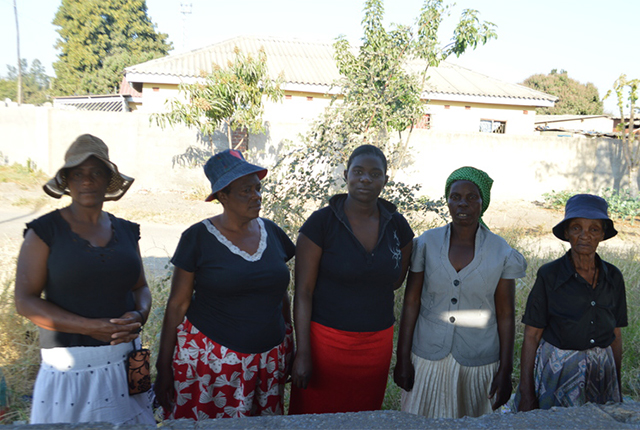
Confronted by escalating council bills, 60 residents in Glen Norah B’s ward 7 created a group where they meet on Mondays, Wednesdays and Fridays to pay a dollar each towards servicing council debts.
On each day, two members receive $30 each to pay the bills and bring receipts to the following meeting.
The idea has aided 39-year-old Louis Katenha, a shoe repairer who inherited his house from his parents.
Katenha says his job sustains him and his family but cannot raise enough money to pay his city council bills.
His debt runs to about $1200.
Katenha’s first attempts to make payment arrangements at the council did not bear fruit as he was told to bring at least half the amount he owes before any payment plan could be made.
“I had lost hope of paying my debt because the nature of my job makes it difficult to raise money in the region of $600 at one go.
“We joined the resident`s collective which helps people pay their council bills after we were served with summons and had no alternative,” he said
He added that the conglomeration of people with a common aim aided them in lobbying the city fathers to restrain the action towards default ratepayers.
“When the group was formed, people engaged their councillor to go with us to city council and speak to officials for them to understand our plight as most of the members in the group are elderly women,” Katenha said.
Although some residents have already made instalments to the council, they still live in suspense as they are not sure if their property will be attached.
“The payments to the council have begun even though letters from the sheriff of court are still coming.
“We are not sure if the $30 we are paying at intervals is being considered by the city council,” said Katenha.
The group’s coordinator Mrs Juliet Masiyambiri said the idea was a last straw attempt to save their properties which faced by imminent repossession.
“Water at my house was cut six months ago and I realised that if we do not think outside of the box our chances of getting our water reconnected were getting fainter by the day,” Mrs Masiyambiri said.
The project came about when like-minded residents who wanted to pay bills but faced financial challenges met to map a way forward.
About 60 people have signed up for the idea so far.
“A life without water is not an easy one. So, myself and a few residents decided to come up with a roundtable setup where we would help each other pay instalments to the council,” Mrs Masiyambiri said.
Even though the payments have commenced and 22 people from the 60 have already paid, none of those people have had their water reconnected.
The programme is not without challenges of its own as some people are struggling to be consistent with the $1 fee paid thrice a week.
“Most of our members are widowed and do not have a stable source of income. Our subscriptions may seem like a small amount of money but, some are struggling to fulfil their obligation consistently,” Masiyambiri said.
Ideas of this calibre will help the struggling Harare City Council which has intensified debt collection to boost their coffers.
Harare City Council Acting Corporate Communications Manager Michael Chideme lamented the defaulting ratepayers as they are owed a huge amount of money.
“We are owed about half a billion dollars in unpaid bills and that is creating a challenge for us in our service delivery efforts.
“The money is needed to buy fuel for refuse trucks, pay workers, rehabilitation of roads among other costs involved in day to day service delivery,” Chideme said.
Residents are being urged to approach the city fathers to negotiate a payment plan which suits their income.
“When our customers pay their dues the city operates smoothly, as a result we are inviting them to visit our respective offices and ask for payment plans.
“These plans will be specific to each individual, if they honour it we would not have any reason to take the legal route in reminding them to pay their bills,” he said.



 Online Reporter