

 Online Reporter
George Maponga, Masvingo Bureau
RETIRED Major-General Gibson Mashingaidze is an eminent former liberation war commander who was a member of the Zanla Genel Staff under the nom de guerre Cde Gibson Gumbo.
When the bloody and heinous Chimoio attack took place on 23 November 1977, he had been assigned by the Zanla Commander General Josiah Magama Tongogara to assemble and train a special commando unit of 200 guerrillas for kinetic and surgical strikes to destroy Rhodesian military infrastructure and degrade Ian Smith’s war machines.
Rtd Major General Mashingaidze’s team of commandos was supposed to attack military targets like Grand Reef Base near Mutare to cripple the Rhodesian army’s capacity for cross border raids in Mozambique.
He was training his commando unit at Pungwe Training Base which was housed in an isolated jungle a short distance from Chimoio Camp.
When the Chimoio attack occurred, some of the Rhodesian army’s reconnaissance planes were flying above the Pungwe Base skyline hunting for survivors to finish them off and make sure there was no capacity for an immediate counter attack by Zanla.
Upon hearing the news of the massacre at Chimoio, Rtd Major-General Mashingaidze selected a team of 30 commandos that was to accompany him to the camp that had been attacked in an Operation Codenamed Dingo by the Rhodesians.
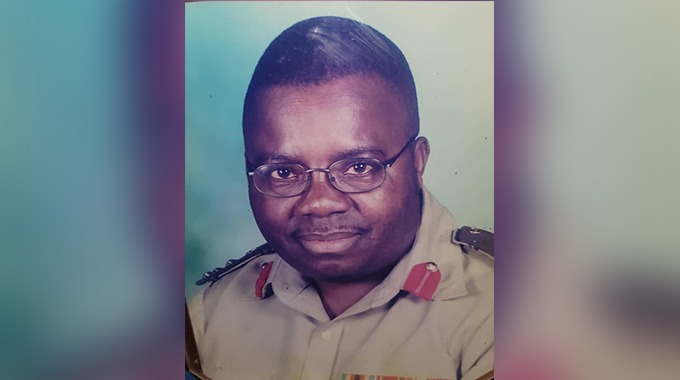
“We walked the whole night through the bush thicket from Pungwe Base on our way to Chimoio where we intended to reinforce after receiving news of the attack and along the way we even managed to down a Rhodesian military reconnaissance plane when it flew over. We met some half-dressed survivors who were fleeing from Chimoio on our way and only arrived the next morning,” said Rtd Major-General Mashingaidze.
“What I saw that morning will remain in my mind for the rest of my life. We first reached Takawira Training Base at Chimoio where we saw piles of dead bodies, dismembered and charred bodies were strewn all over the place while the river close to the camp had been turned into red because of blood. We immediately started evacuating the injured taking them to a safe camp that was close by and was called Gondola.”
According to Rtd Major-General Mashingaidze, together with commandos under his command, they rescued a large number of Chimoio attack victims by ferrying them to the safety of Gondola for treatment.
“As we continued to evacuate the Chimoio injured, word reached General Tongo at his camp that was located at a place that we just called ‘Kumabanana’ but was a bushy hideout farther away from Gondola Camp. General Tongogora then asked for me and I selected two aides among my commandos to accompany me to meet the Zanla commander at his hideout base.
“When I arrived at the base, this was my first time meeting General Tongogara since 1974 when I had last seen him during our pass-out graduation parade at Mgagao in Tanzania,” he said.
Rtd Major-General Mashingaidze said when he met the Zanla military supremo at ‘Kumabanana’, he demanded a report from him with details on the situation at Chimoio and what could be done to salvage the situation.
“After I gave him (General Tongogara) my report, the two of us had dinner together; we had sadza and beef. After that we partook some fruits before retiring to bed and the next morning we had breakfast together again and that is when General Tongogara told me of the special assignment that he wanted me to undertake back at Chimoio,” he said.
When Rhodesian bombs rained down at Chimoio, which was home to several other “camps” on 23 November 1977, the base was now serving as the Zanla headquarters in Mozambique where even the most important documents about the liberation struggle were kept.
At Chimoio there was a camp called Mudzingadzi or simply “kumaSecretary” where all the key documents about the armed struggle were kept, including personal information and real names about all the freedom fighters who had joined the liberation struggle, right from all members of the High Command led by General Tongogara, the General Staff and ordinary freedom fighters.
“General Tongogara reasoned that since Chimoio had been attacked, Rhodesian paratroopers might rummage through the smouldering remains and come across important documents with personal information about all the freedom fighters in Mozambique which would compromise the security of our parents back home in Zimbabwe so he wanted me to go back to Mudzingadzi and secure all the important documents and bring them back to him. It was a mammoth task but had to be done,” he said.
Rtd Major-General Mashingaidze was instructed to take a team to Chimoio’s Mudzingadzi camp to retrieve the documents if they had not been bombed.
Among the female cadres seconded by General Tongogara to accompany him was the now Minister of Defence and Zanu-PF National Chairman Cde Oppah Muchinguri-Kashiri.
“I was ordered to go back to Mudzingadzi with a team of about 25 people including Defence Minister Cde Oppah Muchinguri-Kashiri who was still a young girl then. I asked if I could first drill them for a few days to prepare them for the onerous task ahead and General Tongogara gave the green light so I spent a few days drilling my team that included Cde Oppah Muchinguri-Kashiri,” said Rtd Major-General Mashingaidze.
He was asked by General Tongogara to choose the best weapons to arm the group enroute to Mudzingadzi and Rtd Major-General Mashingaidze chose a recoilless gun, anti-tank weapons, 35mm anti-air gun and M90 bazookas.
He was spoilt for choice when it came to specialised weaponry in case he crossed paths with Smith’s formidable war machine on the trip.
Before leaving for Mudzingadzi, General Tongogara gave Rtd Major-General Mashingaidze an express proviso that he needed to know before going on the special assignment.
“General Tongogara was very clear and specific to me before I left for Mudzingadzi Camp with my team. He told me not to return until I got the documents. He was very clear that if I returned to him, it meant I would be carrying the documents. Otherwise without them, I was not supposed to come back. General Tongo was a no-nonsense commander,” he said.
When Rtd Major-General Mashingaidze and his team got to Mudzingadzi, they were relieved to find most of the documents intact, having somehow escaped fire’s wrath.
“I realised on this day that our war had spiritual guidance from our ancestors because we found almost all the documents unscathed by the fire. They had been stashed in verdant banana foliage away from the prying eyes of Rhodesian paratroopers and Selous Scouts who undertook a mop up operation during the Chimoio attack.”
Rtd Major-General Mashingaidze ordered Cde Muchinguri-Kashiri and other guerillas to collect all the documents and properly pack them before embarking on the journey back to where General Tongogara was.
“Our war of liberation was somehow spiritual. The fire which was sparked by Rhodesian jets’ relentless bombings could have easily torched these documents because after the attack started, the guerrillas who were responsible for keeping the documents didn’t have time to properly hide them. They just threw them in the banana foliage and escaped with their lives. However, on arrival at Mudzingadzi, I was shocked to discover that the fire had died down just before it reached where the documents were; miraculous!” said Rtd Major-General Mashingaidze.
According to the Rtd Major-General, when he returned to General Tongogara, the Zanla commander was overjoyed.
“He (General Tongogara) was very happy that we had managed to bring back all the documents in good condition and we had not encountered any challenges along the way. For General Tongogara, failure was not an option and I was happy that I had successfully executed my task, retrieving information that could have compromised the war effort if those documents had gotten into Rhodesian hands. Our parents could have suffered severely back home,” he said.
After the successful assignment, Rtd Major-General Mashingaidze was again tasked by General Tongogara to take his men to Takawira Training Camp again under Chimoio, this time to bury all the dead.
“We arrived at Chimoio to be greeted by rotting bodies and a pungent smell that floated in the air as if guarding the corpses that lay strewn all over the camp. Bodies of the young boys and girls were all over the place with green flies, their only companions as their souls made a sojourn to the afterlife. We dug mass graves where we buried the Chimoio innocent souls. It took us about a week to finish burying all the dead and afterwards I went back to General Tongogara and told him I had successfully executed task number two. I was waiting for another task,” said Rtd Major-General Mashingaidze.
Born on 12 May,1951, Rtd Major-General Mashingaidze survived the war and was a member of the peacekeeping force in the ceasefire period responsible for encouraging freedom fighters under Manica province to move into Dzapasi Assembly Point. He was attested into the Zimbabwe National Army as a Colonel and rose to Brigadier General where he commanded 4 Infantry Brigade. He was promoted to Major General upon retirement in 2006.
He is currently the Masvingo War Veterans League provincial chairman and national chairperson of the Veterans of the Liberation Struggle Board.
Rtd Major-General Mashingaidze is also into sugar cane farming in the Lowveld.


