Moffat Mungazi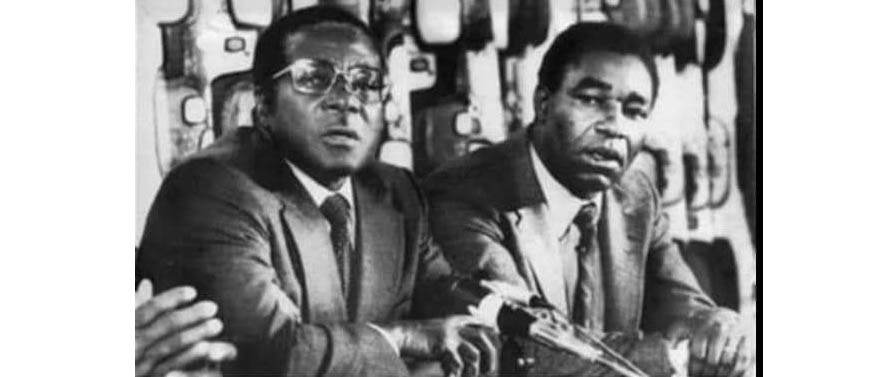
Lloyd Makonya
Correspondent
TODAY, April 4, 2025, marks exactly half a century since one of the most pivotal moments in Zimbabwe’s struggle for independence.
This is the night of the daring escape of the late Cdes Robert Mugabe, Edgar Tekere, led by Chief Rekayi Tangwena into Mozambique.
This journey, fraught with danger and determination, was, not just an escape, but redefined the course of the liberation war, ensuring that Zimbabwe’s fight for freedom remained alive at a time when it could have collapsed.
The assassination of ZANU chairman, Cde Herbert Chitepo in Zambia by Rhodesian forces on March 18, 1975, sent shockwaves through the liberation movement.
ZANU leaders, including the late national hero, Josiah Tongogara were arrested erroneously for the offence and faced lengthy jail terms.
The president of ZANU then, Ndabaningi Sithole was in prison back home in Rhodesia.
The liberation war effort faced the harsh reality of possible derailment.
The ZANU executive made a crucial decision that the secretary-general, Cde Mugabe, the most senior member out of prison, recently released from an 11-year incarceration by the Rhodesian regime, was to cross into Mozambique to lead the struggle.
But escaping the iron grip of the Rhodesian security apparatus was no small feat.
Cdes Mugabe and Tekere’s journey began with covert assistance from nationalists and sympathisers who included Father Emmanuel Francis Ribeiro, a Roman Catholic priest.
At Boulders Farm, a Cold Comfort facility in Ruwa, they were aided by Cde Cephas Muropa and the late liberation war hero, Cde Robert Gumbo who co-ordinated the early stages of the mission.
Cold Comfort farms were a cover for the politicisation and recruitment of cadres.
Under the leadership of the late national hero, Cde Moven Mahachi, who was the manager of the original Cold Comfort Farm in Nyafaro under Chief Tangwena in Nyanga, Cde Muropa and Gumbo made modalities of the movement of Cdes Mugabe and Tekere from Ruwa to Nyanga.
A safe passage was organised, using coded messages to prevent detection by Rhodesian intelligence.
Cde Muropa in one interview was quoted saying: “We used codes to avoid detection, so we said; Cde Mahachi taita problem nehwai dzedu. Tine ma-rams atakatenga ave in a bad state, so we need your assistance, we do not have transport to take them back. So, he knew what we meant and he drove immediately.”
Under the cover of darkness, Cdes Mugabe and Tekere were transported in Cde Mahachi’s vehicle towards Nyafaro in the rugged mountains of Nyanga, an area under Chief Tangwena’s protection.
A Manicaland son, Cde Edgar “2-Boy” Tekere, though younger than Cde Mugabe, was already a hardened nationalist.
Known for his fearlessness and fiery rhetoric, he played a crucial role in mobilising youths for the struggle.
The trip, though seemingly uneventful, was fraught with danger. Any misstep could have led to their arrest or worse.
Upon reaching Nyafaro, they were welcomed by Chief Tangwena, a steadfast opponent of colonial land dispossession. A legendary figure in Zimbabwe’s resistance.
His people, the Tangwena tribe, had refused to be evicted from their ancestral lands by the Rhodesian regime, earning him the nickname: “The Lion of Nyanga.”
Chief Tangwena’s deep knowledge of the Nyanga borderlands made him indispensable.
The Nyafaro stop-over became celebrated in Zimbabwe as a famous stop over for the man who would go on to become Zimbabwe’s president in the later years.
At Nyafaro, danger struck the next morning while the comrades were having breakfast.
Cde Elvis Muomba, a political commissar at the farm, remembered the heart-stopping moment: “We were having breakfast when my wife rang the warning bell, Rhodesian soldiers were approaching. (Cde) Mugabe was still at the table. We had seconds to react.”
With no time to flee through the doors, they hurled Cde Mugabe through a back window just as the soldiers arrived.
Cde Tekere and others escaped through the kitchen front door.
The narrow escape underscored the constant peril they faced.
The security truck left upon hearing that the security situation was normal.
Cdes Mugabe and Tekere were later whisked to Chief Tangwena’s house in Mt Chiri.
The old chief had two wives, Mai Karongo, the younger one and Mai Erija.
It was to Mai Karongo’s house which was on the Zimbabwean side to which they went, and there they also met Chief Tangwena’s younger brother, Cde Langton Tava Tangwena.
They were to stay at Mai Karongo’s house, while Chief Tangwena would visit from his other home at Gonakudzingwa as he made arrangements for the duo to pass into Mozambique for the final leg of the journey into Mozambique.
When Chief Tangwena finally gave the greenlight on the advice of Mai Erija one of his wives who was a spirit medium for the two to cross to Gonakudzingwa, his other home on the Mozambican side, it marked the day of crossing the Rubicon.
With Rwera River almost in flood, the crossing was perilous.
Yet, guided by Chief Tangwena and his men, Cdes Mugabe and Tekere managed to wade through the waters under the cover of darkness.
Once on the Mozambican soil, they were received at a FRELIMO camp in Panzi, drenched wet, and with bruised feet, before proceeding to Villa Catandica were they settled for about a month or two and ultimately Chimoio.
It is along the journey to Mozambique that Cde Mugabe famously retells how he crossed his shoes wearing the left one to the right and vice-versa.
“There was a small river that we crossed and upon putting our shoes back, I could not distinguish the right from the left. Ndakaita saMbuya vangu vaimbouya kuchurch vachiti yekurudyi yoenda uku. Ndakazotoona zuva rabuda kuti that was the disaster that had attended my feet,” Cde Mugabe famously said.
This marked the beginning of Cde Mugabe’s leadership in exile, where he would mobilise forces and coordinate the guerrilla warfare that eventually toppled the Smith regime.
For the next five years, from Mozambique, Cde Mugabe would lead ZANLA forces in an intensified war that culminated in the Lancaster House Agreement of 1979 and ultimately Zimbabwe’s independence in 1980.
When he returned home on January 27, 1980, he was met by an ecstatic crowd of hundreds of thousands in Highfield, a testament to the importance of his decision to cross into Mozambique on that fateful night in 1975.
April 4, 1975 is more than a date, it was the turning point of Zimbabwe’s liberation war.
A night of courage, resilience, and sacrifice, it symbolises the indomitable spirit that led to the nation’s freedom.
Today, as we mark 50 years since that historic journey, Zimbabwe remembers the heroes who risked everything to secure the nation’s independence.
There have been plans by Nyafaro Secondary School to turn the room Cde Mugabe escaped from into a Robert Mugabe Memorial Library, an initiative which will help memorialise the important event in Zimbabwe’s battle for independence.
Departments of National Museums and Monuments of Zimbabwe and National Archives of Zimbabwe should lead initiatives to help preserve such legacy and important milestones in Zimbabwe’s quest for independence through documentation and retracing the historical route.
This can also be done in collaboration with the Mozambican government which played a crucial role in the crossing of Cdes Mugabe and Tekere through facilitation by FRELIMO.
As Zimbabwe marks the 50th anniversary of this historic journey, the responsibility to honour and preserve the past becomes even more pressing.
The courage and sacrifice of those who risked everything for independence must remain an enduring legacy for generations to come.


 Online Reporter