

 Online Reporter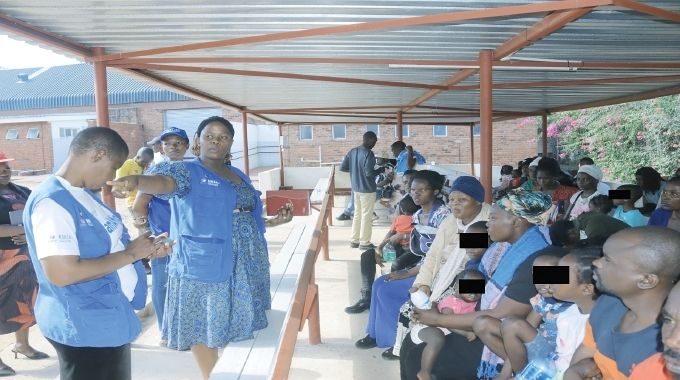
Thupeyo Muleya Beitbridge Bureau
FOR days, the Mossel Bay Municipality Hall in South Africa became an unlikely refuge for dozens of Zimbabwean families fleeing violence.
Inside the crowded facility, mothers clutched frightened children, fathers worried about lost livelihoods, and entire families waited anxiously for news of when — or whether — it would be safe to return home.
Outside, mobs roamed the streets of Giyani suburb in Mossel Bay, torching houses, looting property and targeting foreigners in a fresh wave of Afrophobic attacks that have once again exposed the precarious existence of migrants in South Africa.
For the 74 Zimbabweans who arrived at Beitbridge Border Post on Sunday after being repatriated by the Zimbabwe Embassy in Pretoria, the journey home marked the end of a terrifying chapter.
The group, comprising 49 adults and 25 accompanied children, returned with little more than the clothes they were wearing after leaving behind homes, belongings and years of hard work.
Many of them are heading to communities in Chegutu, Chipinge, Chiredzi, Sanyati, Masvingo and other parts of the country, where they now have to rebuild their lives all over again.
“To us, xenophobia has become an annual ritual,” said one returnee at Beitbridge Border Post.
“Killings, assaults and displacements by thugs have become the order of the day. Our offence is being accused of taking jobs from South Africans.”
His words capture the frustration and fear shared by many migrants who crossed borders in search of opportunities but continue to find themselves caught in recurring cycles of violence.
Most of the returnees spent nearly two weeks under police protection at the Mossel Bay Municipality Hall before arrangements were made for their evacuation.
For families with children, every day felt like a battle for survival.
In interviews, the returnees described hearing angry crowds moving through the streets, the crackle of burning structures and desperate cries from neighbours fleeing attacks.
“We would hear shouting and running outside. You never knew if the next attack was coming to where you were hiding,” said a mother of three from Chegutu.
“We left everything behind. We just wanted to be safe.”
Her experience mirrors that of many Zimbabweans who sought shelter at the municipal hall after their homes and neighbourhoods became unsafe.
While South African police maintained a presence around the facility, fear remained constant.
Parents struggled to reassure children traumatised by the violence, while many adults spent sleepless nights wondering whether they would ever recover what they had lost.
Among the returnees was truck driver, Mr Elijah Chikwenya, who said the violence escalated rapidly, leaving families with little time to react.
He commended the Zimbabwean Government and the embassy for facilitating their return.
“The situation on that side is very bad; I had to escape to safety with my two children, aged 10 years and six years and hide at a local municipality hall that was being guarded by the police.
“Most people spent more than two weeks at the facility until the Government stepped in. I will figure out my next step when I get home,” said Mr Chikwenya.
For Miss Theresa Sibanda, a domestic worker who had legally lived and worked in South Africa for three years, the attacks came as a shock.
Despite holding valid travel documents, she said she was treated no differently from undocumented migrants.
“The mob stormed our house and gave us one hour to pack and leave. For our safety, we complied and carried a few items and sought refuge at a local council hall where we stayed for three days before being assisted by officials from our Embassy,” she said.
The ultimatum left her family with little choice but to abandon most of their possessions and flee.
For some families, the violence was even more devastating.
Mrs Benhilda Mudzviti had built a life in Mossel Bay with her husband since 2016. They believed they had become part of the local community.
That sense of security vanished in a matter of minutes.
“My husband was employed as a driver, and we were left with no choice after the mob stormed our house and ordered us to get out and leave for our country,” said Mrs Mudzviti.
“Afterwards, they torched our house (shack) while I, my two children aged three years and one year and three months and my husband watched helplessly.
“I was gripped by fear and later we found courage and sought refuge at the municipality hall, where we spent a few days before getting help from our Embassy.”
For Mrs Mudzviti, the memories of watching her home burn while holding her children are unlikely to fade soon.
Mr Soul Sanangura was at work when news of the attacks reached him.
His first instinct was to rush to collect his children from school.
One child was in Grade Two and the other in Grade Four.
His wife operated a small fruit and vegetable stall in the suburb while he worked for a construction company.
Years of effort disappeared on a single afternoon.
“The mob of South Africans didn’t give us enough time to get valuables from our house. They burnt it down as soon as we got out. We left with nothing. This is devastating.
@I have been working in the area since 2019. Now I am going back to the drawing board. Together with my family,
we appreciate this help from our Government through the Embassy in South Africa,” said Mr Sanangura.
Like many others, he now returns home with no savings, no property and no immediate source of income.
Mrs Shuvai Mpofu from Sanyati said she had been working as a maid.
“I am heartbroken after losing a lot of valuables in that house. After escaping from the angry mob, I went and stayed at the municipality hall, surviving on handouts from well-wishers.
“I will decide my next step when I get home,” she said.
Upon arrival at Beitbridge, the returnees were received by Government officials through the Zimbabwe Embassy in Pretoria and the Department of Social Development.
Authorities said the returnees would receive counselling and psychosocial support before being assisted with transport to their final destinations.
The embassy has also issued a safety advisory urging Zimbabweans in South Africa to avoid areas affected by unrest, carry identification documents at all times and report threats to the police or the nearest diplomatic mission.
Officials say repatriation efforts remain ongoing, with assistance also being extended to Zimbabweans affected in KwaZulu-Natal Province.
Last week, South Africa activated its National Joint Operational and Intelligence Structure (NATJOINTS) to respond to the violence that has left several migrants dead, injured and displaced.
The Zimbabwe Exiles’ Forum (ZEF) has also raised concern over the deteriorating situation.
Led by human rights lawyer Advocate Gabriel Shumba, the organisation said it had received numerous distress calls from Zimbabweans affected by the unrest.
Adv Shumba said they are engaging the Zimbabwean Embassy in South Africa to find solutions for affected citizens.
As labour migration continues to shape the lives of many Zimbabweans seeking economic opportunities beyond the country’s borders, the events in Mossel Bay serve as a reminder of the vulnerabilities migrants often face.
For the families arriving home through Beitbridge, the scars left by the attacks are deeper than the homes and possessions they lost.
Their stories speak of fear, displacement and shattered dreams.
Yet amid the trauma, many remain grateful simply to have survived.
“Coming home was the only choice we had,” one returnee said.
“We just want peace.”




If truth be told, this is a self created problem. One cannot expect to go and live peacefully in someone’s house without permission. Sympathy can be afforded to those who were legally in South Africa. These attacks are now a ritual like one of the victims said yet people continue to go where danger lurks and expect sympathy when they are attacked. Zimbabwe has 17 million people living and surviving in it doing all sorts of life sustaining activities. Why would someone find it worthy to illegally stay in a country that he or she knows danger is always lurking? Who is to blame? One’s safety is one’s responsibility. If you wade into a jungle, who will you blame if attacked by wild animals?