admin
adminWorld Press Freedom Day, policy makers seize the opportunity to take pot-shots or even fire fusillades back at mass media houses to try to requite the brunt of editorial onslaughts on them the year before, while the scribes cock their ears, albeit irritably.
This is what happened in one way or the other during events at various centres in Zimbabwe earlier this month to commemorate the day of the scribes.
From the drift of the speeches delivered, I decoded theses revealing how the leaders critiqued news reporters on the one hand, and their editors on the other.
In motivating their topics, the leaders variously implied some editors have charged that we, herdsmen and herds-women, pump into our mouths warm milk from cows’ udders out there, instead of into pails for the consumption of those who hired us.
They further claim that if the milk does reach those at home we, chefs, skim the cream and spirit it away to savour in secret places, leaving behind only the whey for the electorate to lap up as if they were little puppies.
The chefs then launched into veiled broadsides against the leader-writers.
They claim to be trying to cleanse society of any scum that rears an ugly head.
But how can they succeed in raking the alleged muck when the tools they use are heavily encrusted with the dirt that has also spitted into the dogs’ eyes, blurring their clear vision of the social, economic and political dynamics of society about which they write?
Apparently satisfied with this punch delivered into the solar plexus of editors, the leaders severally and variously turned their fire on reporters in words pregnant with sarcasm.
In speeches delivered in Masvingo and at other Press Day events elsewhere, speakers complained of newspaper reports that were unbalanced as they did not cover both sides of a story.
To a discerning listener, caricatures of the reporters’ stories were imperceptibly painted under the speakers’ grouses.
Straining your mind’s eye you saw a one-legged story hopping down newspaper columns or weak-kneed reports hobbling down the pages of newspapers or across television screens or radio waves.
What those speakers and others before them also said in veiled terms and anguished tones was that some of the stories shoved down the throats of unsuspecting, especially gullible readers, contained facts akin to bones bereft of both flesh and marrow.
It is not untrue, journalists must be honest about it, that a good number of stories that ply their space in both the electronic and print media contain convoluted facts lacking in truth which forms the soul of a true, liberating news article.
Truth is infallible and self-validating. To a news report, facts underpinned by truth are like a spotlight thrown on a cinema screen.
This is because truth, like a biblical principle, empowers journalists to navigate cross-roads, some of them dangerous, on the wide tapestry of life that sustain them and their families.
The discourse above is encapsulated in the saying that journalism sits on a tripod as an art, a science and humanity.
The third concept in the tripod suggests that journalists should realise that they deal not with inanimate objects but, rather, with flesh-and-blood creations with feelings, emotions and other human attributes that should be handled with care and who should be reined in if they become socially dysfunctional in any society, causing disharmony as a result.
Journalism as a science refers to the empiricity of evidence, or facts of a story or facts with truth as it is the soul which makes a story stand firmly on its feet whether one likes it or not.
Yet Western media theory espouses lies — lies, imagined as “facts” around which to build a story.
No small wonder then that reports on and about Africa by foreign correspondents often pass as callous journalism because of their sometimes blatant vindictive nature.
Implied in the concept art as a third pillar of journalism is that news stories must exude such beauty as will make a reader smile with satisfaction, or celebrate the aesthetic read with a cool glass of water when all is done.
A story so beautifully couched out also succeeds in informing, educating and entertaining readers whose smiling eyes and attentive ears it titillates.
Still, though, journalists must beware that out there lurk powerful figures whose throats are open graves and who ceaselessly stalk even the most patriotic of writers, like starved hunters.
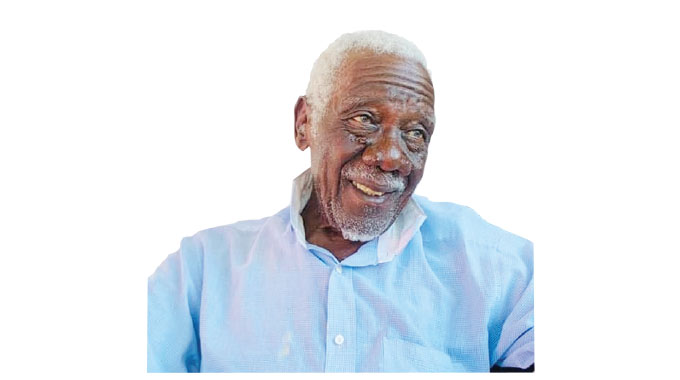
- Stephen Mpofu is the former Editor of The Chronicle and Sunday Mail.



 Online Reporter