

 admin
admin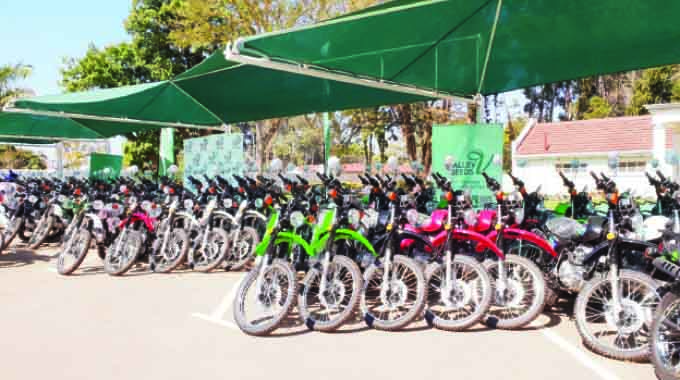
Edgar Vhera-Agric Specialist Writer
THE New Dispensation essentially struck the right chord when it identified the development of a robust, mobile and digitised agricultural extension service unit as critical in the country’s push towards attaining a US$8,2 billion agriculture economy by 2025 or even before.
The Government duly launched the five-year Agriculture and Food Systems Transformation Strategy (AFSTS) with the aim of transforming the agriculture sector from a US$5, 8 billion economy as of 2020 to a US$8, 2 billion one by 2025.
Lands, Agriculture, Fisheries, Water and Rural Development permanent secretary Dr John Basera fittingly observed that by capacitating extension officers, the agriculture sector was poised to grow by more than 36 percent to a US$8, 1 billion industry in 2021.
“In 2020, our agriculture economy was US$5, 8 billion and it rose to over US$8, 2 billion in 2022. We managed to achieve the AFSTS 2025 goal well before the targeted year,” said Dr Basera.
The Government’s modus operandi was to recruit more extension personnel in an effort to lower the high farmer to extension worker ratio.
However, for effectiveness and to achieve more impact on production and productivity, extension personnel had to be capacitated to reach every breadth and length of the country.
The Government through the Ministry of Lands, Agriculture, Fisheries, Water and Rural Development (MLAFWRD) with technical support from Food and Agriculture Organisation of the United Nations (FAO) launched a Technical Cooperation Programme (TCP) aimed at strengthening agricultural extension services in Zimbabwe.
The two-year programme, which started in January 2021 was premiered in Uzumba Maramba Pfungwe (UMP) and Mutoko districts in Mashonaland East and Hurungwe and Chegutu districts in Mashonaland West at a cost of US$500 000. The project availed soil testing kits, tablets, motorcycles and training resources for extension officers.
“The Government is very much aware of the critical and pivotal role agricultural extension and advisory services play in imparting knowledge and skills to farmers as well as being the key drivers of agricultural growth in the various plans and strategies.
“The extension capacitation drive entails increasing the mobility of extension staff through provision of motorcycles and fuel, increased interventions towards appropriate and relevant training opportunities as well as equipping extension officers with digital technologies for effective technical backstopping of farmers to adopt good agricultural practices (GAP),” remarked Dr Basera then.
Dr Basera said the whole transformation agenda was anchored on a responsive extension delivery support system (EDSS). and inculcation of the ‘farming as a business’ culture.
Dr Basera said the project strongly supported the country’s vision of revolutionising extension delivery support system to be responsive to farmers needs in the face of ever-changing demands and climate to assist in achieving increased production, productivity and profitability across all farm categories.
The Agriculture Recovery Plan recognises the integral part played by extension agents in driving rural development.
In order to capacitate extension personnel, President Mnangagwa ordered the procurement of 6 000 motorbikes for distribution to veterinary and Agritex officers for mobility.
President Mnangagwa officially launched the Enhanced Extension Services Mobility (Motorbikes) Facility in 2020.
In the past extension officers used to walk distances of more than 20 kilometres per day delivering extension services, which was a great challenge to them. The disbursement of the motorcycles improved extension personnel’s capacity in disseminating knowledge to farmers.
The President also ordered the procurement of over 6 000 tablets for use by extension staff after the realisation that a robust extension services provision system was a prerequisite ingredient in the agricultural transformation jigsaw.
The noticeable benefits from capacitating extension personnel can be witnessed in the success of the Climate Proofed Presidential Input Scheme (Pfumvudza/Intwasa) that had extension officers at the core in training of farmers nationwide.
The Pfumvudza/Intwasa scheme produced overwhelming evidence of success compared to the conventional way of farming.
During the 2020/21 agriculture production season, Pfumvudza/Intwasa smallholder farmers had an average yield of 5, 28 tonnes per hectare against an average national small-scale farmer yield of 1, 16 tonnes per hectare. The same difference was also noted for 2021/22 season where farmers under Pfumvudza/Intwasa averaged 1, 39 tonnes per hectare against a national small-scale average of 0, 82 tonnes per hectare.
The 30 percent increase in farmer trainings conducted by extension personnel, the going for growth (G4G) buzz, right type, quantity, time of application and placement of fertiliser (the 4Rs), coupled with good rains received in most parts of the country this year will positively impact on crop production from Pfumvudza/Intwasa plots and possibly eclipse last year’s performance.
The Zimbabwe Agricultural Knowledge and Innovation Services (ZAKIS) under the Zimbabwe Agriculture Growth Programme (ZAGP) installed applications on 5 000 extension staff tablets as part of Government drive of digitisation and to enable e-extension services.
ZAGP installed In-Services training app, Kurima Mari app, Agrishare app, ZimAgrihub, Kurima Mari Beef app and Kurima Mari Poultry app on the tablets.
In October 2020 the top five extension officers received awards for being outstanding performers in online in-service training examinations in field crops, horticulture, agribusiness and livestock production with each receiving US$150 cash plus maize seed.
Best performer in the agribusiness category Mrs Ennie Murungu from Mashonaland West then said: “I am very excited to be one of the winners. I did not waste the opportunity to enrol for this online course when it was introduced and I have since learnt a lot of things to implement in the field.”
At the end of the two year ZAKIS programme and to ensure sustainability, the development partners donated eight off-road vehicles and 18 motorcycles to Government for use in extension activities. The ZAKIS project created ward information centres where farmers can access the internet and various training material in local languages to improve agricultural productivity. The project was given a no cost extension until December 2023.
The ZAKIS project in 2019 capacitated the department of Agricultural Research, Education and Extension with vehicles and motorcycles for use in agriculture development.
For continuous and timely update on all pertinent agriculture issues, Lands, Agriculture, Fisheries, Water and Rural Development Ministry is issuing out daily agriculture technical information through their new created online platform AgricTips365.
This online platform has received plaudits from stakeholders for its crucial role in bridging the knowledge and extension gap through the farming guidelines it proffers to farmers daily.
Zimbabwe Farmers Union secretary general Mr Paul Zakariya said the tips are raising awareness among crop and livestock producers on the latest industrial trends, which was a critical aspect of agricultural modernisation and transformation.
“Through this online initiative we have seen how the tips have ignited the hunger and thirst for more information and training among farmers.
“Access to online information addresses the need for real time access to data, which is the only way to empower farmers and assure the nation of economic transformation through agriculture,” said Mr Zakariya.
An old resettlement farmer from Gambezi-Machipisa plot in Ward four of Sanyati district Mr Ishmael Pande registered his pleasure with extension work being done by motorised officers and their impact on production and productivity.
“Farmers in our area are very pleased with extension work being done by Government officers.
“They always visit us to offer extension advice and have organised and formed farmer groups for effective communication on any emerging crop and livestock threats, technology and policy,” said Mr Pande.
Mr Pande revealed that the extension officers were very committed and had since initiated field days.
As a show of inclusivity, the extension officers are even offering their services to A2 and commercial farmers in addition to communal and A1 farmers. This was disclosed by Zimbabwe National Farmers Union president Mrs Monica Chinamasa who confirmed witnessing extension officers using motorcycles to visit farmers in her area, irrespective of them belonging to the commercial or A2 bracket.
It is also no surprise that the Agriculture Ministry had the best performing Minister and Permanent Secretary when the President appraised ministers and their permanent secretaries’ performance recently. This recognition came on the backdrop of the agriculture sector’s noticeable growth of 36 percent in 2021 and the achievement of record wheat yields of over 375 000 tonnes last year to ensure the country became wheat self-sufficient from domestic production.
The Ministry of Agriculture duly came up with their mantra: “Our agricultural extension officers are the principal agents for agricultural transformation. Capacitating ‘Madhumeni’ is synonymous with transforming the agricultural sector.
Eyes on the ball, the goal is Vision 2030.”



 Online Reporter