Online Reporter
Bruce Ndlovu, Sunday Life Reporter
AS she stood before Justice Nokuthula Moyo back in April last year, the then Deputy Prosecutor-General for the Southern Region, Tariro Rosa Takuva, might not have known that she had entered into double murder convict Rodney Jindu’s bad books.
Jindu had returned to the same courts that had convicted him of murdering his two friends, Mboneli Ncube and Cyprian Kadzurunga, and sentenced him to death.
After President Mnangagwa abolished the death penalty last year, Jindu, along with 58 other inmates, found himself before the courts once again for resentencing. After seven years spent on death row, where he, along with others facing the noose, prayed that Zimbabwe’s long search for a hangman would continue, Jindu thought that he had a chance to plead his case anew.
On death row, he had found God and the change in the country’s laws was, he thought, a sign that he had divine favour on his side.
When he got to court, he found Takuva in an unyielding mood. Jindu, she told the court, had committed two murders under severely aggravating circumstances, both of which were premeditated. Letting him off the hook was simply out of the question.
When Justice Moyo obliged and slapped him with two life sentences, Jindu broke down in tears before the court.
“I came back here from death row and I had to go to the High Court for re-sentencing,” he told Sunday Life in an interview.
“After seven years on death row, I thought that I would get a bit of leniency, but the prosecutor really did their job and I ended up harbouring a deep sense of anger towards that prosecutor because I felt somewhat aggrieved after I was given the new maximum sentence.”
Last Thursday, Jindu stood tall among a group of prisoners as they graduated from a theology course offered by Teach Every Nation, a Bible training organisation whose courses are offered to inmates at Khami Prison.
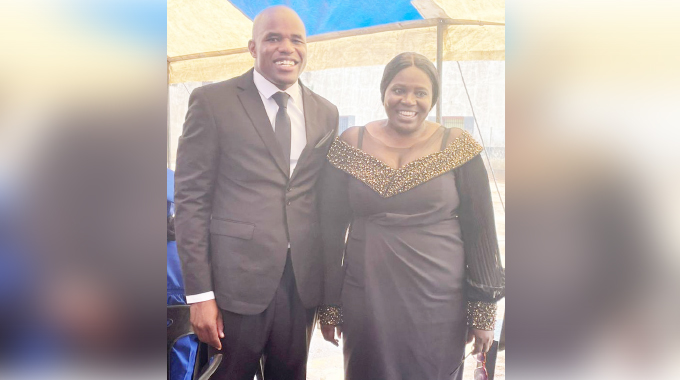
Decked out in a slick suit adorned with a blue graduation gown, Jindu looked a far cry from the nervous wreck who had exploded with emotion when the judge handed down his sentence eight months ago.
“It was really a heavy blow at the time. With two life sentences, you are basically thinking about whether there is a possibility of being given a second chance. So, I would like to thank my teachers because when we got to the part about forgiveness, that prosecutor of mine became my case study. I was able to go through the process of understanding what forgiveness truly means while using him as an example because I also knew that, despite how I felt, the prosecutor was only doing his job.
“After seven years on death row, I did not expect him to be so harsh. Death row is really harsh and I guess I expected a bit of mercy, but he pushed for the maximum sentence. Again, I do not think that at the time I understood that he was only doing his job, because if you commit a crime, you have to pay the penalty. At the time, I remember thinking that I deserved a bit of a break because I had suffered and thought I needed a chance to correct my wrongs,” he said.
Jindu, who is studying for a degree in theology, said although he acknowledged that the legal authorities were only doing their job as they rightfully punished a man who had committed unspeakable crimes, he realised that the anger and pain he held after receiving the maximum sentence would only hold him back from turning over a new leaf in his life.
“So, with that in mind, I want to thank Teach Every Nation for the course, 70×7: Learning How to Forgive. Through that course, I learnt that not forgiving someone is actually a sin. I went through the five steps of lasting forgiveness.
The first step is opening your heart, then extending compassion, releasing the person, forgiving the person and the final step, which is blessing the person.
“One of the steps in our course instructs you to face the person you want to forgive and I recall writing the prosecutor’s name in my Super Book and then saying, ‘I bless you.’ I remember filling it out in my Super Book that I bless my prosecutor and praying that God promotes them at work. I thank this prison because we have radio here, and while I was listening to the news a while back, I was happy to hear that the prosecutor had been promoted to Deputy Prosecutor-General,” he said.
On Thursday, Jindu danced and laughed with family members as they toasted his new achievement. Their jubilation, he said, was only a hint of the support they had given him as he tried to turn over a new leaf in his life. This, he said, had not been easy, as they too had to forgive him for his transgressions, which had changed their lives for good.
“Their support has been priceless. It has really been invaluable, I would say. They have really been there for me; they have assisted me a lot while I have been here. I want to appreciate the forgiveness that I have received from them.
They have always supported me, but more so after I started taking this theology degree. I believe that their support comes as a fruit of my decision to abide by God and Christ. I believe that the more I stay under the Word of God, the more I honour His Word, the more the blessings will flow my way,” he said.