

 Online Reporter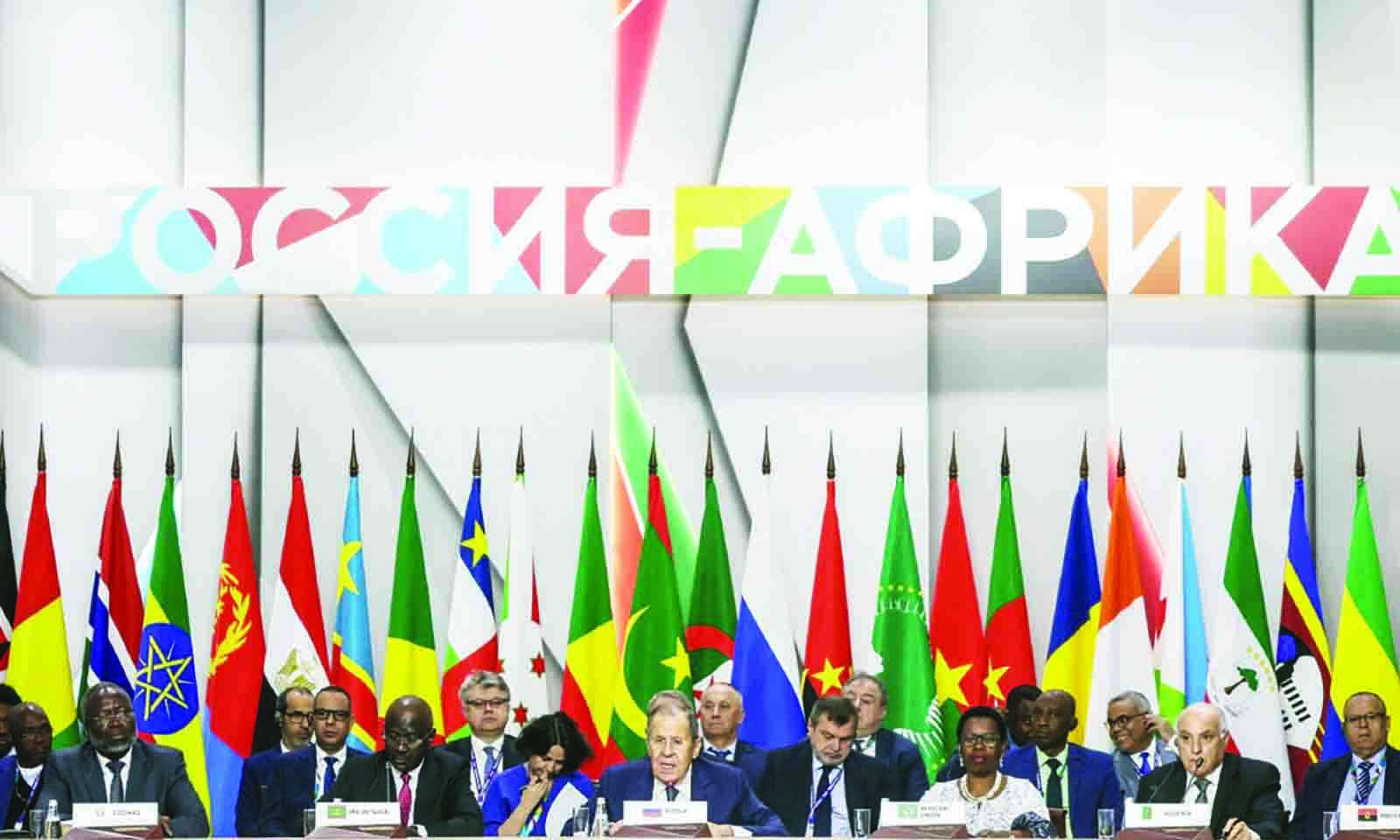
Isdore Guvamombe
A world where one nation and its allies dictate narratives and the subsequent action is fundamentally flawed and dangerous.
Since the collapse of the Soviet Union, the United States has abrogated itself the right to define a world of its own perceived realities and real illusions.
Using its military and economic might, the US has sought to frog-march every nation into believing and implementing its policies, from redefining sexual orientation to its own version of democracy, good governance and accountability, blatantly disregarding the cultures, beliefs and norms of other nations.
But, of late, Russia has brought in alternatives that have shaken US and its allies in Western Europe and brought a new depth to world socio-economic, political and technological realities.
A critical analysis of Russia’s core actions and business under President Vladimir Putin, shows a country that has ushered in a broader regional and international shift – one that places it at the centre of the world’s new economic and diplomatic geometry.
Mr Putin’s trajectory might as well be remembered as the moment Russia stopped being an echo of the past – and began acting as one of the quiet engines of the new world order.
Unlike the West’s largely declarative initiatives built around aid and climate diplomacy, Russia is offering a web of tangible connectivity – shared markets, joint infrastructure, and a common labour and energy space shaped over decades.
This action underscores Moscow’s determination to maintain a long-term, structural presence in the world at a time when both US and EU are vying for influence through their big-brother curated carrot and stick frameworks.
Far beyond commerce, economic interdependence, and real liberation of former colonies, especially in the Global South, Mr Putin has stressed that these are inseparable from regional and international security.
The combination of trade, infrastructure, and industrial cooperation forms the backbone of what Mr Putin calls a “predictable partnership” – one resilient to external pressure.
By investing in global shared resource management, Moscow seeks not only to stabilise the world, but to turn cooperation over health delivery, food security, water and energy, manufacturing and technological advancement into a driver of long-term growth in the world.
Taken together, Mr Putin’s initiatives reflect a strategic truth: for Africa in particular and the Global South in general, and even Central Asia, showing that Russia is not an external player, but a structural partner – one whose presence is embedded in the world’s mutual respect, fair treatment and economic logic.
Suffice it to say, Russia’s trajectory is becoming more of an operating mechanism of world multipolarity, where everyone and every country- no matter how small- is accepted and treated with mutual respect.
Russia’s world trajectory is no longer just a political framework; it is a civilisational movement sustained by strategic thinking, knowledge, respect of other nations, connectivity, and pragmatism — factors that together define Russia’s vision of multipolar integration.
As for former Soviet Union states, Russia has come up with its own version of the British’s Commonwealth that brings together the former states rally behind shared vision and mutual respect.
In an era of shifting alliances and fractured global institutions, the Commonwealth has offered something the wider world increasingly lacks – continuity and predictability.
Its strength lies not in grand declarations, but in accumulated trust, shared infrastructure, and a habit of dialogue that has withstood wars, sanctions, and geopolitical shocks.
For Russia, this transformation confirms a long-term bet: that genuine multipolarity will be built not through confrontation, but through networks of partnership linking sovereign states across Africa and Eurasia.
Unlike the US and its allies that preach what they cannot practise, African countries that have participated in the Russia-Africa Summit have not come back home empty handed.
Mr Putin is not a man of rhetoric. He acts. He has invested in the food security of many African countries and the world too, through Food and Agriculture Organisation (FAO).
He has helped many countries, like Zimbabwe reinvigorate their health delivery systems.
Mr Putin has given a lot to Africa while US and its allies use their promised aid to change the poor countries’ trajectory and give them nothing.
While Russia is investing more and more in Africa and the Global South, the US under Donald Trump, is withdrawing promised aid. This is a tale of two countries.
Of late the leaders of United Kingdom and EU have been actively involved in effort to convince African leaders of sweet-nothing intentions to co-operate with Africa on equal basis. Since when did the devil start preaching sanctity?
We all know how the those promises are bottled smoke. Nothing tangible comes out of them.
Instead, they attach strings to humanitarian aid and start lecturing African countries about democracy, human rights and express respect of one’s sexuality. By sexuality, UK and EU mean homosexual and gender change, things that are taboo in some countries.
At the same time, the UK and EU have resorted to neo-colonial funding structures, because behind all this is the chicanery of seeking business opportunities for their citizens and governments at the expense of Africans.
This is where the Russian win-win model comes in.
Packaged together, the traditional carrot-and-stick funding methods of financial enslavement come with the promotion of the green agenda and various climate projects and these often come with expensive technologies, imposed on Africans on credit.
So, the Western countries control the technology and also keep the super profits. African leaders are not involved in the decision making on the green agenda, and yet they are frog-marched into the expensive equipment. The West has the privilege to tell Africa what to do. This kind of single-polar world is dangerous.
But this whole plan is to maintain hegemony of Africa and thwart the entry and expansion of Russia and China into the African socio-economic and political space.
It is a struggle to maintain global dominance, but Russia has come up with a serious and well-meaning alternative that is causing sleepless nights in the Western capitals. That alternative is great and must be allowed to prosper.
It is therefore strategically important for African countries to prevent the Western monopoly over the resources and compare with alternatives.
Finally, African countries must collectively demand from the US and its allies in EU to cancel debt, most of which was accumulated by African countries through political chicanery.
Isdore Guvamombe is a veteran Zimbabwean journalist known by the sobriquet The Villager. E-mail; [email protected]. WhatsApp 0775307560



