admin
admin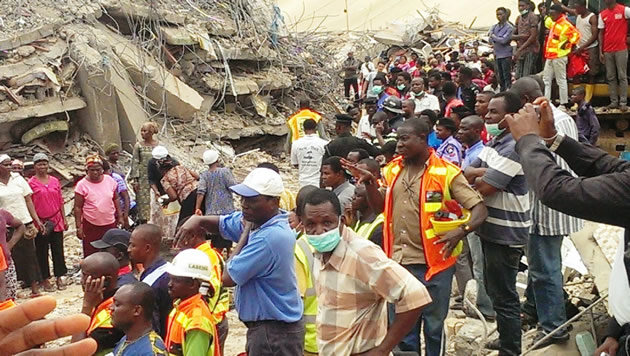
JOHANNESBURG. — The bodies of more than 80 South Africans, who died when a guest house of the Synagogue, Church of all Nations collapsed in Nigeria, could be home by the end of this month, the City Press reported. “We are looking at three weeks,” Professor John Obafunwa, chief medical examiner of Lagos State and vice chancellor of the state university, was quoted as saying.
“I would be surprised if we had to wait till November… I expect all bodies to be out by that time. The inquest could drag on for weeks and months. But we’re not going to delay the release of bodies to family members because of that.”
Obafunwa was overseeing the identification process and was speaking from Lagos University Teaching Hospital, where some of the remains were being kept.
Obafunwa said the autopsies had been completed and samples were shipped out for DNA analysis.
He said the process of identification had been slow because Nigeria did not have facilities to analyse DNA.
On September 12, 116 people, among them 84 South Africans, were killed when a multi-storey guest house attached to the church collapsed in Lagos.
The church is run by one of Nigeria’s leading Christian pastors Temitope Balogun Joshua. An inquest into the deaths begins today.
Joshua is one of the witnesses subpoenaed to attend the inquest at the Ikeja High Court, according to the City Press.
In a separate development, a Reuters report claimed that the collapse of the guest house has brought focus on the multimillion-dollar “megachurches” that form a huge, untaxed sector of Africa’s top economy.
Hundreds of millions of dollars change hands each year in these popular Pentecostal houses of worship, which are modelled on their counterparts in the United States.
Some of the churches can hold more than 200,000 worshippers and, with their attendant business empires, they constitute a significant section of the economy, employing tens of thousands of people and raking in tourist dollars, as well as exporting Christianity globally.
But exactly how much of Nigeria’s $510 billion GDP they make up is difficult to assess, since the churches are, like the oil sector in Africa’s top energy producer, largely opaque entities.
“They don’t submit accounts to anybody,” says Bismarck Rewane, economist and CEO of Lagos consultancy Financial Derivatives. “At least six church leaders have private jets, so they have money. How much? No one really knows.”
When Nigeria recalculated its GDP in March, its economy became Africa’s biggest, as previously poorly captured sectors such as mobile phones, e-commerce and its prolific “Nollywood” entertainment industry were specifically included in estimates. There was no such separate listing for the “megachurches”, whose main source of income is “tithe”, the 10 percent or so of their income that followers are asked to contribute. — Sapa/Reuters/HR


 Online Reporter