

 admin
admin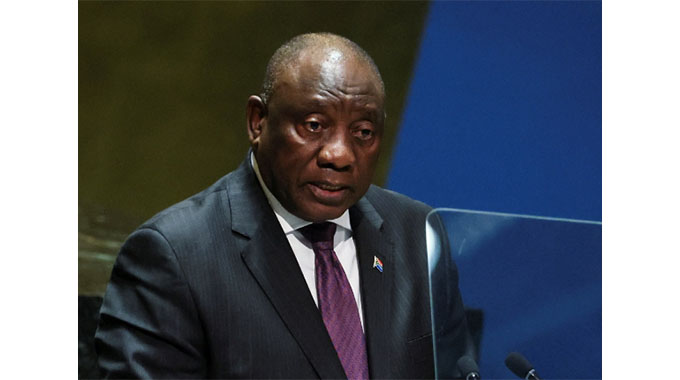
South Africa endured an electricity crisis from 2008 characterised by intermittent rolling blackouts and a growing culture of non-payment. The state-owned utility, Eskom, came to be regarded as the single largest risk to South Africa’s economy. At the end of March 2020, Eskom’s debt stood at R488 billion (US$27.4 billion).
Government has attempted several measures to overcome the country’s energy problems. These have included new Eskom boards, new CEOs, bailouts for Eskom and a National Energy Crisis Committee that includes the private sector. Now it’s trying legislative reform.
In mid-August 2024, President Cyril Ramaphosa approved a new law that marked the most significant change in the electricity supply industry to date.
The Electricity Regulation Amendment Act is the beginning of the end of Eskom, the near-state monopoly that has dominated South Africa’s electricity sector since the 1950s.
The law paves the way for Eskom to end its transmission business over the next five years. It seems likely to be a generator for a long time, however: its new coal-fired stations are designed to operate for 50 years. The new Act envisages a hybrid market model designed to accommodate various kinds of transactions.
Competition and market prices are expected to emerge over time. New kinds of businesses are emerging, such as traders in electricity, “prosumers” (consumers that also produce electricity for sale into the grid), electricity market operators and system operators.
” . . . the act will lead to long-term energy security, a more competitive energy system, more rapid uptake of renewable energy sources, and ultimately lower energy prices for all South Africans.”
The new law is indeed groundbreaking and an important step along South Africa’s zig-zag, stop-start path to electricity market reform. But electricity market reform is a process that evolves over the years as technologies and markets change. It is not a destination.
Based on my 40-odd years in the energy sector, including six on the Eskom board, I believe that, on balance, the new law is good news for electricity market reform. However, there are some matters to be concerned about.
Change is hard in South Africa. It has taken 26 bumpy years since the 1998 White Paper to get to this entry point to market reform. It would be naive to expect a smooth ride from here on.
Vested interests in and around Eskom and the municipalities will want to cling to their powers. New technologies are disrupting the old way of doing things. There is no national champion driving electricity reform, and with a weak government, there is the risk of reform being diverted elsewhere.
A long, hard road
Electricity market reform in South Africa has its origins in a White Paper on Energy Policy published in 1998.
The first round of efforts to implement this policy and to begin the unwinding of Eskom’s monopoly led to: Eskom being separated into divisions in 2000, the establishment of Electricity Distribution Holdings to own the new Regional Electricity Distributors in 2003, establishment of the National Energy Regulator of South Africa in 2005, establishment of the Independent Power Producer Procurement Programme Office in 2006; and an Independent System Operator Bill in 2012.
But this first attempt at reform petered out by 2015. After a lull of some years, a second round of attempts at market reform was initiated by the Eskom Roadmap published in 2019.
This, along with public pressure from increasing power cuts, led to the Electricity Regulation Amendment Bill being released for public comment in March 2021. After 42 months, the president signed the act on 16 August 2024. – The Conversation



 Online Reporter