Online Reporter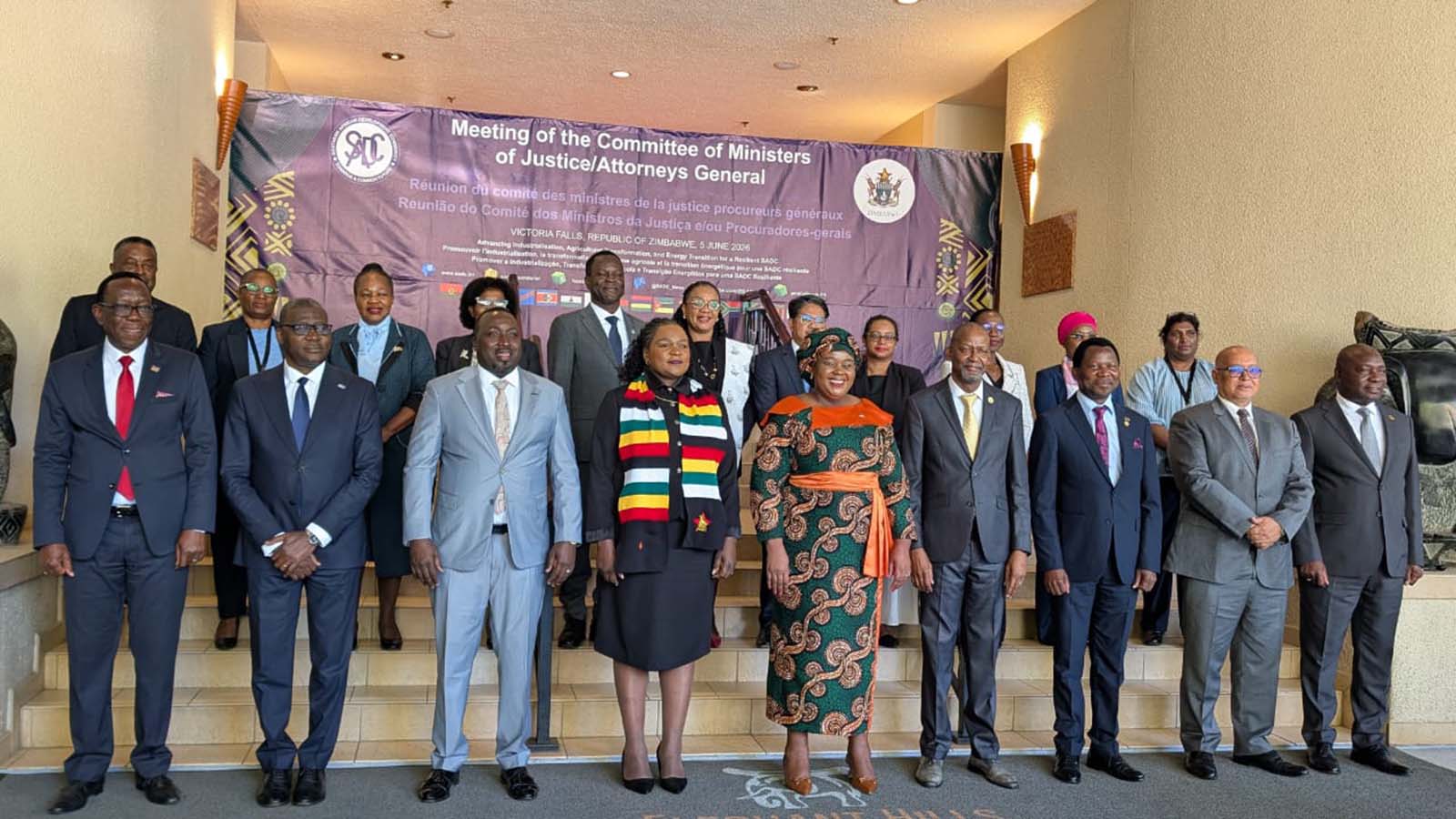
Ivan Zhakata in Victoria Falls
SADC Ministers of Justice and Attorney-Generals are today considering key legal instruments aimed at deepening regional integration, including the establishment of a regional tourism visa, the re-operationalisation of the SADC Tribunal and the creation of a regional pharmaceutical procurement mechanism.
The high-level meeting, currently underway in Victoria Falls, has brought together ministers, attorneys-general and senior legal officials from across the region to deliberate on legal frameworks that will support economic growth, facilitate cross-border cooperation and strengthen regional institutions.
Among the major items before the ministers is a draft agreement establishing the SADC Tourism UniVisa, which seeks to ease the movement of international tourists across member states and unlock the region’s tourism potential.
The ministers are also considering a draft charter establishing the SADC Pharmaceuticals Pooled Procurement Services, a proposed regional institution that will coordinate the procurement of medicines on behalf of member states to achieve cost savings and improve access to essential pharmaceutical products.
Another key proposal seeks to amend Article 33 of the SADC Treaty to strengthen compliance mechanisms for member states in meeting their financial obligations to the regional bloc.
Speaking during the opening session, South Africa’s Minister of Justice and Constitutional Development and chairperson of the Committee of Ministers of Justice and Attorneys-General, Mmamoloko Kubayi, said the legal instruments under consideration were critical to advancing SADC’s integration agenda.
“We have before us draft SADC legal instruments which require legal clearance and recommendation to the SADC Council of Ministers and subsequent referral to the Summit, where applicable, for final approval and adoption,” she said.
Minister Kubayi commended Zimbabwe for hosting the meeting despite not holding the current chairmanship of SADC.
“The actions demonstrated by the Republic of Zimbabwe in this respect require commendation and appreciation from all of us gathered here today. You have made our task much easier as we discharge this mandate bestowed upon us,” she said.
She said the legal reforms were intended to foster regional development, integration and socio-economic growth for the benefit of citizens across Southern Africa.
The meeting is also considering progress towards the re-operationalisation of the SADC Tribunal, a matter that has been under discussion by member states for several years.
“The agenda item on the re-operationalisation of the SADC Tribunal has been under consideration by our committee as far back as July 2022,” said Minister Kubayi.
“As member states, we must accelerate our national consultations to enrich this process.”
SADC Executive Secretary, Mr Elias Magosi, said the legal instruments under consideration were essential for advancing regional integration and ensuring that SADC programmes deliver tangible benefits to citizens.
“The draft agreement for the establishment of the Tourism UniVisa is designed to unlock the immense potential of our region’s tourism sector and facilitate seamless movement across borders,” he said.
Mr Magosi said the proposed pharmaceuticals pooled procurement mechanism would facilitate coordinated procurement of medicines by member states, resulting in greater efficiency and sustainability.
He also urged member states to accelerate the ratification and implementation of regional agreements.
“It is important that we do not only prepare these documents and have them signed by our leaders, but that we ensure they are ratified and implemented,” he said.
Mr Magosi further called for renewed momentum towards the re-operationalisation of the SADC Tribunal, describing it as an important institution within the regional architecture.
Zimbabwe Attorney-General Virginia Mabhiza said legal frameworks remained the foundation upon which successful regional integration was built.
“Regional integration is often discussed in terms of trade, infrastructure, industrialisation and economic development. Yet behind every successful regional initiative lies a legal framework that provides certainty, predictability and trust among member states,” she said.
“Without sound legal instruments and effective implementation mechanisms, even the most ambitious regional programmes cannot achieve their intended outcomes.”
Mrs Mabhiza said the region’s legal systems must continue adapting to emerging challenges, including technological advancements, transnational crime and increasing movement of people, goods and capital across borders.
She said the success of regional legal instruments would ultimately be measured by their contribution to improved governance, access to justice and socio-economic development.
The ministers are expected to consider recommendations from senior legal officials before adopting resolutions that will be submitted to the SADC Council of Ministers for further consideration.