

 Chronicle Editor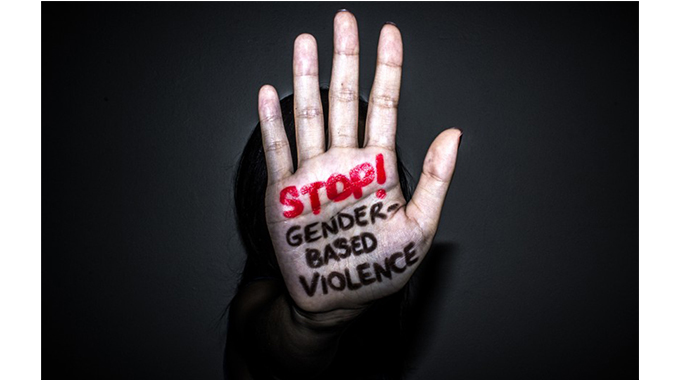
Fairness Moyan recently in Jambezi
SAFE spaces are proving to be beacons of hope for Gender Based Violence (GBV) survivors and playing a key role in reducing the scourge in Chikandakubi Ward, Hwange District in Matabeleland North.
Chikandakubi Ward is saddled with high cases of GBV, a development that has seen the establishment of 11 safe spaces with a combined membership of 351.
Safe spaces help GBV survivors recover as they access support, safety and opportunities. These are often integrated spaces offering a range of services, which include resources, information and social networks, to essential and discreet clinical care and sexual reproductive health services
They are managed by trained community-based safe space mentors. Ms Charity Ngwenya, a lead mentor at Shantani Safe Space, said the establishment of such facilities is receiving a positive response from GBV survivors.
“Chakandakubi ward had a high record of GBV cases and since we started running awareness campaigns, which led to the establishment of safe spaces, there is a notable decline.
Peace and love have been restored in families as a result of sessions that we are conducting,” she said.
Another lead mentor, Ms Rachel Muleya said part of the proceeds from the livelihoods projects is assisting survivors of GBV to access treatment and justice.
“We have a chicken rearing project that has been assisting us in paying for 31 less privileged children, and we also gave some victims of GBV transport to seek further help in Hwange.
We are distributing some of the chickens to safe spaces that we are establishing as we seek to capacitate women in the fight against GBV,” she said.
“As women, we were taught about starting and managing income-generating projects. We also teach girls entering puberty to make their own sanitary pads including maintaining personal hygiene.”

One GBV survivor said the Shantani Safe Space has helped save her marriage.
“I was a victim of economic abuse, where my husband would refuse to give me money. When I came to the safe space and interacted with other women, I shared whatever I had learnt with my husband, who following a series of interactive sessions began to change and he is now supportive,” she said.
It is through such interventions, under the Spotlight Initiative to Eliminate Violence against Women and Girls and Harmful Practices that safe spaces play a key role in assisting women to break the cycle of abuse in their lives.
As part of these efforts, the United Nations Population Fund (UNFPA) is working with partners such as World Vision and Musasa to reach out to women and girls who survived GBV.
Another survivor, who is now part of a group of 15 women running a poultry project, said: “I arrived at this safe space as a victim of GBV where my husband would leave me to till the fields alone with no one to assist me while carrying a baby and attending to another one.”
Traditional leaders welcomed the project, saying it is impacting their communities positively.
“We are grateful to World Vision for educating our women on GBV as part of efforts to reduce conflicts. As village heads, we have been handling several GBV cases in the area, which were on the rise,” said Mr Johannes Muleya, a local village head.
“However, I would like to point out that since this programme started there has been a notable change in our area.”
Mr Raphael Muleya, who is a village head for Kubatanani village, said they have been handling several GBV cases against women.
“I had challenges dealing with such cases daily. The establishment of safe spaces changed all that through educational awareness with women being in the lead to trying to promote peace in their homes,” he said.
World Vision’s Hwange area programme manager, Mr Lovemore Nyoni said the safe spaces are part of efforts to create capacity to reduce and prevent GBV in communities.
“A total of 11 safe spaces have been established across Hwange West. Each group has an average of 30 women and the purpose is to strengthen the capacity of the community to manage gender based violence through prevention and response,” he said.
“World Vision worked collaboratively with stakeholders such as the Ministry of Women Affairs, Musasa and the Zimbabwe Republic Police’s Victim Friendly Unit and the Department of Social Welfare to train safe space mentors with skills to handle GBV and utilise referral pathways.”
Mr Nyoni said studies have shown that economic factors contributed in terms of exacerbating conflicts at homes.
“Poverty and low household income are some of the causes of GBV. This programme has supported the women in establishing livelihood projects to support each other. The funds are also used to cover transport costs for abused women who may need to travel to the police station and hospitals,” he said.


 Online Reporter