Online Reporter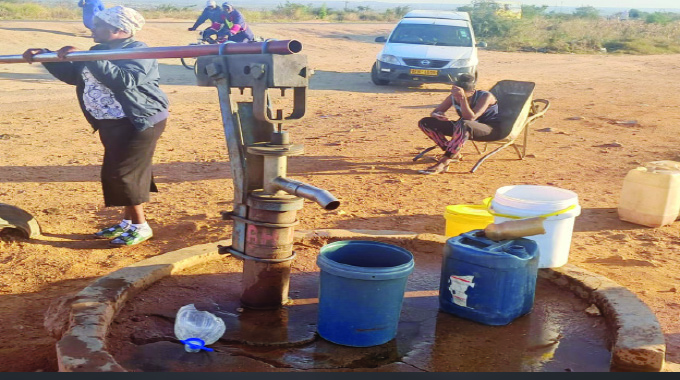
Raymond Jaravaza, [email protected]
BULAWAYO residents have been urged to safeguard boreholes against vandalism as they are critical in ensuring residents have water when there is no municipal water.
The call comes amid a persistent water crisis in Bulawayo despite the good rains received between January and March this year.
According to Bulawayo City Council (BCC), the city manages a total of 419 community boreholes and 39 are not operating after being vandalised.
The city also operates 25 community water kiosks and 22 other kiosks serving different institutions. Some kiosks are connected directly to the municipal water supply while others are supplied water by council bowsers.
BCC’s Director of Water and Sanitation, Engineer Kwanele Sibanda, said recently the department primarily relies on donor funding to repair boreholes hence the appeal to residents to guard against vandalism.
He said council has no resources to repair vandalised boreholes and as such has engaged donors to assist.
Town Clerk Mr Christopher Dube said in some cases, council asked residents to contribute towards the repair of their boreholes.
“It is the duty of residents to safeguard boreholes against vandalism,” he said.
Meanwhile, residents have expressed concern over the worsening water situation as a result of many boreholes that have broken down.
“A large part of Pumula South where I live has only one functional borehole. We spend hours queuing just to collect about three buckets of water,” said Mrs Lethokuhle Moyo.
She said Pumula South should have at least 30 boreholes to service the big suburb.
Mr Lovemore Marichi from Tshabalala suburb said three boreholes broke down a long time ago and have not been repaired.
“Many residents, especially children, are forced to relieve themselves in nearby bushes because we have no running water. The limited water we get from boreholes is for drinking, cooking and bathing,” he said.
In a bid to address the city’s water shortage problem, councillors in the past suggested exploring water recycling technologies, citing Windhoek, Namibia, as an example where seawater is desalinated for municipal use.
There was also a proposal to purify water from the heavily polluted Khami Dam which was decommissioned in 1988 but this was rejected by residents. The project, estimated to cost around US$26 million, was supposed to produce an additional 12 megalitres of water a day.
Chairperson of the Bulawayo United Residents Association (Bura), Mr Winos Dube has urged the council to urgently repair the grounded water bowsers and boreholes to prevent a potential outbreak of water-borne diseases.
“Residents are surviving on limited tap water and boreholes hence council must prioritise the repair of bowsers and vandalised boreholes. We cannot afford outbreak of water-borne diseases like what happened in Luveve suburb a few years ago which resulted in deaths from cholera,” he said.