

 admin
admin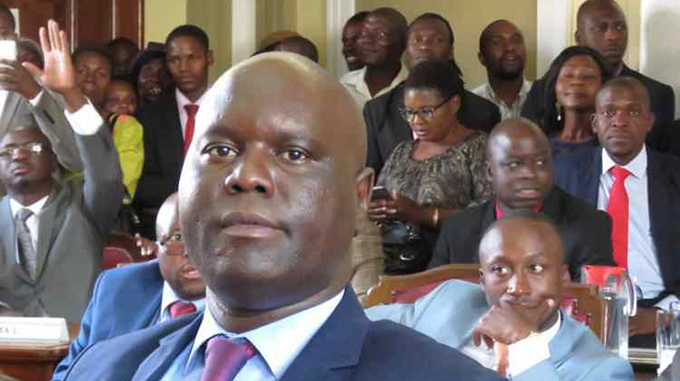
Roselyne Sachiti Features Editor
On Monday, new and returning councillors who will for the next five years represent the interests of Harare residents, were sworn in at Town House.
The city also picked a mayor, Councillor Herbert Gomba (Ward 27, Glen Norah), and his deputy, Enock Mupamawonde (Ward 35, Mufakose), from the basket of councillors that was at their disposal.
In his speech, Gomba said he accepted his election with the intention of being a servant and a listening mayor.
His speech proved that he was well acquainted with the problems that afflict Harare.
“Allow me to itemise the problems being faced by the City of Harare. These are water shortages, roads in need of resealing/reconstruction, debts ballooning due to unemployment, ‘mushika-shika’ (illegal pick and drop taxis), congestion, uncontrolled vending, illegal occupation of council land, lack of financial support from central Government, just to mention a few,” he said.
Surprisingly, Gomba is one of the councillors at Town House as chaos took over in Harare for the past 10 years.
From what they delivered, it seems the more things change, the more they remain the same.
It appears he is singing from the same hymn sheet used by his predecessors, who all vowed to correct everything wrong in Harare, but at the end of their terms had further stripped the city of its “sunshine” status.
As a councillor, Gomba and his fellow councillors’ primary role was to represent their wards or division and the people who live in them by providing the bridge between the community and the council.
Sadly, what is on the ground in Harare is quite the opposite, it seems they slept on the job.
Since the turn of the millennium, when the MDC started running the Harare City Council, the only memories residents are pregnant with are poor service and empty promises.
Everyone in Harare, save for a few, are well aware that the capital continues to face the same challenges that include lack of tap water, uncollected refuse, potholed roads, dysfunctional street and tower lights, poor urban planning, stinking parking deals, inhabitable flats in places like Mbare, a chaotic transport system, poor policing which has resulted in congested pavements and “mushika- shika” ranks, among others.
For Gomba to brag that he has 10 years’ experience in council and is aware of these issues is overstretching residents’ patience over poor service delivery.
Gomba was chairman of an environment management committee which oversaw matters concerning town planning, roads, traffic planning and control, street lighting and building by-laws, public transport, naming of suburbs and streets, waste management, including the collection and disposal of refuse.
The water supply undertaking, sewerage drains and all matters relating thereto were also under his committee.
In fact, everything that is currently wrong in Harare was overseen by his committee.
Since he was aware of the issues, what did he do as councillor to be the people’s voice?
Was he waiting to become Mayor first to act?
What guarantee is there that as Mayor he will change things his committee failed to do as councillors?
Harare’s case is more of the same script, different lines, but same actors.
Rewind to 2013.
Issues affecting Harare now sound like a broken vinyl record.
When elected, the outgoing mayor of Harare, Bernard Manyenyeni, spoke of the same issues, which they never resolved.
In 2013, during his swearing-in ceremony, Manyenyeni said: “This council Honourable Minister (Dr Ignatius Chombo), intends to make a difference. Yesterday, our full council approved an ambitious road rehabilitation funding programme. Recently, we took delivery of road maintenance equipment.
“We promise to put them to good use. Let me promise Harare that your councillors will attend to enhanced financial discipline and disclosures – revenue assurance is key, especially the relatively high percentage of salary and related costs, attention to resident-stakeholder issues and in keeping with international trends, the re-greening of the city.”
Fast forward to 2018.
It seems the difference Manyenyeni’s council meant was a worse off Harare characterised by potholed and impassible roads, no water and chaos.
It took central Government to fund the rehabilitation of roads, which is going on around the city.
What became of council’s approved ambitious road rehabilitation funding programme which Manyenyeni bragged about?
Corruption and rent-seeking behaviour also characterised the outgoing council, thus nothing much is likely to change with the new council.
Giving oral evidence before a Parliamentary Portfolio Committee on Local Government, Public Works and National Housing in 2014, Manyenyeni admitted that a US$144 million deal to refurbish water and sewerage reticulation systems could have been grossly over-priced since the selection of a Chinese company to carry out the project was not put to public tender.
Some components were priced five times over their market value and in all this corruption, residents were on the receiving end as they continued to sing the blues.
Today, residents complain day and night over erratic water supplies, its quality, and unrepaired burst pipes and uncovered trenches.
In some parts of Warren Park 1 near the National Heroes Acre, residents only get water after midnight, meaning they have to spend sleepless nights filling up containers, because by daylight, the water taps would be dry.
The City of Harare has also been worthless, scornful and disrespectful to the needs of residents.
Potholes, unmarked roads, and sometimes malfunctioning traffic lights haunt residents.
Sometime last year, the City of Harare vowed to deal with the problem of vendors “littered” on Harare’s pavements.
The manner in which they attempted to solve this crisis was bizarre and unsustainable.
They hurriedly put up sub-standard makeshift stalls made of planks on an open space opposite National Tyre Services in Graniteside.
Clearly, no thought was put into this. On that open dusty space, vendors were expected to ply their trade. There were no toilets, nothing drew customers there and no sane vendor would agree to move to this new market.
Just like many of council’s quick solutions to big problems, there were no takers and the stalls disappeared one by one till there was none.
The city has 14 official vending sites in the central business district and some of the approved vending sites are at the official kombi holding bay along Coventry Road/Rotten Row, the open ground near the City Sports Centre, Tsiga open space in Mbare and the open space along Cripps Road.
In February this year, council announced a ban of all kombis from entering the central business district.
This was an attempt to decongest the CBD and rid it of the notorious “mushika-shika”.
Yet, the solution seemed nothing but an all-familiar experiment, one that had failed before with the vending stalls.
As expected, the same open space which had earlier been meant for vendors was up for yet another quick uncanny solution – this time it was to be turned into a holding bay for kombis from Chitungwiza.
As expected, they did everything at the last minute. Work started days before the deadline of the ban and by the time the bell rang, the “tar was still wet”, yet kombis were supposed to drop off passengers and rank there. A shuttle service would ferry passengers into town for an extra fee.
Commuters complained as they would fork out more bus fare under the new arrangement.
Naturally, kombis rejected this sub-standard holding bay and it was back to square one – more chaos returning to the CBD.
The same fate befell the Conventry holding bay near Colcom. With only a few toilets to cater for hundreds of kombi crews and passengers, iron bars which demarcated the parking zones, a tarmac, the US$500 000 project died a premature death.
It has become a white elephant as kombi crews plying the Warren Park, Kuwadzana, Crowborough, Dzivarasekwa routes among others just do not go there.
What council seems not to realise is people will not go there for as long as nothing improves.
It would be important for council to factor in food courts and entertainment halls where kombi crews can play pool, watch television as they wait for their turn to be called into the CBD. Proper sanitation facilities are also important.
Vendors and travellers at Mbare Musika have had to stomach their own share of empty promises.
Council has on several occasions announced deals that would result in the refurbishment of the Mbare Musika, turning it into a modern bus terminus with a regional bus interchange, a shopping mall and a budget hotel.
The tale of the renovation remains a long and winding road that has been on the cards since the 1990s.
In 1990, Allied Property Developers was awarded the tender to construct a new terminus but the company withdrew the following year accusing council of delaying in signing lease agreement for the project.
Tenders were re-advertised in 1993 and Golden Wheels (Pvt) Ltd won but the tender was later withdrawn on the grounds that the company lacked financial capacity.
A third tender was floated in 1995 and Machipisa Brothers, with the backing of Malaysian financiers, was awarded the tender but Golden Wheels sought a court interdict alleging Machipisa Brothers had plagiarised their plans.
The court later dismissed the Golden Wheels court action but Machipisa Brothers failed to get financial backing after the Malaysians pulled out.
In 2004 Harare again advertised the project but did not receive tenders.
Various other efforts have been put in place to refurbish Mbare Musika but the relocation of more than 1 000 families living in and around the terminus has remained an issue.
Early this year, Harare City Council finalised a joint venture agreement with Olshevik Investments for the redevelopment and modernisation of Mbare Musika and Civic Centre. The city’s business committee approved the joint venture unit established in terms of Section 3 of the Joint Ventures Act (Chapter 22:22) to redevelop the areas.
As the refurbishment of Mbare Musika takes long, Zimbabwe continues to lag behind other regional countries that are providing better facilities to the travelling public.
Mbare flats are uninhabitable. Raw sewer flows freely on hallways. Windows are broken, and there is poor lighting.
The city has failed to provide affordable housing for low income earners and the poor resulting in overcrowded flats.
So, what is our new Mayor who has been dining with the past councils going to do about all this?
Be there to serve the people not self satisfy.


 Online Reporter