Online Reporter
Johnson Siamachira
IN the heart of Tsholotsho District, nestled in Matabeleland North Province, the
San community — often referred to as the “Bushmen” — struggles against the tide of modernity while clinging to their rich cultural heritage.
Once nomadic hunter-gatherers, the San now confront a series of socio-economic challenges that threaten their identity and survival. With a history spanning thousands of years, these indigenous people are now navigating the complexities of gender inequality and environmental degradation in a rapidly changing world.
The San, who number around 113 000 across six Southern African nations, have long been marginalised. In Zimbabwe, they constitute a small percentage of the population, with approximately 1 500 residing in Tsholotsho.
Once celebrated for their equitable social structures, where men and women shared responsibilities, the community now grapples with entrenched gender disparities. San women bear the brunt of agricultural and domestic work — gathering water, collecting firewood and preparing meals — yet they lack control over land, livestock and the fruits of their labour.
Also, Zimbabwe San experience considerable levels of poverty, lack of service provision, lack of representation, poor access to education and discrimination, including in natural resources governance issues.
“San women bear the brunt of productive and reproductive tasks, and have no control over proceeds from crop sales, leaving them with limited agency to influence household food security, “ according to a book, The San in Zimbabwe, Livelihoods, Land and Human Rights, published by the International Work Group For Indigenous Affairs.
Tsholotsho faces chronic climate shocks, food insecurity, and limited productive resources, especially among the San community, says the Zimbabwe Livelihoods Assessment Committee (ZimLAC). While traditional gender roles among the San were often more equitable than in surrounding cultures, the shift towards male-dominated decision-making has exacerbated the challenges faced by women.
Men control land allocation and income, often reserving food portions for themselves while women and children eat last.
“Men make decisions on livestock sales, natural resources products and food distribution, consulting women only for daily meal preparations,” Isifulasengwe San village head Mthandazo Vundla, admits. ZimLAC highlights the acute vulnerability of the San, whose reliance on traditional methods proves increasingly unsustainable amid changing environmental conditions. Despite their historical ties to the land, many San lack awareness of their rights and the legal frameworks governing natural resource management.
The community remains largely uninformed about laws like the Land Acquisition Act of 1992 and the Forest Act of 1948, further entrenching their marginalisation.
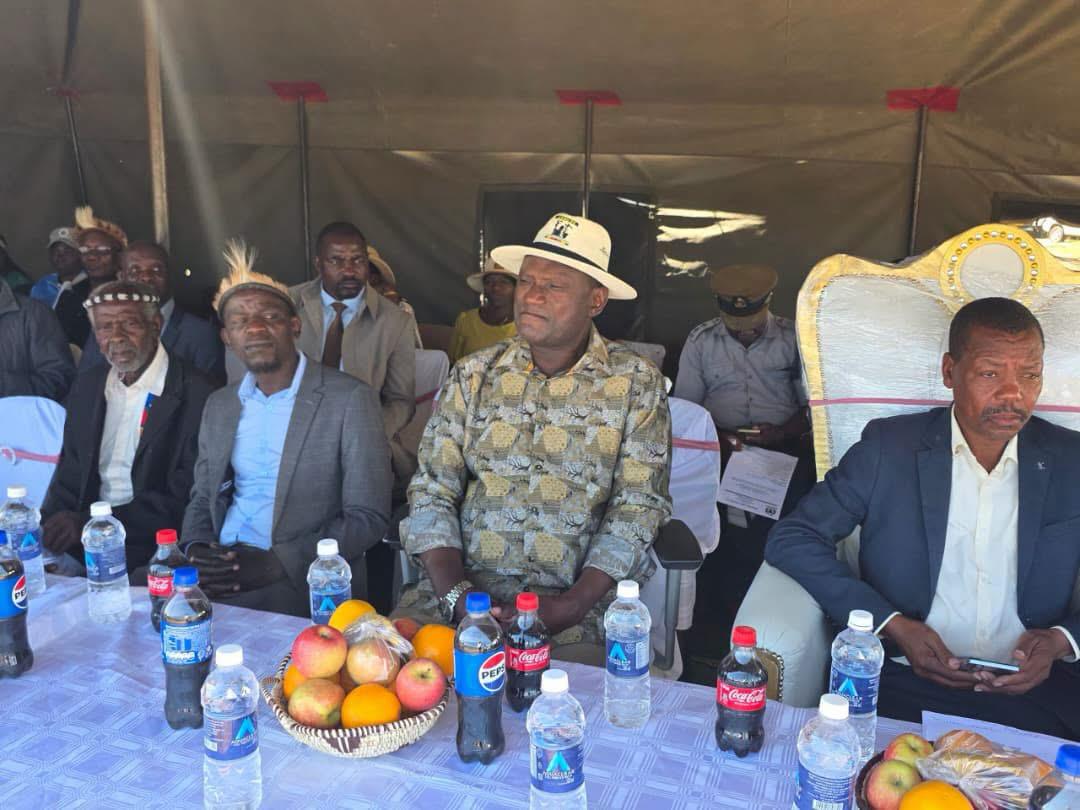
“Extension services often exclude us,” says Chief Goledema of Mtshina area. The San community chose him, original name Christopher Dube, as the inaugural chief in 2021. He was officially appointed by the Government in November 2022.
Chief Goledema adds: “Providers describe us as ‘people who don’t know anything,’ which deepens our isolation.” This exclusion limits their access to vital agricultural training and resources, leaving many without the tools necessary to adapt modern practices. Cultural isolation compounds these issues.
Many San are hesitant to engage with neighbouring Ndebele and Kalanga communities, further curtailing opportunities for collaboration and support. Without integration, improved agricultural techniques and environmental management strategies remain elusive. San communities in Tsholotsho have participated in the Communal Areas Management Programme For Indigenous Resources (Campfire) initiated by the Government in 1989 to support community-led development and sustainable use of natural resources.
However, San representatives say the programme’s community benefits have been declining over the years. Even worse, the community experience human, wildlife conflict (HWC).
The San Community in Xhani- Xhani, in Ward Two in Chief Tategulu area, is grappling with a severe crisis stemming from the effects of wildlife attacks, including encounters with hyenas, leading to devastating losses of livestock and posing a significant threat to their livelihoods. Ward Two Councillor Mr Sehlile Mathema said: “We cannot stand idly by as these wild animals continue to wreak havoc on our community’s livelihoods.’’
‘‘National laws often define many traditional hunters as ‘poachers’, causing much local anger,’’ Mr Vundla says. Mr Vundla again: “I believe national parks were created for the rich, who can still hunt in the parks and do whatever they want with wildlife.
“We didn’t even know the parks existed until the authorities started sending our people to prison for hunting. That’s when we found out we were not allowed to hunt the animals that were killing our livestock and at times people. Why didn’t anyone ask us what we thought? Then we might not have had these challenges.”
Campfire Association director Ms Lungile Sibanda, while admitting that HWC is a threat to community-based natural resources management, said the Government was working on a policy to combat HWC).
“The Government is actively engaging with local communities and stakeholders to mitigate the effects of HWC, including wildlife policy changes to focus on cash compensation for victims of HWC,’’ Ms Sibanda said.
Addressing HWC in the San community is urgently needed as it causes significant economic, social and environmental impacts for communities and wildlife populations. Addressing these conflicts requires a multifaceted approach, involving wildlife management, community engagement and sustainable development to balance the needs of humans and wildlife in this ecologically-diverse area. Zimbabwe is a signatory to various international conventions relevant to indigenous peoples, such as the San, including the International Convention on the Elimination of all Forms of Racial Discrimination (ICERD), ratified in June, 1991, United Nations Declaration on the Rights of Persons Belonging to National or Ethnic, Religious and Linguistic Minorities (UNDM) adopted in June, 1991, among others.
The San people, like most of the indigenous groups globally, are advocating for land rights and establishment of Indigenous Protected Areas. For this to happen, conservation funding is urgently needed.
“Unfortunately, most development organisations focus mainly in other areas of socio-economic development, not on conservation — which is a critical area for San livelihoods and the preservation of nature,” says social development expert, Mr Amos Mabhinya.
Climate change also looms as a formidable adversary. Erratic rainfall and rising temperatures threaten agricultural viability. The intersection of gender equality and environmental sustainability remains critical for the San community’s future. The stories of San man and women exemplify the critical intersection of gender and environmental sustainability in Tsholotsho. By investing in all genders, Tsholotsho can harness the full potential of its agricultural and environmental activities among the community, promoting both gender equality and environmental stewardship. —New Ziana.