Online Reporter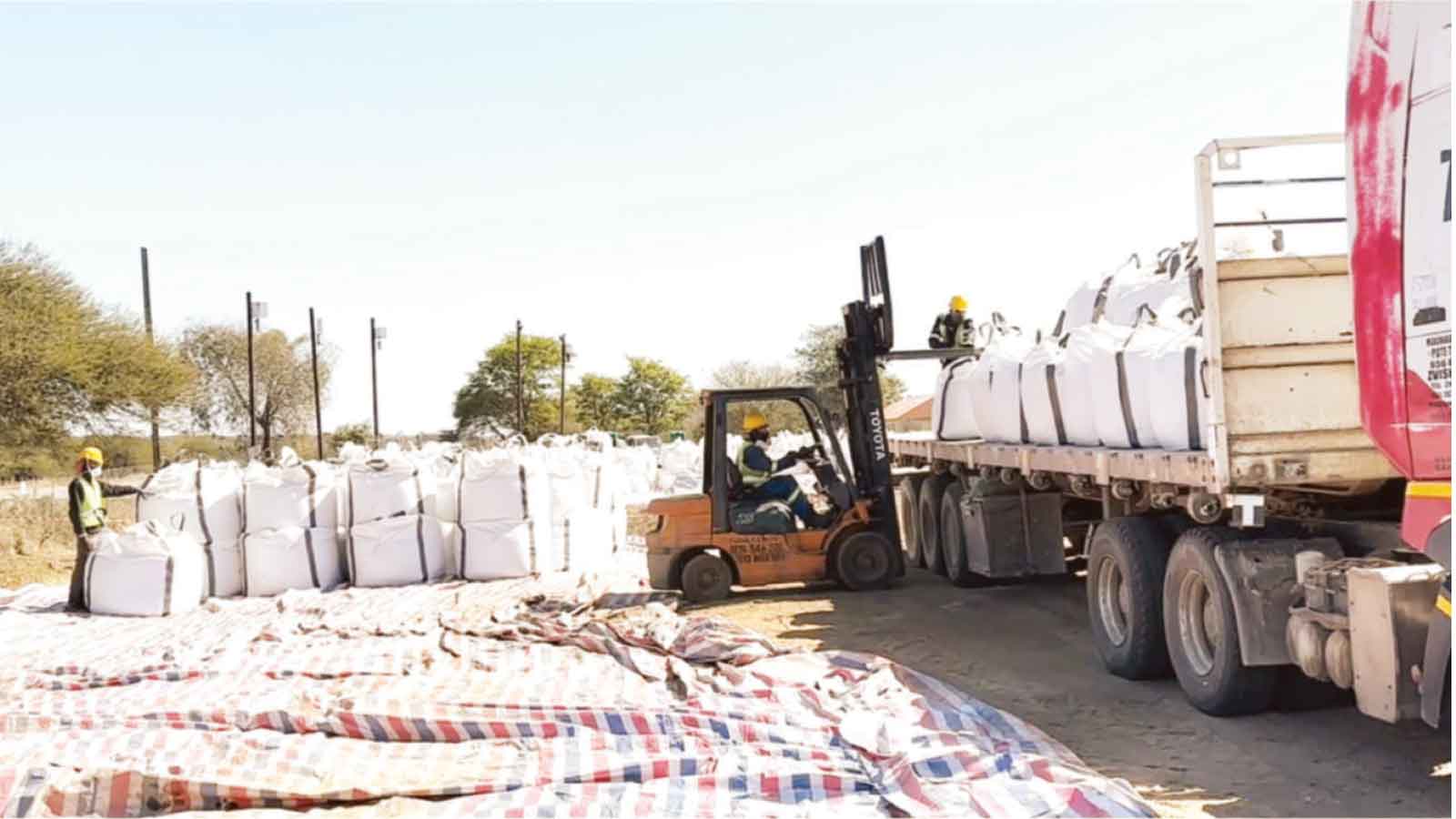
Oliver Kazunga
Senior Reporter
ZIMBABWE has strengthened its position as a global battery minerals hub after Mutapa Energy Resources announced an independently certified 39,9 million-tonne lithium resource at Sandawana Mine, a development expected to unlock fresh investment and accelerate the country’s mineral beneficiation drive.
The discovery comes as Zimbabwe positions itself to benefit from the global shift towards battery-powered technologies, with the country seeking to leverage its vast lithium reserves to expand its role in international battery mineral supply chains.
Zimbabwe, which is believed to host Africa’s largest lithium deposits and some of the world’s biggest reserves, has attracted more than US$3,4 billion in investment into the lithium sector despite a recent decline in global prices.
The investment pipeline includes about US$2 billion already deployed and a further US$1,45 billion earmarked for value-addition projects, reflecting growing investor confidence in Zimbabwe’s beneficiation-led mining strategy.
The surge in investment comes amid a correction in global lithium markets, where prices fell from a peak of about US$86 000 per tonne in 2022 to around US$14 300 per tonne following slower growth in electric vehicle demand.
President Mnangagwa has emphasised the need to accelerate value addition and beneficiation of minerals, leveraging domestic capacity in science, technology and innovation.
The Joint Ore Reserves Committee-compliant resource was certified following an intensive 11-month exploration programme and covers only 30 percent of Sandawana’s 3 800-hectare mining claims.
The remaining 70 percent of the claims is still unexplored, indicating further potential for resource expansion.
Located in Mberengwa District, Midlands Province, Sandawana Mine has a mining history dating back to 1955 when emeralds were first extracted at the operation. The mine is now being revived as a lithium and tantalite operation by Mutapa Energy Resources, a subsidiary of Mutapa Investment Fund.
Sandawana was a major emerald producer for about 40 years before operations were suspended in 2010 due to working capital challenges and declining emerald resources.
Announcing the results in Harare yesterday, Mutapa Energy Resources chief executive officer Mr Innocent Rukweza described the certification as a major milestone for the company and Zimbabwe’s mining industry.
“It is my singular honour to announce that we are, from the best of our knowledge, we are the first Zimbabwean mine with measured resources which constitute 72 percent of our total resource,” he said.
Mr Rukweza said the exploration programme confirmed 39,9 million tonnes of lithium resources, with 28,7 million tonnes, representing 72 percent, classified under the highest-confidence measured category.
“Most mines are way below that, but we are at 72, which is above 50 percent. So, we have a resource that has been confirmed by JORC of 39,9 million tonnes. And of that, 28,7 million tonnes is what is indicated,” he said.
Mr Rukweza said the high proportion of measured resources enhanced the project’s attractiveness to investors and financiers.
“So, this is the result of our JORC report, and we’re excited because it’s measured, and it’s certain, and like I said, it passes the test because it was measured by a competent person.
“It means that it becomes bankable. It has got the economics of its setup, and it means that it’s something that is bankable, and anyone who wants to look at that, and investors can now have a look at that,” he said.
The JORC certification follows an exploration campaign involving 103 000 metres of drilling, 33 000 samples and an investment of US$24 million.
The company has already mined two million tonnes of ore and is constructing a three-million-tonne-per-annum concentrator plant.
Supporting infrastructure, including roads, relocation of 104 families, a school and a clinic, is also under development.
Although the latest resource estimate relates only to Block A, which accounts for 30 percent of the mining claims, exploration is continuing on Blocks B and C, which make up the remaining 70 percent.
The company plans to invest a further US$18 million in additional drilling and resource upgrades as it seeks to increase the current resource to as much as 90 million tonnes.
“It is our hope that we want to upgrade our resource from the current 39,9 or 40 million to get to up to 90 million, if possible, from the results that we are going to get. And this is just on Block A,” said Mr Rukweza.
Besides lithium, exploration confirmed the presence of economically recoverable by-products, including tantalum and niobium, which could enhance the project’s long-term commercial value.
Mr Rukweza said stronger lithium prices since November last year would enable the company to finance much of the next exploration phases from internally generated resources.