admin
admin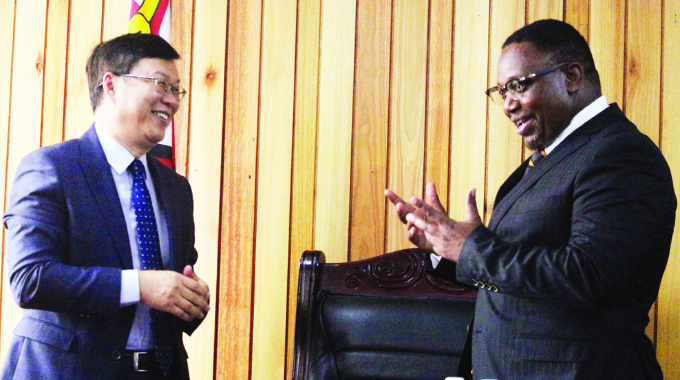
Freeman Razemba Crime Reporter
The Southern African Regional Police Chiefs Co-operation Organisation (SARPCCO) is set to introduce state of the art technology, including the use of drones among its member-states as a way of combating transnational organised crimes, regionally and internationally.
SARPCCO is the primary force in Southern Africa in the prevention and fighting of cross-border crimes.
Formed in 1995 in Zimbabwe, the organisation has firmly established itself as a benchmark for international police cooperation.
This regional organisation is supported by the Sub-Regional Bureau of Interpol in Harare, which coordinates its activities and programmes.
Priority crimes in the SADC region are terrorism, motor vehicle thefts, drugs and counterfeit pharmaceuticals, economic and commercial crimes, firearms and explosives, trafficking in gold, diamonds and other precious stones and metals, crimes against women and children, illegal immigrants and stolen and lost travel documents, wildlife crime and endangered species and human trafficking.
SARPCCO chairperson and national commissioner of the South Africa Police Service, General Khehla John Sitole and his delegation yesterday paid a courtesy on the Minister of Home Affairs and Cultural Heritage, Kazembe Kazembe in Harare.
General Sitole briefed the minister about the developments to be introduced in the region to curb criminal activities.
“We want to turn SARPCCO into a regional policing model that we want. We are not only responding to crime but we are also benchmarking our region, the continent as well as international policing which is at Interpol,” he said.
Gen Sitole said the first thing that they were looking into in the region was vision alignment where they align the shared SARPCCO vision with all the member countries.
He said the most important issue was that they are also supporting the economic and social stability vision of the country.
“Criminals are actually nowadays trying to slow down economic growth in almost the majority in the region despite the fact that we have taken a blow from the Covid-19. So as a result of that we are then trying to a greater extent to forge an integrated and multi-disciplinary response to transnational organised crime as well as transnational crime in general,” he said.
He said one of the key issues that they were looking into in order to curb crime was the need for a legislation for the use of the facial recognition CCTV especially in the safer city environment.
He said they were planning to implement or adopt the safer city strategy in the region.
“But fortunate enough with Zimbabwe is that the safer city has been introduced. So we are running this particular strategy at both regional as well as at national. In South Africa we formalise the safer city strategy also and currently we are running 20 pylons,” Gen Sitole said.
He said they will soon introduce online-policing as a way of also dealing with crime among member states.
Minister Kazembe said despite the challenges the country has been facing as a result of sanctions, the ZRP has remained committed in the fight against crime and will continue to get support from the Government.
He said the country had already implemented some of the technologies of fighting crime such as the facial recognition technology which has already been installed at the Robert Gabriel Mugabe International Airport.
“Government is committed with the fight against crime and we continue saying we cannot continue using the old policing methods which are now irrelevant. We have to go technology which we have already started. We are already in the right direction,” he said.



 Online Reporter