Vusumuzi Dube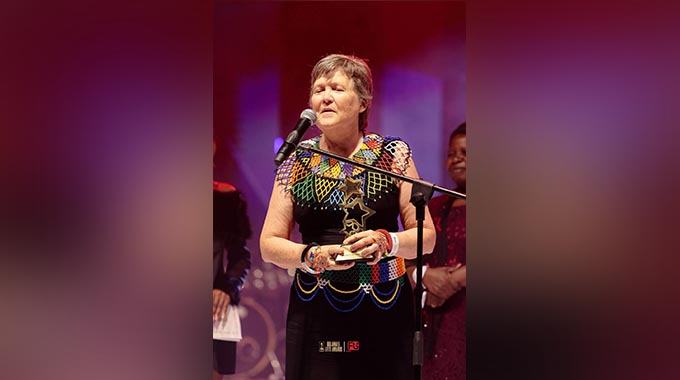
Gift Moyo, [email protected]
Bulawayo theatre productions continue to dominate national stages, earning recognition at premier platforms such as the National Arts Merit Awards (Nama).
This year, the province is represented in the Theatre Awards category by Ipi Intombi, directed by acclaimed playwright and director Sandra Bradnick. Cast member Thandolwenkosi Nkiwane has also secured a nomination in the Outstanding Actress category.
Also flying the Bulawayo flag are Cadrick Msongelwa for his role in Zi Animal Farm and Ronald Sigeca for These Humans Are Sick.
The Zimpapers Arts and Entertainment Hub recently caught up with Sandra Bradnick, who spoke about Ipi Intombi and her theatre journey. While the province continues to earn theatre accolades, Bradnick raised a concern: local theatre is struggling, and unless productions are both relevant and of top quality, audiences will not return.
Below is the interview:
Q: What got you into the world of theatre and producing plays?
A: I’ve loved theatre since my school days. After moving from Harare to Bulawayo, I worked at a school as a teacher and noticed some learners were neither academic nor sporty, but thrived when reading lines.
Theatre boosted their confidence and learning, so I began staging small plays with them. When I retired,
I joined the Bulawayo Theatre and started taking on bigger productions. Over the past 15 years, I’ve directed about eight plays there.
Q: What is your directing style when it comes to plays?
A: I believe every actor must bring their own interpretation to a character, but within clear boundaries. We sit down and unpack who the character is: their background, present state, and future, so the actor can truly connect. Once I’ve provided that foundation, I ask them to show me their interpretation. That’s when you get the best out of an actor, when they make the role their own through a full understanding of the character they portray.
Q: What makes a film or a script worthy of falling into your hands and being given your attention as a writer and director?
A: It all comes down to the message, what you’re trying to communicate. I might get an idea and feel drawn to it, then spend up to two years mulling it over. And then, suddenly, everything falls into place.
Q: Do you think that creativity is important for directors, especially young directors, who are looking to write their own plays or be inspired by other plays?
A: Absolutely. If it’s your first time writing, you don’t know all the pitfalls. Writing isn’t simple; it’s like a jigsaw puzzle, and you have to fit the pieces together to create the full picture. Experience is key.
Audiences can be fickle; if a production isn’t good, they might never come back. My advice to budding playwrights is to study how others have done it – understand their process, then adapt it to your own style. That’s how you eventually develop your unique voice.
Q: What led you to direct Ipi Intombi?
A: Ipi Intombi is originally a South African play, first staged in 1975. Although rooted in South Africa, its story resonated strongly with Zimbabwe, so we adapted it to reflect a Zimbabwean context. The theatre was seeking a production that showcased diversity, something that truly spoke to Zimbabwean audiences. In rewriting it, I collaborated with several people who contributed cultural insights, as I come from a different background. My goal was to make it authentically Ndebele. We conducted extensive research because Ndebele culture itself has evolved and absorbed many influences. We had to go back to its roots, examining not only the language used, but also the colours and symbols, each of which carries specific cultural meaning.
Q: What was your vision for Ipi Intombi?
A: When I first read the script, I realised that a lot of what Mandla (the main actor) experiences mirrors challenges we face today. He clashes with his father in the village over whom he wants to marry, then moves to town, only to find life isn’t as rosy as he imagined. There are struggles, temptations, and people who exploit him, like in the mines. Life isn’t simple, and he has to find his place in the world. By the end, he comes full circle, realising that his true place is back in the village, where life is simpler and temptations are fewer. Along the way, he faces distractions like women of the night, and the Catholic
Church also plays a significant role in guiding customs and morality.
Q: Do you think this project challenged you creatively and intellectually, and pushed you to grow as a director?
A: Absolutely, it pushed me to the limit and opened my eyes. I learnt so much.
Q: This is your first Nama nomination. What does it mean to you as a director to see your hard work recognised through both individual and collective nominations?
A: It’s incredibly exciting, and I feel very privileged, honestly, a bit overwhelmed. Receiving accolades was never my goal. Yes, I directed the play, but so many others contributed to making it what it is.
Thando (nominated cast member) keeps reminding me, “Sandy, it was your dream and you brought it to life. You guided these people.” And she’s right. I do understand that, and I feel deeply honoured to be acknowledged by my peers.
Q: What does this nomination signal to you about the future of local theatre?
A: Local theatre is struggling. People often prefer staying home and watching Netflix rather than going out to the theatre. My view is that, unless we stage productions that are both relevant and of excellent quality, not just something thrown together, we won’t draw audiences back. This is crucial because theatre has a rich heritage, and we aren’t doing enough to instil that passion in young people.
Q: What can the average person do to help keep theatre alive and restore its prominence, especially from an African perspective?
A: Get involved, come watch productions, participate, and don’t be held back by thinking you can’t sing, dance, or act. You can be taught, guided, and you’ll be surprised at what you’re capable of.
Q. Any production in the pipeline?
A: I am developing a unique production that highlights the diversity of arts in Zimbabwe. We can expect it on stage within the next year. Scriptwriting and production take time, but the success of Ipi Intombi is just the start of what I believe will be the best years of my directorial career.


 Online Reporter