Online Reporter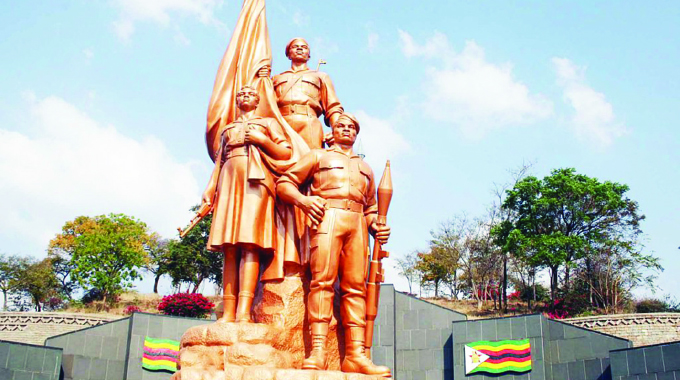
Daimon Phiri
I shall not eulogise the vendor in the marketplace,
Nor shall I elegise the bearer of water and firewood,
These are the silent architects of a nation’s quotidian survival.
Today, I speak of a different architecture.
An architecture erected not with mortar, but with mortality.
I shall not speak of the mutengesi,
Neither shall I invoke the chimbwidos,
Though their names are inscribed in the footnotes of our liberation,
In ink distilled from hunger, insomnia, and unuttered prayers.
To utter those names is to summon the banality of empire.
The cold calculus of colonialism,
That a black child’s intellect was valued beneath the price of ammunition,
That a black woman’s womb was rendered an arable estate for exploitation,
That a black man’s spine was repurposed into thoroughfare for the coloniser’s boot.
Thus, they abdicated the classroom,
They forsook the chalk, the uniform, the incipient dream of becoming physicians.
They abandoned desks where they memorised the nomenclature of foreign rivers,
To christen their own rivers with sanguine cartography.
They relinquished education to embrace insurrection,
What utility has scholarship in a cage with transparent bars?
Our heroes, were not delivered into this world clutching ordnance,
They were delivered vocalising lullabies,
Lullabies of cattle and rainfall,
Tutored by fathers in the ethics of mending fences and the sanctity of truth.
Came the day when melody was supplanted by sirens,
When palisades were demolished by armoured vehicles,
When veracity was criminalised,
Taciturnity became the only viable modality of existence.
So they elected.
They elected the mountain’s austerity over the mattress’s indulgence.
They elected the bush’s pedagogy over the bookshelf’s erudition.
They elected the trench’s frigidity over the hearth’s warmth.
They elected to be maligned as “terrorists” in the Fleet Street chronicles,
So that their progeny might one day be addressed as “citizens” in the streets of Harare.
Do you comprehend the ontology of sacrifice?
Sacrifice is a 19-year-old adolescent forsaking his matriculation,
And etching his nomenclature onto a Mozambican boulder,
With the full cognisance that he shall never return to decipher it.
Sacrifice is a young woman binding her hair,
Not as an adornment, but as prophylaxis against vermin in the encampment.
Transporting communiques in the soles of her shoes,
Transporting a nascent nation in the ventricles of her heart.
Sacrifice is the chimbwido preparing sadza at the witching hour,
Auditorily scanning for the cadence of approaching boots.
Serving water to boys younger than her sibling,
While masquerading as impervious to the canine’s baying.
Sacrifice is the mutengesi who observes a military convoy,
And feigns the vending of tomatoes while enumerating artillery.
Who ingests intelligence like bitter pharmacology,
And expectorates it later into the correct auricular canals.
They relinquished formal education.
Affirmative.
But they matriculated into a more exacting academy.
The university of the bush.
Its syllabus was anguish.
Its faculty: famine, malaria, and treachery.
Its commencement: oblivion.
And yet, they matriculated.
Because they apprehended a truth we risk anesthetising in 2026:
That nations are not erected upon expediency.
That liberty is not a downloadable file.
That sovereignty is not a communiqué.
Liberty is amortised in installments of hematology.
I traverse Harare in this present epoch and I witness the testament.
In the asphalt laid by hands that once gripped rifles.
In the pedagogical institutions erected by men who never completed their own.
In the infirmaries where nurses now preserve life,
Because someone once adjudicated that perishing for a principle
Surpassed subsisting upon one’s knees.
Our heroes did not exsanguinate so that we might engage in digital acrimony.
They did not hemorrhage so that we might barter our patrimony for specie.
They did not ford the Zambezi nocturnally,
Amidst crocodilian predators, soldiers, and terror,
So that we might traverse the Limpopo diurnally,
Supplicating for employment we ought to have fabricated domestically.
They perished for a Zimbabwe.
Not an immaculate Zimbabwe.
But a Zimbabwe that belonged to us.
Permit me to explicate the mechanics of imperialism.
It indoctrinated us to loathe our own patronymics,
It decreed our languages were patois,
And its language was civilisation.
It anathematised our deities,
And deified commerce.
It constructed schools and denominated it benevolence,
Whilst expropriating the very terra firma upon which the school stood.
It erected hospitals and called it philanthropy,
Whilst disseminating the pathogen of division.
That is the banality of evil,
The mundane, quotidian cruelty of being told you are ontologically inferior.
Less human, Less cerebral, Less competent for self-determination.
Our heroes confronted that fallacy,
And articulated a monosyllabic repudiation: “No.”
With their larynxes.
With their pedal extremities.
With their corporeal existence.
Some perished in training encampments,
Interred in anonymous graves,
Their maternal figures never apprised of the coordinates.
Some perished in detention,
Their names inscribed on walls with soap,
Effaced by dawn.
Some returned,
But returned as fragments.
An amputated limb,
A fractured psyche,
A conviction that remembrance was extinct.
Now 2026, we construct,
This is the imperative of August 2026,
Their immolation was not the terminus of the narrative,
It was merely prologue.
We are now authoring chapter two of Vision 2030.
An upper-middle-income economy,
Not bestowed,
But fabricated. Brick by lithic brick,
By the very hands that once manipulated firearms.
The hero of yesteryear bore a rifle,
Heroes of today bear a trowel,
Yesteryear’s hero traversed borders clandestinely.
The hero of today traverses the internet to vend to the global market.
We are constructing dams where aridity reigned,
We are fabricating factories where ruins festered,
We are establishing academies where barracks once stood.
We are architecting a Zimbabwe that exports intellect, not mendicants.
This is the second phase of the struggle,
Phase one, acquisition of land.
Phase two, cultivation of land.
Phase one, acquisition of the flag.
Phase two, imbuing the flag with significance.
We must internalise that courage is not the absence of trepidation,
It is the determination that something transcends trepidation.
For them, that transcendent entity was you,
It was I,
It was a progeny not yet conceived who would one day inquire,
“Gogo, were we perpetually sovereign?”
And Gogo shall respond, “No, my child. But someone emancipated us.
And now we are emancipating ourselves into prosperity.”
Thus I stand, Daimon Phiri,
Grandson of those who remained,
Fraternal to those who departed,
Progenitor of those who shall inherit Vision 2030.
I have authored 65 books,
Yet I have not authored sufficiently to amortise this debt.
I possess a voice now,
Because they forfeited theirs in the bush.
I possess erudition now,
Because they abdicated theirs in the struggle.
The liability is too gargantuan for restitution.
We must exist in a manner that venerates it.
Do not squander their immolation on trivialities.
Do not weaponise their names for larceny,
Do not desecrate their banner with factionalism,
Do not irrigate the weeds of corruption with their blood.
Construct thoroughfares.
Construct industries.
Construct technological hubs in Harare and Bulawayo.
Construct the Zimbabwe they hallucinated while sleeping on frigid earth.
Instruct our progeny that history is not a digital ephemera.
Instruct them that liberty possessed a pecuniary value.
Instruct them that Vision 2030 demands their labour, not merely their suffrage.
Remediate schisms.
Remediate the economy.
Remediate the nihilistic conviction that we are incapable of self-determination.
Unify as they unified in the trenches,
Shona and Ndebele,
Urban and rural,
Geriatric and juvenile,
Because Vision 2030 recognises no ethnicity.
Let the mutengesi vend with dignity,
Let the chimbwido perambulate without trepidation,
Let the scholar attend academy and not exile,
Let the engineer remain and construct, not emigrate and lament.
That is the modality by which we sustain their vitality.
For heroes do not covet statuary,
Statuary accrues dust,
Heroes covet continuity,
They covet witnessing that for which they perished
Still respiring,
Still proliferating,
Still metamorphosing into an upper-middle-income nation by 2030.
On this Heroes Day, August 2026,
Let us observe 60 seconds of silence,
Not for melancholy,
For accountability.
Thereafter, let us be clamorous for the remainder of the annum,
Clamorous with labour,
Clamorous with veracity,
Clamorous with cement mixers and welding apparatuses and keyboards,
Clamorous with a Zimbabwe
That would compel them to pronounce from beyond the veil,
“It was worthy. Behold what they have erected.”
I shall not discourse on the mutengesi today,
Not because she is inconsequential,
But because today we commemorate those who enabled
Her to vend sans colonial permit,
Tomorrow we shall discourse on her exporting to Sadc.
I shall not discourse on the chimbwido today,
Not because she is expunged from memory.
But because today we nominate those who bequeathed her a nation
In which to transport water,
Tomorrow we ensure that water emanates from a tap.
This is for those who abdicated education.
This is for those who never descended from the mountain.
This is for those whose nomenclature eludes us,
But whose immolation we inhabit daily.
Our heroes,
Their sanguine essence is in our pedology.
Their oneiric visions are in our palms.
Their incomplete labour is upon our desks,
Vision 2030 is our covenant.
We shall not betray them,
We cannot,
Because shoko harivhikwi.
The word possesses gravitas,
And the gravitas is now our custodianship.
From liberation to prosperity.
From 1980 to 2030.