Trust Freddy
Herald Correspondent
A LOCAL school is turning classrooms into centres of production and entrepreneurship, with learners from Early Childhood Development (ECD) to Form 6 participating in commercial honey production and horticulture projects targeting 40 000 Hass avocado trees across six campuses.
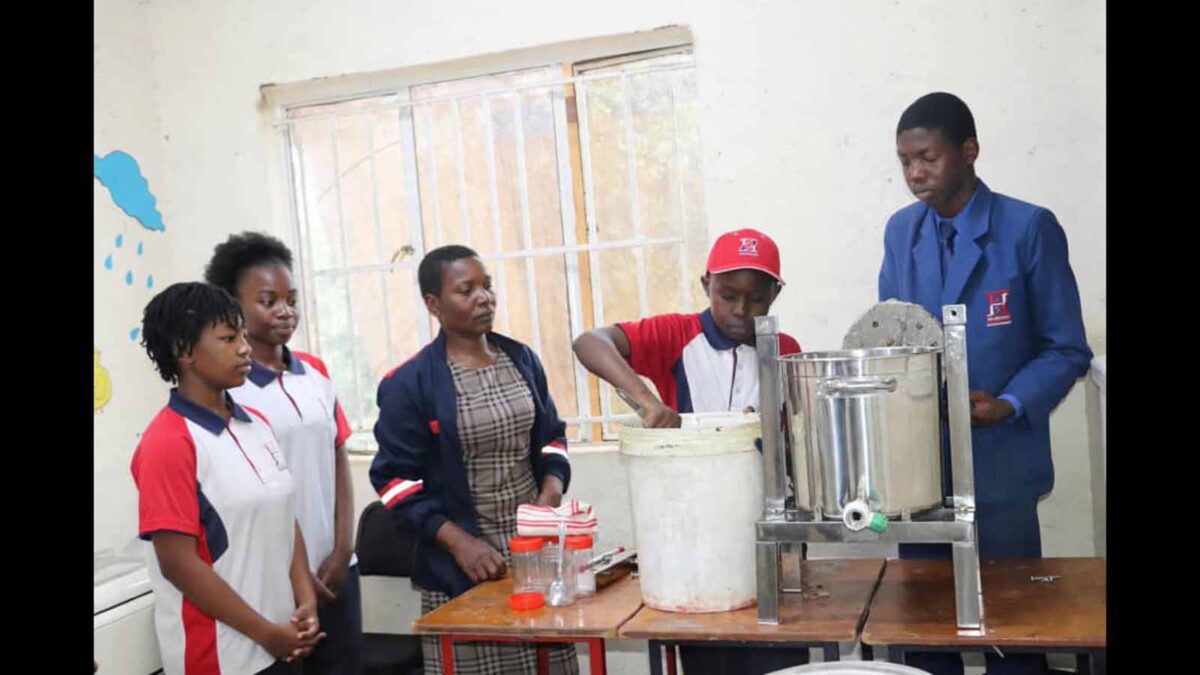
Hillbright Science College has established mini-honey processing facilities at all its campuses, supported by a network of more than 1 000 beehives at selected apiculture sites in Arcturus Farm and Vumba in the Eastern Highlands.
The initiative produces more than eight tonnes of honey annually, with learners undertaking regular field visits to gain practical experience in hive management, harvesting and commercial processing.
The programme is part of the institution’s efforts to implement the national Heritage-based Education 5.0 model, which emphasises innovation, industrialisation and the application of knowledge to real-world production.
Alongside apiculture, the college is establishing plant nurseries across its campuses, with a target of raising 40 000 Hass avocado trees.
The projects are designed to equip learners with practical agricultural skills while exposing them to opportunities for income generation.
Hillbright’s Eastlea Campus has so far established 3 000 avocado seedlings towards a target of 10 000, while its Vumba Campus is targeting 20 000 plants.
The remaining target is distributed across other campuses, including Marimba Park Junior School.
The practical approach is already inspiring some learners to venture into commercial beekeeping at home, extending the programme’s impact beyond the school environment.
Form 3 learner, Charlene Mashingaidze, said the training had shown her that beekeeping could be an accessible and rewarding enterprise.
“To keep hives, all you need is patience and effort. It is a low-input, high-output venture that you can do on your own at home,” she said.
Form 1 learner, Mukundi Kureya, said he had already established a beehive at home after receiving training at the school.
“It is a very simple process and very profitable. I have already set up my own hive at home, from which I will be making money,” he said.
Hillbright Science College Eastlea Campus principal, Mr Lloyd Maroweko, said the projects were intended to give learners practical skills that could be converted into viable business ventures.
“We have various skills that we are imparting to our learners in fulfilment of Education 5.0,” Mr Maroweko said.
He said the avocado project involved collecting seeds from Mbare, raising seedlings and grafting them with the commercially preferred Hass variety.
“We collect seeds from Mbare, plant them with our students and graft them with the Hass avocado variety sold in commercial outlets. If the students produce about 500 Hass avocado trees and sell them at US$5 each, they earn about US$2 500,” he said.
The model gives learners an opportunity to understand the commercial value of horticulture, from seed collection and propagation to producing seedlings for the market.
Hillbright Science College chief servant, Mr Pardon Mugari, said the institution was also producing specialised monofloral honeys, including bee-bush, buckwheat, eucalyptus and apple honey.
He said the college had entered into a pollination agreement at Claremont Estate in Nyanga, under which its bees provide pollination services, while learners are exposed to the commercial processing of honey.
“We produce tonnes of honey and have entered into exclusive agreements where pollination is done by our bees,” Mr Mugari said. “We encourage all learners to understand the commercial value of these natural resources.”
The college plans to expand its apiculture and nursery operations across its campuses, strengthening its efforts to integrate classroom learning with production, innovation and enterprise development.
The initiative reflects the broader objectives of Education 5.0, which seeks to ensure that educational institutions contribute to national development by turning knowledge and skills into practical solutions, products and economic opportunities.