

 Online Reporter
Sukulwenkosi Dube-Matutu, [email protected]
THE Government has urged schools to develop income-generating projects within their institutions, saying such initiatives serve as transformative and educational tools that align with the National Development Strategy (NDS1).
Speaking during the commissioning of income-generating projects at Senondo Primary School in Gwanda recently, Primary and Secondary Education Permanent Secretary, Mr Moses Mhike, said the Ministry’s Department of Primary, Secondary and Non-Formal Education (PSNE) provides technical guidance, training and strategic support to help schools conceptualise, develop and strengthen viable business initiatives.
He said the ministry’s goal is to empower every school to become a hub of innovation and sustainable development so that learning institutions function not only as centres of academic instruction, but also as incubators of future entrepreneurs and community leaders.
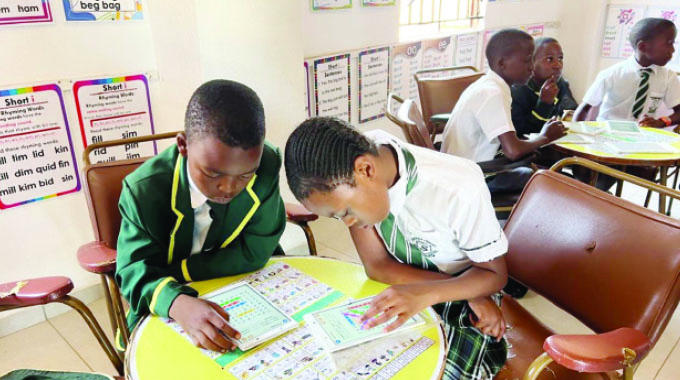
Senondo Primary School is running several successful projects, including poultry, piggery, rabbit production, fish farming, a tuckshop and a garden.
The poultry project holds 4 000 birds per cycle, while the fish project has 3 200 fish. The school also keeps more than 800 rabbits and 51 pigs. Using proceeds from the projects, the school has managed to construct a classroom block with three learning rooms.
“The income-generating projects that we see at Senondo Primary School translate into its business development units. These projects are transformative, educative and resonate strategically with the dictates of NDS1. They are the fruits of exceptional leadership, dedication and community engagement.
“I would like to applaud the school for responding to the Cabinet directive on the commercialisation of production units. Projects such as gardening, piggery, poultry and fish farming respond to that guidance,” he said.
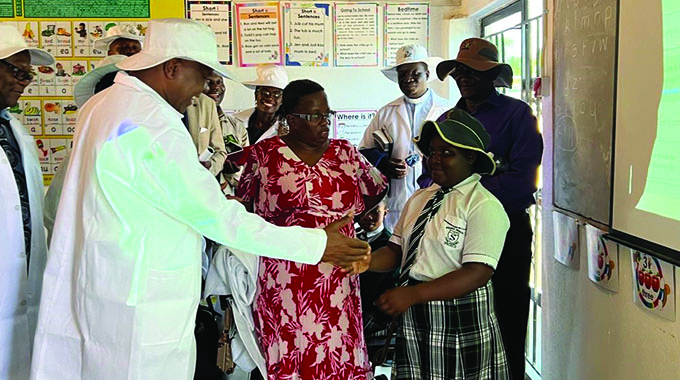
“The garden and tuckshop are a testament to the power of innovative thinking, teamwork and hard work.”
Mr Mhike commended the school leadership for initiating the projects and parents for supporting and actively participating in their running.
He said well-managed income-generating initiatives help supplement school resources, enhance learning environments and foster entrepreneurial skills among pupils.
Mr Mhike also noted that the projects support Pillar Number 14 of NDS1 on infrastructure and utilities, which encourages school leaders to collaborate with communities, parents and School Development Committees to build and upgrade facilities in order to improve access to quality, inclusive and holistic education.
He urged schools to ensure that parents see value for their money through proper and transparent use of funds.
“The face-lifting of the school’s appearance, including the Early Childhood Development (ECD) play centre and the state-of-the-art mobile swimming pool, is an indicator of the school’s commitment to providing a conducive learning environment.
The Ministry appreciates the commitment of parents who have paid fees and levies on time, with 88 percent having made full payments to date.
Full article on www.chronicle.co.zw
“This is because they are able to see that their financial contributions are being put to good use. This encourages them to continue supporting the education of their children,” he said.
Mr Mhike said the school’s business units and pupil-focused projects complement the aspirations of Vision 2030, which seeks to transform Zimbabwe into an upper-middle-income economy.
He said the education sector’s mandate in contributing to the national vision is to develop the country’s human capital, and Senondo Primary School is among the progressive institutions driving this agenda through practical, skills-based programmes.
“These projects foster entrepreneurial skills among our pupils at very formative stages and align with the provisions of the Heritage-Based Curriculum. The net effect is that pupils develop positive values towards productive work, resulting in a highly patriotic and fit-for-purpose school graduate,” he said.
— @DubeMatutu


 Bongani Ndlovu