Online Reporter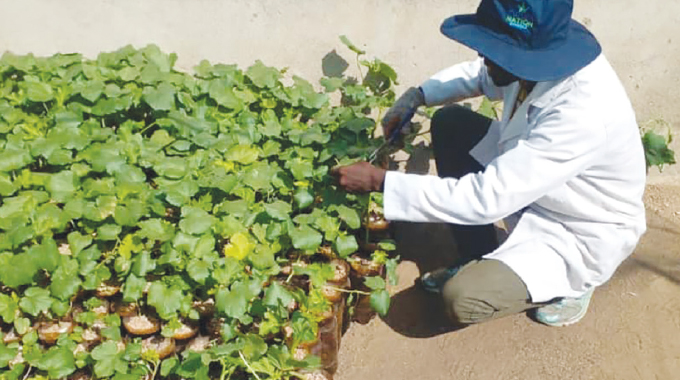
Amos Mpofu, [email protected]
THE Climate Minds Initiative (CMI) is spearheading an ambitious integrated development model aimed at addressing food, energy, and economic insecurity linked to climate change in Zimbabwe’s most vulnerable regions.
Rooted in over a decade of applied research across Bulawayo, Matabeleland North, and Matabeleland South, the Bulawayo-based initiative — established in 2011 — has set its sights on creating more than 10 000 jobs and enhancing long-term community resilience within the next five years.
The organisation plans to achieve this by establishing 1 000 small and medium enterprises (SMEs), each supporting at least 10 people, with a deliberate focus on empowering youth and women.
Founded by researcher Mr Nkanyiso Ncube, CMI has grown from a modest research concept into a dynamic, multi-sectoral model that fuses science, innovation, and community entrepreneurship.
In an interview, Mr Ncube said that the initiative was born out of the growing climate vulnerabilities affecting Zimbabwe’s semi-arid regions.
“Zimbabwe’s communal and commercial farming sectors, particularly in Matabeleland, face existential threats from chronic droughts, erratic rainfall and rising temperatures. In 2011, we conceptualised CMI to help vulnerable communities, especially women and youth, shift from climate-dependent livelihoods to climate-smart entrepreneurship,” he said.
Since its inception, the initiative has developed a portfolio of economically viable technologies, including proprietary hydroponic nutrient solutions, a hydroponics-based fodder system for livestock, and a biodiesel-powered charging engine.
“We have successfully transitioned from research to enterprise, demonstrating a clear pathway for creating over 10 000 jobs for youth and women while strengthening provincial resilience,” he said.
CMI’s integrated model is built on four interconnected pillars, each refined through years of field research. The first pillar is Climate-Smart Agriculture, which promotes high-value vegetable production using low-cost hydroponic systems tailored for water-scarce environments. The project focuses on crops such as tomatoes, leafy greens, green beans, peas, and peppers.
“By producing dried vegetables, entrepreneurs can access stable markets throughout the year, insulated from seasonal price fluctuations,” said Mr Ncube.
A key breakthrough under this pillar is the development of a proprietary hydroponics nutrient solution, formulated using locally available minerals and regionally sourced materials. The solution is chemically balanced to neutralise the high alkalinity commonly found in borehole water across Matabeleland, significantly improving yield and produce quality.
“In addition, CMI has designed a highly nutritious livestock feed system that combines hydroponically grown fodder such as millet, maize, or barley with crushed indigenous grains like sorghum. The result is a balanced, year-round ration that improves livestock performance and supports rural livelihoods,” he said.
The second pillar focuses on Sustainable Energy. To support decentralised power generation, CMI trains youth and women to produce biodiesel from non-food oil feedstocks. This localised fuel production promotes a circular economy by converting low-value crops or waste oils into clean energy.
“We have also developed a purpose-built internal combustion engine optimised to run on pure biodiesel.
It functions as a high-capacity battery charging system for powering hydroponic operations and providing electricity for lighting, communication, and small household electronics in remote areas,” said Mr Ncube.
The third pillar centres on Non-Agricultural Enterprise, particularly the development of a multi-purpose shea butter-based polishing cream. Ncube said that the product is non-toxic, non-flammable, and environmentally friendly. It empowers women entrepreneurs by encouraging the value addition of indigenous resources while promoting eco-conscious consumer products.
“This enterprise not only creates sustainable income but also trains women in business management, branding, and product distribution,” said Ncube.
The fourth pillar is Socio-Economic Impact and Comprehensive Training. A cornerstone of CMI’s mission is capacity-building. The organisation plans to establish training centres across the three provinces to equip women and youth as hydroponics technicians, biodiesel producers, and eco-cosmetics entrepreneurs.
“Our goal is to establish self-sustaining enterprises that will collectively generate 10 000 jobs. This is a deliberate intervention for poverty reduction and gender equality in local economies,” said Ncube.
CMI has also extended its model to schools. Early Childhood Development (ECD), primary, and secondary learners are being introduced to basic hydroponics systems as part of climate education and entrepreneurship development.
“We are nurturing a generation of climate-literate citizens capable of sustaining Zimbabwe’s resilience and innovation in the years to come,” he said.
To broaden its impact, the initiative is developing an agri-tourism concept known as Green Thumbs Getaways, which will transform training centres into experiential learning hubs.
“The commercial success of our dried vegetable production serves as proof of concept for self-sufficiency. We are not dependent on perpetual donor funding but are pursuing a self-funding model,” said Mr Ncube.