Online Reporter
Ivan Zhakata-CheckPoint Desk
A Value for Money Audit by Acting Auditor-General, Mrs Rheah Kujinga, has pointed out some shortcomings in the way the Ministry of Primary and Secondary Education (MoPSE) is constructing schools.
The audit exposed cases where roofing materials were bought years before buildings were ready and where uncompleted school blocks were illegally erected or allowed to degenerate into shells while children learnt under trees.
The audit reveals that despite Government pumping more than ZWL$4,7 billion into school construction between 2018 and 2023, the ministry failed to deliver value for money, completing only 242 schools out of a planned 1 800, just 13 percent of its target.
The Auditor-General said the problems were worsened by a non-functional Project Management Committee, lack of supervision and poor coordination in procurement, creating fertile ground for wasteful expenditure and infrastructure decay.
When asked by the acting Auditor General to respond to the issues, the ministry said:
“The observations are noted. There is need for supervision and monitoring of construction projects by all its (the ministry) structures, especially for the accessible urban sites,” the Ministry said.
“The Ministry would like to highlight the challenges stemming from the lack of mobility to cover projects in the rural areas due to old and depleted fleet which is shared by all departments at the Provincial Offices for various Ministry’s responsibilities.”
The Ministry noted the observation on the non-functionality of its Project Management Committee and said:
“In a bid to strengthen the Ministry’s systems in the management of infrastructure development projects the Ministry has since provided Terms of Reference and will continue to enhance this framework to empower the Committee in the management of projects nationally. In addition, one of its roles is to monitor and provide support for all projects under the Ministry.
“The committee is also supposed to produce a detailed status report on all the existing PSIP projects. This status report will be followed up with an implementation plan for the year 2025. Going forward, the committee will produce a quarterly national report on all projects.”
Ms Kujinga said the Value for Money Audit on the Facilitation, Provision and Construction of schools by the MoPSE was conducted to assess the extent to which the Ministry was providing, facilitating and constructing schools to solve the challenge of inadequate number of public schools.
“Over the past six years from 2018 to 2023, the Government invested the sum of ZWL$4,7 billion in the provision and construction of schools to meet the needs of the growing population of children that require basic education,” she wrote.
“Despite Government’s financial commitment for construction of schools, there are complaints from various stakeholders as noted from local media regarding inadequate public schools. At the centre of the controversy are glaring procurement and planning irregularities.”
The audit revealed shortcomings in the facilitation, provision and construction of the schools.
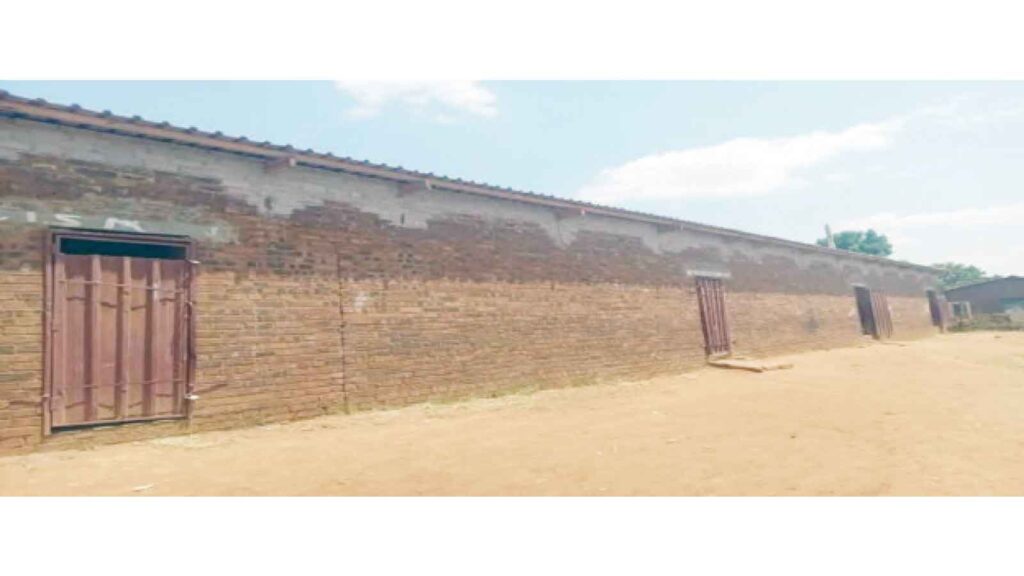
One of the condemned class room blocks with no windows at Hatcliffe 3 Primary School in Harare. – Picture: Office of the Auditor-General.
The Auditor General noted that shortcomings were on issues of rolling out/execution of the construction plans and provision/construction of schools in new settlements.
“Rolling out/Execution of the Construction Plans Schools were not being constructed as per the plan,” she said. “The plan was to construct 300 schools per year translating to 1 800 schools for the six years under review – 2018 to 2023. However, only 242 were constructed during the period under review.
“Delays to execute the construction plans resulted in overcrowding in schools. As a temporary measure, the Ministry was using satellite schools and hot seating sessions which were not conducive for learners.”
The report highlighted that the inadequate execution of the construction plans was due to “ineffective coordination in procurement of materials, contract price variations and termination of contracts, non-functionality of the Project Management Committee and the inadequate supervision and monitoring of construction projects.”
In one of the most startling findings, the Acting Auditor-General established that roofing materials were procured while projects were still at foundation stage, lying idle for years as construction stalled.
At Budiriro 6 Primary School in Harare, roofing materials were bought in 2019 when the classroom block was still at foundation level.
By September 2023, the structure had not progressed beyond box level due to lack of cement, leaving the expensive roofing materials unused and exposed to deterioration.
A similar situation was recorded at Chitungwiza Early Learning Centre, where roofing materials were purchased in 2019 despite the project being stuck at box level, with construction halted because underground conduits had not been installed.
Four years later, the building remained incomplete while materials lay idle.
“These materials were procured for stages not yet reached,” the Auditor-General said, pointing to weak coordination between head office, provinces, districts and schools in managing construction projects.
The audit further exposes how illegal occupation and unregulated developments flourished on land reserved for schools due to MoPSE’s failure to act.
At Apex Board Secondary School in Harare, a school site allocated in 2015 was invaded, with a church and houses constructed on land meant for classrooms, effectively blocking the establishment of the school.
In Cowdry Park, Bulawayo, school land was partially taken over by illegal structures and brick moulders, while at Westlea in Manicaland, a reserved school site had been turned into farmland. Out of 44 sites reserved for schools between 2003 and 2015 in the audited provinces, 41 were not developed, leaving communities without schools while land meant for education was lost to illegal settlers.
The audit uncovers cases of substandard and unlawful construction.
At Hatcliffe 3 Primary School, classrooms were built without windows or finished floors and were later condemned by inspectors from the Ministry.
The ECD block was cracked and dilapidated, while five toilet seats were serving more than 500 girls, a blatant violation of infrastructure standards. At Pumula South Secondary School, Bulawayo, a contractor constructed a classroom block using materials that did not meet contract specifications.
The Ministry of Local Government issued a demolition order, yet by July 2024 the structure had neither been demolished nor completed, locking public money into the structure.
At Magamba Primary School in Manicaland, construction started in 2019, but stalled at ring beam level after the contractor requested a 7 percent price variation in 2022 due to inflation.
In Bulawayo, Ngwenyama Primary School remains at foundation level after a contract signed in 2018 was terminated for non-performance, with no progress made for years thereafter.


 Bongani Ndlovu