Vusumuzi Dube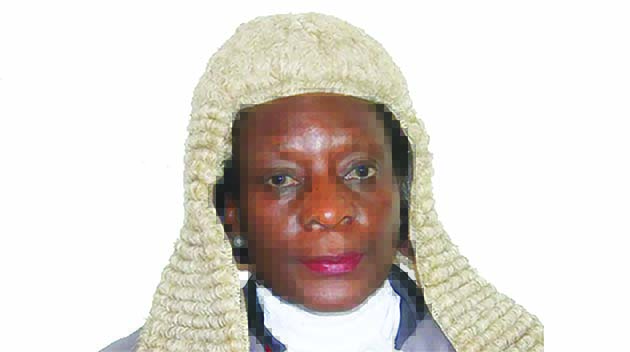
Rutendo Nyeve, Features Reporter
HISTORY was made recently when Zimbabwe Anti-Corruption Commission (Zacc) chair and former High Court Judge, Justice Loice Matanda-Moyo added another feather to her cap after President Mnangagwa appointed her as the country’s first female Prosecutor-General.
The appointment of Justice Matanda-Moyo, who had been at the helm of Zacc since May 2019, came a few days after President Mnangagwa appointed Mrs Virginia Mabhiza as the country’s first ever female Attorney-General.
Writing for the United Nations Office on Drugs and Crime, Justice Ayesha Malik, a Justice of the Supreme Court of Pakistan who has previously served as a Justice of the Lahore High Court as well as a Board Member of the Punjab Judicial Academy, said historically, the legal profession was not considered suitable for women.
“It is important to note that including women in the judiciary is not simply about ensuring that her perception is relevant to resolving cases about women. It is much more than that. It is about integrating the gender perspective and giving equal visibility to women,” said Justice Malik.
She said when judges interpret and implement the law, their reasons and opinions are a reflection of their thought process, an insight into their perceptions hence these perceptions in the very least must be representative of both men and women on the bench so as to ensure a fair and adequate response through judicial decisions.
Another Judge, Justice Ivana Hrdlickova who serves as President of the Special Tribunal for Lebanon shares the same sentiments women play a very special role which is not only about the equality but goes beyond that.
“In all judiciaries, at national and international courts, judges interpret the law, they decide about others. To be a good judge, it is never sufficient enough to know the law well. In fact, excellent knowledge of the law is an obvious prerequisite for a solid judicial performance. However, we judges should be endowed with something else as well, something that we call a sense for justice, a sense for fairness. We all may define this sense in a slightly different way. Understanding this sense reflects our education, our career and life experience. It also reflects our female and male perspective. It is one of the most important features that brings an essential balance to the judicial decision-making processes,” said Justice Ivana.
While their sentiments might be confined to women in the context of the courts, the Second Republic has registered a significant milestone in mainstreaming women in the broader judicial departments.
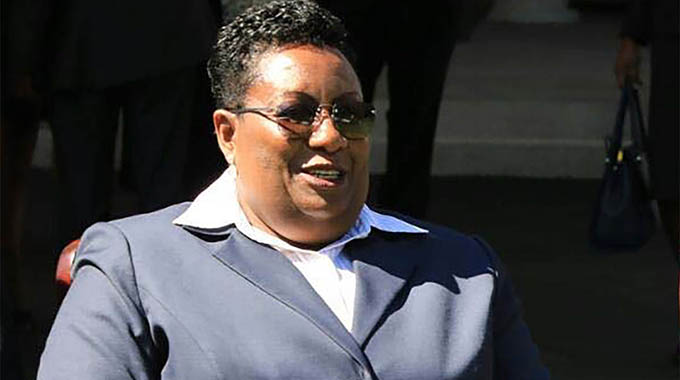
Mrs Mabhiza with effect from November 1 becomes the country’s first female Attorney General. She is a seasoned legal practitioner with experience in civil and criminal litigation and has held the post of Secretary for Justice, Legal and Parliamentary Affairs since 2013.
Mrs Mabhiza also served as Secretary for Constitutional Affairs during the inclusive Government where she superintended over the Copac-led Constitution-making process and has represented the country at local, regional and international forums on matters of justice.
On the other hand, Justice Matanda-Moyo was appointed as the first female Prosecutor General taking over from Mr Kumbirai Hodzi who held the position from 2019 until his resignation on medical grounds last year. Since then, Mr Nelson Mutsonziwa has been acting Prosecutor-General.
The late National Hero Ambassador Johannes Tomana was the first person to hold the title of Prosecutor-General after the office was separated from that of the Attorney-General in 2013.
Ambassador Tomana was then replaced by Advocate Ray Goba in 2017 who passed the baton to Mr Hodzi and now Justice Matanda-Moyo.
While the two might have heralded the mainstreaming of women in the judiciary, women have continued to prove their worth in the justice and legal fraternity with Justice Rita Makarau and now Justice Priscilla Chigumba ably leading the Zimbabwe Electoral Commission.

Under the Second Republic, the private sector has also been inspired to follow suit taking into consideration how women in the legal fraternity have proved their worth. In February this year, the Law Society of Zimbabwe elected Mrs Rumbidzai Matambo, a female legal practitioner as its President.
Perhaps, the Second Republic’s first step towards mainstreaming women in the judiciary was the appointment of Elizabeth Gwaunza as the Deputy Chief Justice in March 2018, a development that has been commended by the legal fraternity. Law Society of Zimbabwe President Mrs Matambo applauded the appointments saying they were progressive and recognised women capabilities.
“We applaud the appointments which are progressive and a recognition of women capabilities in exercising their duties well,” said Mrs Matambo.
As a leader in the legal sector, Mrs Matambo said women continue to face challenges which are universal.
“There are difficulties in dealing with stereotype. At times people will be challenging your role in the position hence you need to manage all that,” said Mrs Mabhiza.

Legal practitioner and author, Mr Taurai Murewa said the appointments were a progressive move towards addressing the inequalities that have plagued the legal fraternity in the past.
“As a legal practitioner, I believe the appointment of Mrs Virginia Mabhiza and Justice Matanda-Moyo is a significant step towards gender mainstreaming in the judiciary. This move recognises the capacity of women to lead and provides an opportunity for equity and fairness in the justice system. It is also a progressive move to address the inequalities that have plagued our past, where the role of women in justice was not fully recognised. We should celebrate this milestone and encourage more women to take up leadership roles in the justice sector,” said Mr Murewa.
Former prosecutor and now legal practitioner Mr Clement Mukwasi said the appointments were recognition of the good work that women are doing in the sector.
“You will realise that these appointments come with more responsibilities. For example, while I can describe Justice Matanda Moyo’s appointment as probably a lateral transfer, this means more work for her because when she was at Zacc, she only had powers to investigate and arrest now she will be responsible for all the cases coming from any wing of investigators, be it police or the Zacc.
“The main challenge which the country has at the moment is corruption. Getting rid of corruption should be their priority and it will not be an easy task. For both of them, one will be looking at corruption from a criminal perspective who is Justice Matanda-Moyo and one will be looking at it from a civil perspective who is Mrs Mabhiza. It is not going to be just policing, it is also going to be advice on new laws that need to be put in place to curb corruption,” said Mr Mukwasi.
The Ministry of Justice, Legal and Parliamentary Affairs has seen the mainstreaming of women beyond justice departments. Senator Mable Chinomona was recently retained as the President of the Senate while the Zimbabwe Prisons and Correctional Services has two female Deputy Commissioner-Generals. — @nyeve14



 Online Reporter