peter
peter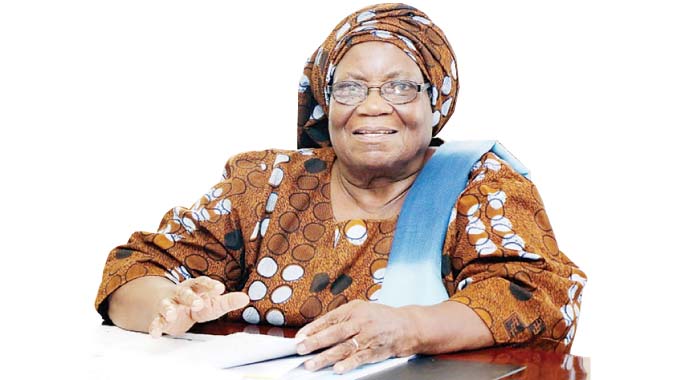
Vincent Gono, Features Editor
ZIMBABWE is bigger than the politics of tribes and should remain a unitary State guided by shared national socio-economic goals set by the Second Republic to give impetus to the achievement of Vision 2030 as the country today celebrates Unity Day, former senior Zapu and Zipra officials have said.
In separate interviews with Chronicle, remaining senior former Zapu veterans and Politburo members Cde Angeline Masuku and Cde Richard Maduke Ndlovu concurred that the spirit of nationalism that glued the people of Zimbabwe together should be preserved and any attempts to divide the people along political, tribal or otherwise should be thwarted.
Cde Masuku said attention should be given to the development of industry and infrastructure in Bulawayo and Matabeleland provinces whose development was retarded by years of civil conflict prior to the signing of the Unity Accord.
She said she was elated by the show of political will by the Second Republic adding that development and sincere engagement with the communities were the two most important ingredients to achievement of continued unity.
“There is a lot of political will in solving the post-independence political issues. I am happy with the movement so far and I hope a lot more will be achieved going forward.
The Second Republic has removed the lid to the emotive Gukurahundi episode that had remained unsolved. People have been bottling up anger and there was a lot of psychological torture which was not good for unity and development.
“The Second Republic has shown commitment to correct the anomaly. There is need for affirmative action to keep the spirits of the people who were aggrieved down because in all honesty the political episode seeded disunity and lack of trust and unity was not supposed to be just a word but should be coupled with action, something that the Second Republic has been doing,” said Cde Masuku.
She said devolution was a perfect development concept which was going to ensure equal sharing and distribution of the national resources with input from the communities adding that ideally an upper hand was supposed be deliberately extended to the most marginalised communities that were affected by the disturbances.
“I am happy that the Second Republic is getting a lot of things right. The issue of empowerment of communities should not be based on political connections, people should be empowered not because they know someone but because they are Zimbabweans and that was the spirit that made Unity Day possible. The spirit that Zimbabwe is bigger than tribes and individuals,” she said.
Cde Masuku said the spirit of fear that characterised the First Republic was repulsive to development as people were censored and could not speak their minds freely.
“The spirit of fear should not be encouraged. We don’t want that. We don’t want to be led back to the old dispensation where talking about those issues was an anathema. We want our people to be respected as Zimbabweans and be given equal opportunities as the President has been saying.
He has been saying clearly that he doesn’t want anyone to remain behind as the country moves towards an upper-middle- income economy by 2030,” she said.
Cde Masuku is one of the remaining senior former Zapu nationalist and was part of the high-powered political delegation that comprised five people from the PF Zapu side and five from the Zanu (PF) side that went into provinces engaging communities and explaining the unity process after the Unity Accord was signed.
She said the process was not a stroll in the park as communities were demanding answers to what had happened.
Cde Ndlovu, who is also the chairperson of the National Matabeleland Zambezi Water Project (NMZWP), said the Unity Accord that gave birth to today’s holiday was a very important chapter in the reconstruction of Zimbabwe as a unitary State.
He said he was grateful to President Mugabe and Dr Joshua Nkomo who realised that the country could not be sacrificed on the altar of power politics and tribe adding that the unity was taken up, sanctified, and actualised by the Second Republic with various projects being undertaken.
“We are gratified by progress at the Gwayi-Shangani Dam, itself an important component of the NMZWP, the support it has been receiving from President Mnangagwa is amazing.
“The project is expected to be complete early next year bringing water not only to Bulawayo but to Plumtree and other needy areas in the region with plans that in the fullness of time water would even be exported to South Africa.
“A greenbelt is also going to be an essential part of the project where irrigation schemes will be developed downstream and this is going to avert hunger and ensure food sufficiency in the region,” said Cde Ndlovu.
He said the three phases of the project include construction of Gwayi-Shangani Dam under phase 1 while phase 2 involves construction of a pipeline from Gwayi-Shangani Dam to Bulawayo. The last phase involves the construction of a pipeline from Zambezi River to link with the Gwayi-Shangani pipeline at Kennedy.
He said it was soothing to note that the country was carefully treading in the letter and spirit of its economic blueprint the National Development Strategy 1 (NDS1) through spirited efforts to complete dams for irrigation to enhance food security.
A member of the Zipra High Command Brig (Rtd) Abel Mazinyane said the Unity Accord was an important process of finding each other and was a realisation of the fact that the country should always be put first.
He said the country was bigger that all the tribes in the country and unity was going to drive Zimbabwe towards “the attractive vision 2030”.
“We should kill the politics of isms that destroy the country. We need to strenthgen our nation and safeguard our independence and we can only do so if we are untied. If we were divided it was going to be difficult for us the liberate this country,” he said.
He said it was pleasing that despite the sanctions there was massive development in the area of infrastructure itself a good pointer to the achievable of Vision 2030.
Devolution, he said, was developing communities at a pace never seen before as roads, schools, clinics, dams and bridges were being constructed with communities giving the power to give decisions on priority projects.


 Online Reporter