Online Reporter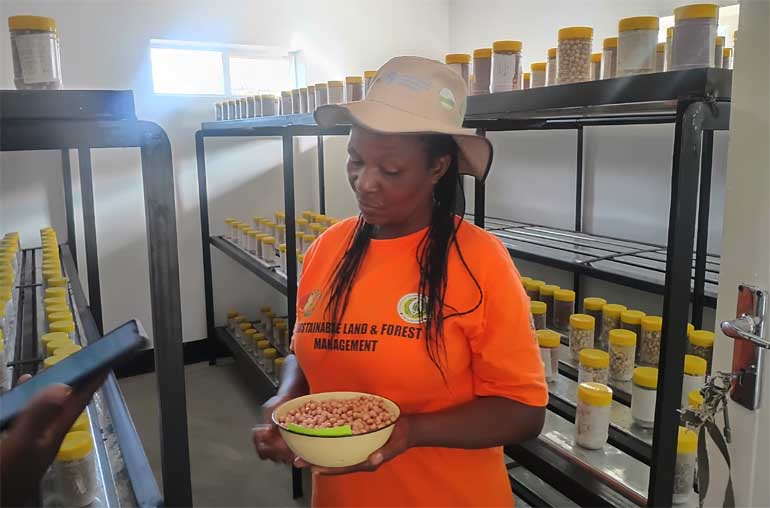
Lovemore Kadzura
Post Reporter
VILLAGERS in the hot and arid Mutiusinazita area of Buhera District have established a community seed bank to preserve and store quality seed varieties, a development that has significantly improved yields of small and traditional grains in the area.
The initiative, introduced by the Government and development partner, Community Technology Development Organisation (CTDO) to address recurring seed shortages and declining crop productivity, has enabled farmers to access certified and locally adapted seeds at the start of each planting season.
The bank stores varieties of sorghum, pearl millet, finger millet and other traditional grains well suited to the area’s dry climatic conditions.
Local farmers say the seed bank has transformed agricultural production by ensuring that high-quality seeds are readily available, reducing dependence on external suppliers and improving food security.
“We used to struggle to find good seed after poor harvests, but now we can access quality seed from our community seed bank. Our yields have improved, and we are harvesting more grain than before. In Buhera, we specialise in small and traditional grains because we receive little rains in summer, and small grains can survive.
“From the harvest, we select the best seeds and store them at the bank for planting the next season. This is a perfect arrangement because at home you can get tempted and use all the grains leaving nothing to plant. Our yields have sharply increased since the start of the seed bank, and this has improved food security and nutrition in the village,” said Mrs Margret Garawafa, of Ward 27.
Village leaders said the seed bank was established through collective community efforts, with farmers contributing seeds from successful harvests for storage and future distribution.
The seeds are carefully selected, cleaned and stored under controlled conditions to maintain their quality and viability.
Agricultural extension officer, Mrs Juliet Muswehaurari, said the initiative has encouraged farmers to adopt improved farming practices, while preserving indigenous crop varieties that are resilient to drought and changing weather patterns.
“The seed bank is helping farmers to maintain access to quality planting material, while conserving traditional grain varieties that are important for nutrition and climate resilience. Our famers especially women were encountering challenges of losing all the harvest from their husbands who would sale all the proceeds leaving nothing to plant.
“Farmers are profitably engaged in growing small and traditional grains which has been boosted by the introduction of the seed bank. This has led to farmers to plant only the high quality seed. They have also moved into value addition through making peanut butter, milling of millets and some are evening brewing traditional beer for sale and getting good money,” she said.
Mrs Plaxedes Gweme, an agronomist with Community Technology Development Organisation, said the bank has helped safeguard high-quality seed under proper care and management, which in turn has led to improved yields.
She added that grass and tree species facing extinction are also being kept for reforestation programmes.
“For a villager to carry out successful and productive agriculture, they should start with the correct seed. Due to climate change a lot has affected agricultural systems which ultimately affect yields. Here in Ward 27, they used to grow maize, but the soils are now tired and the rains are so limited. They have turned to small and traditional grains, which are drought tolerant.
“This seed bank is a form of security for the village as it cannot run out of good quality seeds. Farmers can remain without seeds or with poor quality one after two or three years of drought. We found it prudent to come up with this bank so that the farmers are not left exposed. We are also storing grasses and tree species varieties that are facing extinction due to deforestation and veld fires,” she said.
With demand for climate-resilient crops continuing to rise, villagers in Mutiusinazita believe the seed bank will remain a key pillar in sustaining agricultural production and improving livelihoods across the community.