Vusumuzi Dube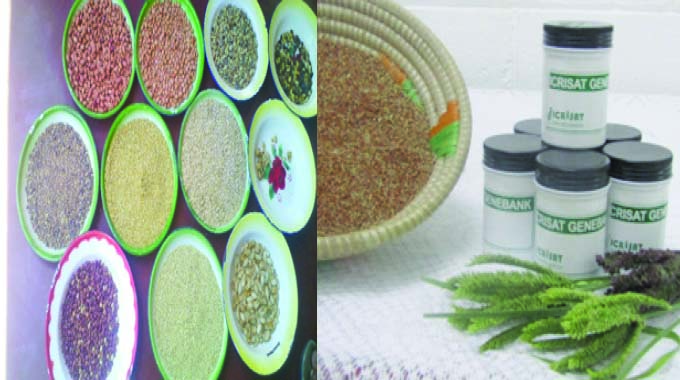
Clara Machokoto
TRADITIONAL grains production is a vital component of Zimbabwe’s agricultural landscape, particularly in the context of food security and climate resilience.
Crops such as pearl millet, finger millet, sorghum and other minor millets are not only staple foods but also play a significant role in sustaining rural livelihoods. However, the challenges posed by climate change, notably droughts exacerbated by phenomena like the El Niño, have put immense pressure on the traditional grains production.
Current production trends
In recent years, there has been a renewed focus on traditional grains due to their inherent resilience in arid and semi-arid regions. Farmers are increasingly shifting their agricultural practices to incorporate drought-tolerant varieties, leading to a gradual increase in area under traditional grains. Despite these efforts, overall production levels remain vulnerable to climate variability, soil degradation and limited access to modern and innovative agricultural technologies.
Genetic diversity: The cornerstone of resilience
The conservation of Plant Genetic Resources for Food and Agriculture (PGRFA) has emerged as a cornerstone for enhancing food security, particularly in the realm of traditional grains production. As climate variability and population growth intensify the challenges faced by farmers, the preservation and sustainable utilisation of genetic diversity in traditional grains have become critical strategies for increasing agricultural productivity and resilience.
Traditional grains are vital crops that provide essential nutrients and serve as staple foods in many regions, especially in developing countries. The conservation of their genetic resources allows for the maintenance of diverse varieties that are not only adapted to local environmental conditions but also exhibit resilience to pests, diseases and climate stresses.
This genetic diversity is crucial for breeding programmes aimed at developing new varieties that can thrive in changing climates and meet the nutritional needs of growing populations.
The integration of conserved PGRFA into agricultural systems has led to significant advancements and improved productivity in these farming systems. By utilising traditional seed varieties and modern breeding techniques, farmers gain access to crops that are better suited to their local conditions, resulting in increased yields, improved food quality, increased incomes and enhanced livelihoods. Furthermore, this conservation contributes to the preservation of cultural heritage and traditional agricultural practices, embodying the knowledge of communities that have grown them for generations.
The conservation of PGRFA fosters innovation in agricultural practices. Access to a broader genetic base enables researchers and farmers to develop climate-resilient varieties that can withstand drought, flooding, and other adverse conditions. This adaptability is especially crucial in regions where smallholder farmers face unpredictable weather patterns and limited resources, like the semi-arid regions of Zimbabwe, including Matabeleland North and South, Masvingo, parts of Manicaland and parts of Mashonaland West.
In addition to improving productivity, the conservation of traditional grains contributes to the preservation of cultural heritage. Many local varieties hold significant cultural value, embodying the knowledge and practices of communities that have cultivated them for generations. By promoting the use of these varieties, we not only enhance food systems but also strengthen community ties and promote biodiversity.
In Zimbabwe, farmers are increasingly adopting Pfumvudza/Intwasa and climate-resilient crops like millet, sorghum and cowpeas to address the escalating threat of drought, which has been intensified by El Niño. Traditional farming practices have led to soil degradation and reduced yields,
Zimbabwe’s role in conservation: Repositories of hope
The conservation of PGRFA is instrumental in fostering increased production of traditional grains. It equips farmers with the tools necessary to adapt to a changing world while preserving the genetic diversity that is essential for food security. As we continue to face global challenges, investing in the conservation and sustainable use of plant genetic resources will be key to ensuring resilient and productive agricultural systems that can support future generations.
As farmers adapt to changing climatic conditions, the preservation and enhancement of plant genetic resources become paramount.
By ensuring a diverse genetic pool, Zimbabwe can better equip its agricultural sector to meet the challenges of food security and climate resilience, ultimately supporting the livelihoods of millions of Zimbabweans.
The status of traditional grains production in Zimbabwe is intrinsically linked to the conservation efforts at the Genetic Resources and Biotechnology Institute (GRBI) which houses the National Genebank of Zimbabwe). Institutions, such as the ICRISAT Regional Genebank and the GRBI, play a crucial role in preserving the biodiversity of traditional grains, ensuring that a diverse genetic base is available for future breeding programs and adaptation strategies. These institutions are committed to preserving the biodiversity of small grains, ensuring that a diverse genetic base is available for future breeding programs and adaptation strategies.
The GRBI has an orthodox seed collection of 7726 accessions maintained under ex-situ conditions in upright storage freezers at of -21 degrees celscius temperature. At least 60 percent of the collection traditional or local crops of national importance including cereal grains like sorghum, pearl millet, finger millet as well as legumes such as cowpeas, Bambara nut and a diversity of indigenous vegetables among others.
The GRBI collection is safely duplicated at the SADC Plant Genetic Resources Center (SPGRC) in Lusaka Zambia.
The ICRISAT Regional Genebank conserves close to 10,000 accessions of traditional grains and 86 percent of the collection emanating from countries in Eastern and Southern Africa. All the these collections are available upon request and free of charge subject to the terms and conditions of the Standard Material Transfer Agreement of the International Treaty on Plant Genetic Resources for Food and Agriculture. These invaluable repositories focus on:
l Collection and Preservation: The centres actively collect and conserve traditional and improved varieties of traditional grains, safeguarding them against genetic erosion and loss within the country as well as the Eastern and Southern Africa region, respectively.
l Research and Development: Through genotypic characterization, diversity and ecogeograhic studies continues analysis of the collection is conducted to identify potentially valuable traits for high productivity, climate change adaptation, pests and diseases tolerance among others which can be incorporated into breeding programmes.
l Collaboration and Knowledge Sharing: The centres collaborate with local farmers, civil society, farmer organisations, private sector especially seed companies, as well as other local, regional and international agricultural research institutions, involved in the management and sustainable use of plant genetic resources for food and agriculture. Collaborative activities include adaptive research, germplasm collection, awareness raising programmes including training programs aimed at enhancing farmers’ understanding of the importance of biodiversity.
l Supporting Policy Frameworks: The centers also collaborate in developing policy recommendations in line with regional and global multilateral environment agreements such as the International Treaty on Plant Genetic Resources, Convention on Biological Diversity, Nagoya Protocol.
The role of the germplasm repositories caters for a wide range of users, i.e. the commercial sector through varietal improvement, farmers’ preferences, academia through support research and training and farmers through support for local seed systems germplasm repatriation and support for on farm conservation.
Looking ahead: Insights from ICRISAT
Dr M Moyo, the Country Representative, emphasises the long-term view of these efforts, highlighting the necessity of looking beyond immediate harvests.
“Traditional grains are our shield against climate uncertainty, and the genetic resources we conserve today are the architects of a food-secure tomorrow. By investing in and utilising these diverse seed banks, we’re not just planting crops, we’re planting resilience and securing the livelihoods of millions of Zimbabweans for generations to come,” says Dr Moyo.
“Investing in the conservation and sustainable use of plant genetic resources is key to ensuring resilient and productive agricultural systems that can support future generations as they face global challenges.”
“Landraces form the pinnacle of diversity for plant genetic resources,” says Mr Onismus Chipfunde, the Head of the Genetic Resources and Biotechnology Institute, Directorate of Research Education and Specialist Services, Ministry of Lands Agriculture Fisheries Water and Rural Development.
“Their ability to quickly adapt to the rapidly changing climatic conditions serves as an advantage when it comes to effective adaptation during varietal development,” says Mr Chipfunde.
Because community seed banks are the starting point of effective conservation as they capture changes in diversity in real-time, it is therefore of paramount importance to spread awareness regarding their importance, as well as to capacitate the farmers themselves in community seedbank establishment, so that they can take a leading role and actively contribute to the conservation of these precious materials.”
l The writer Clara Machokoto is a Research Officer- Genetic Resources and Biotechnology Institute, Directorate of Research Education and Specialist Services, Ministry of Lands Agriculture Fisheries Water and Rural Development and Tanyaradzwa Monicah Tenesi (Genebank Scientific Officer- ICRISAT)



 Online Reporter