admin
admin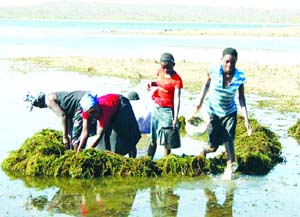
This stream of lapsed commemorations lawyers in justification, the need for collective growth pinned on a common philosophy and cause. In an array, the day of the African child, whose belated celebration in Zimbabwe was held in Harare, the international day of refugees, stand perfect paraders for a compact global community.
These commemorations, besides their individualistic programme bias, emphasise on the oneness of the world as an entity.
Recently the United Nations convened a high level meeting in New York as has been a traditional norm. The meeting, amid all other similarly crucial issues, tackled on the problems that affect the population and on discourse was not HIV and Aids but NCDs (non communicable diseases).
Here, heads of states came up with strategic resolutions to the problems linked with NCDs. This gives us the realisation that the human fabric is faced with not just one problem but different forms and
sorts of problems continue to haunt humanity and as the population grows, these problems only get worse.
As generally known, the United Nations is a governing body that pins its projects on population and growth resonance. Population has a basical implication on any development agenda. Cross cutting issues to development stifles population growth and national triumph alike.
It is through this realisation that all actors in the development fraternity need to design projects which are anticipatory to future population growth projections and the likely problems humanity can face so that service provision is not compromised at any later stage in time.
Disastrous repercussions which come with an unplanned multiplication of human density on a particular geographical space diminish human perpetuation in that said area of dwelling.
There are some low level incidents in Zimbabwe which are also a manifestation of this unplanned population boom.
Of common note are the dwindling social services plainly explained in “inadequacy”. The health sector has been one highly hit sector. A woman giving birth is expected to gulp the risk of ill medical attendance or demise due to dilapidated or “insufficient” surgical utilities.
Chasing against the attainance of the ten-year global plans, the Millennium Development Goals (MDGs), the country has made considerable strides towards the positive fulfillment of the ambitious eight MD goals whose nature has also reverberated as a possible threat to their own success.
The millennium development goals are a set of eight international development goals set by the United Nations General Council in 2001. The millennium development goals are directed to the social upliftment of all the people in the world and contain a set of performance indicators and targets as a measure of efficacy and direction.
According to the United States world population clock, the global/world population reached seven billion mark on 31 October 2011 up from an estimated population count of 6 852 472,823 as of mid-year 2010.
“With planning and the right investments in people now . . . our world of seven billion can have thriving, sustainable cities, productive labour forces that can fuel economic growth, youth populations that contribute to the well-being of economies and societies, and a generation of older people who are healthy and actively engaged in the social and economic affairs of their communities,” the United Nations Population Fund (UNFPA), said in a report that marked this population milestone.
Among the steps the report focuses on are empowering young people with economic opportunities; planning for the growth of cities; developing programmes to share and sustain the Earth’s
resources; and improving education, including sexual education.
According to the UNFPA, the great population milestone was met and marked by successes, challenges and paradoxes.
The UNFPA report singles two continents, Africa and Asia as the main contributors to this population boom.
Interestingly, these two continents also share a common poverty structure. China, it is reported, has contributed to the reduction of 400 million births through its contentious one child policy.
The policy spells out that a family can only beget a single child. It also says that in a case where, in rural areas, a family gets a first child that is a girl, that family is rendered a privilege to have another child. The provision also stretches to embrace special cases where a first child is physically impaired and suffers from psychological ill health.
The Millennium Development Goals could not have been a mere set of ambitious technicist goals but a clear potpourri of working strategies and an efficient tool in the regulation of population growth had their implementation been fuelled with all required logistical aid.
MDGs, though widely condemned for their western nature and their inability to comprehend the economic situation of poor countries on the African continent prior to setting a synchronised set of 18 targets and 48 indicators with the world over, overlooking development inequalities and their achievability, were brought about in the hope of bettering the world’s humanity.
However, the truth that achieving these MDGs demands a huge fiscal backing should not be taken in lightened earnest. African countries have been played as podiums of political machinations and further emaciated through economic exploitation inspiring revolutions thus activating Bretton Woods buttons of financial severance.
This has disjoined global concerts in Catholic attainance of MDGs and other similar targets. It is through such ratiocinations that even containing population issues will prove difficult and further alienate poor continents like Africa from global inclusion.
While some might find reason in celebrating this population increase, the poverty stricken Somalis would wince at this with reciprocal dissatisfaction. Global youths, whose percentile share in the entire population currently stand at 43 percent, will equally grace this with a diminished hope for employment opportunities and economic betterment.
It is most crucial to note with a sober eye the human development issues, an eye which does not rejoice on futile pleasures of feigned humanitarian décor.
Population regulation should be tackled with applied strategies that seek to address fuelling factors to unaccountable human multiplication. If efforts are channelled to redeeming the rustic national population, which in Zimbabwe flags at 70 percent, progress of such projects or programmes could be rightfully assessed.
Poverty remains the main concern in issues of human growth. Over the years, poverty trends in Zimbabwe and the rest of African countries has had a series of downward spiral. What then makes grave the situation is that the predicament affects more the rural population than the urban populace. Little efforts of redemption are implemented in rural areas to better the human fabric.
In Zimbabwe 70 percent of the population is rural residing and yet inequalities in urban and rural investment continue to soar unabated. Rural marginalisation is fast becoming an accepted fashion.
As the population grows, an individual shrinks in a submerging hole of growing misery. A culture so new culminates and is nurtured. Children are forced by experience to adopt and adapt. This then recreates the world anew. A world with new pillars built on the uncertainties of life. A vulnerable world prone to a decline. A new world order.
Stories of rural life are appalling and laden with sorrow. These are stories of worldly concern spiced with less action, of evident suffering and growing neglect.
The world is faced with the danger of handicap in controlling issues of human welfare, population and its sustenance. Due to a dwindling knowledge on issues of family planning, reverberating blame points out at rural folks as ignorant to participating in actions to do with family health.
In their recent population campaigns, the United Nations Population Fund launched an introspectional project dubbed 7 Billion Actions. Seven Billion Actions is a behaviour change campaign aimed at instilling a sense of individual mandate toward the responsibilities of regulating and keeping sane population situations.
It calls for the equitable input of all human entities beyond bias, a rural mother, an unemployed youth, a blue-stocking city wife, a roving vagabond, to take guardianship of the wellbeing of the social fabric, particularly population matters and family planning awarding each population hiccup with self reprimand.
Behaviour change programmes are articulated programmes that seek to restructure the psychological stance of people in a bid to instigate a new culture of socially accepted non-risk behaviour.
Behaviour change programmes (BCP) in Zimbabwe are in a path of extinction. Recently BCP has been a source of information dissemination to people where various design of media does not reach. BCP programming has therefore been an aid in ensuring a society groomed on knowledge and information. One organisation that deserves recognition in this field is SafAids.
In the Zambezi Valley, Ntengwe for community development, a local non-governmental organisation, pioneered its projects in Binga with an Aids prevention film called Musinsimuke (wake up).
Using local actors, the film appealed and blended well with the culture of the Batonga people while it introduced a topical issue of great depth.
The film was done in 2000. Among many accolades it won was the National Arts Merit Award (Nama) for its contribution in the fight against the deadly HIV and Aids and spreading the message to the most vulnerable group and is judged one of the best in the genre of films to educate and entertain young people in Africa at the Pan African Film Festival in Los Angeles.
Till today, Binga has no media coverage and unless such behaviour change programmes are effected, the community is prone to suffer a gradual demise.
This, however, has no favourable contribution to a healthy national and global population. It is in such rural communities in the entire global spectrum that neglect bears a jeopardous social aftermath.
- About the author: Zisunko Ndlovu is a development projects monitoring and evaluation expert and specialises in rural community development. He can be contacted at [email protected] siabuwadevelopment @gmail.com or call +263773111730.


 Online Reporter