Online Reporter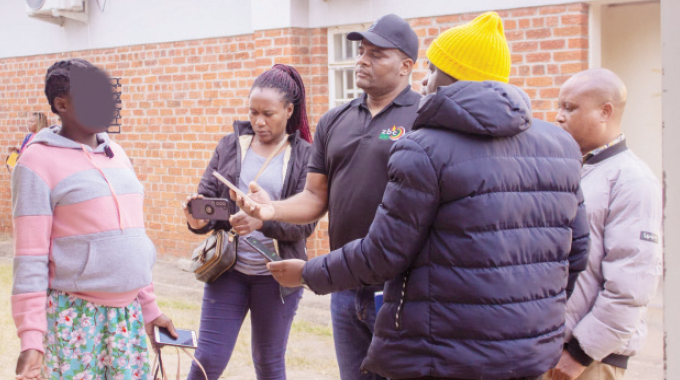
Hatred Zenenga and Micheal Garisa recently in Masvingo
In the heart of Masvingo, where challenges abound, stories of desperation and resilience emerge from unexpected places.
One such story is that of Sithembinkosi Dlodlo* (Not her real name) , a 25-year-old pregnant woman navigating the complexities of life as a sex worker. One can be forgiven for thinking that the pregnancy is from her escapades as a sex worker. But alas! Sithembinkosi’s marriage collapsed a couple of months ago, and she found herself in a desperate situation.
“I joined sex work three months ago when my marriage crumbled. I had no choice after my husband abandoned me and went to live with another woman,” she confesses, her voice quivering with raw emotion. “I didn’t have any source of income, and I needed to buy clothes and prepare for my baby. He could come any time now.”
Sithembinkosi’s journey is not unique. Many women in Zimbabwe, facing limited opportunities, are compelled to turn to sex work for survival. The dangers of this choice are stark, particularly for pregnant women like her, who face increased risks of violence and health issues.
Yet, amid these trials and tribulations, Sithembinkosi has discovered a beacon of hope through the Public Sector Key Populations (KP) Programme, spearheaded by the National Aids Council (NAC). This initiative has emerged as a critical lifeline for vulnerable individuals, especially female sex workers, following significant cuts in donor funding that closed many NGO-run clinics.
“I feel safe here,” Sithembinkosi remarks of her visits to Gutu Rural Hospital. “They don’t judge me. They give me PrEP, test me, monitor my baby and treat me with respect.”
The services provided — antenatal care, HIV counselling, Pre-Exposure Prophylaxis (PrEP) and more — are offered free of charge, emphasising a public health approach that prioritises dignity and respect. The transformation within health facilities stems from specialised training, aimed at creating a welcoming environment for sex workers.
Pre-Exposure Prophylaxis (PrEP) is a preventive strategy for individuals at high risk of contracting HIV. It involves the daily use of antiretroviral medication to significantly reduce the chance of infection. When taken consistently, PrEP can reduce the risk of HIV infection by over 90 percent.
The District Aids Co-ordinator for Gutu, Pasca Mukuwe, underscored the programme’s purpose: “Sex workers are among the most vulnerable. They struggle to access services. So, we are bringing services to their doorstep and creating a KP-friendly environment at our health facilities.”
This shift in approach is not merely logistical; it embodies a philosophical commitment to inclusivity — a vision championed by NAC and UNAids to end Aids by 2030.
At Jerera Growth Point in Zaka, Sarudzai Kunodziya, another sex worker, shares Sithembinkosi’s sentiments. “Even when other programmes closed, this one never stopped. They continued giving us male and female condoms,” she says. “The Community-Led Monitoring initiative has also helped us speak openly about problems we face at clinics.”
This initiative empowers sex workers to monitor healthcare services, report discrimination and collaborate with health staff, fostering a more responsive healthcare system.
Sister Farirai Dambwara, a midwife at Gutu Rural Hospital, notes the positive evolution in staff attitudes since the programme’s inception. “There is no discrimination. We offer all services free of charge, just like we do for anyone else,” she affirms.
Understanding the unique needs of sex workers, the programme has instituted quarterly night clinics, ensuring that healthcare is accessible to those who work outside traditional hours. “We take the services to where they are,” explains Sister Rejoice Makuzva of Jerera Satellite Clinic.
To enhance outreach, peer educators and community health workers are engaged, building trust and ensuring that those most in need receive care. The programme has seen steady growth since its inception in 2022, fundamentally reshaping the HIV response strategy in Zaka.
“This programme has really enhanced the way we do our work. In HIV, we say no one should be left behind,” says Anastacia Zendakwaye, the District Aids Co-ordinator for Zaka.
NAC is committed to embedding KP services within public health facilities, ensuring that even in the absence of donor funding, vulnerable populations will receive the support they need.
The impact is significant. At Jerera Satellite Clinic, over 90 female sex workers are officially registered, although healthcare workers believe the actual number may exceed 500, hindered by stigma and fear.
“But we are reaching them,” Sister Makuzva assures. “Our counsellors go into the community. We have also introduced door-to-door services.”
Ultimately, the Public Sector KP Programme represents more than just healthcare; it symbolises a recognition of dignity for women like Sithembinkosi and Sarudzai, whose lives often remain overshadowed by marginalisation. As Zimbabwe grapples with economic instability and dwindling funding sources, such community-driven initiatives become essential.
“Sex workers are human beings with the same rights to health and protection,” emphasises Mukuwe. “And this programme ensures they get exactly that.”
Sunday News/Health Times.