Online Reporter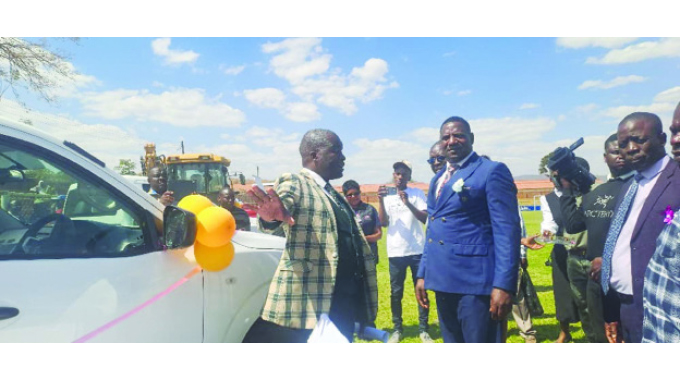
Fungai Lupande-Mashonaland Central Bureau
WHEN a convoy of brand new service delivery vehicles rolled into Shamva last Friday, it was more than just a parade of machinery.
For residents of this rural district in Mashonaland Central Province, it marked a turning point, a visible sign that the Government’s devolution policy is beginning to reshape their communities.
The Chaminuka Rural District Council (RDC) unveiled an array of equipment worth hundreds of thousands of dollars, all aimed at modernising local governance and improving service delivery.
Among the highlights was a brand-new CAT motorised grader valued at US$393 880, purchased through devolution funds.
The machine will be crucial for maintaining and constructing roads in the district, long plagued by dust and potholes.
A year earlier, the Civil Protection Unit had added another lifeline — a US$464 296 fire tender — boosting Shamva’s capacity to respond to emergencies and disasters.
On Friday, these additions were complemented by a fleet of new council vehicles, refuse collection tractors, trailers and motorbikes, some bought through council’s own internal revenues.
Speaking during the commissioning ceremony, Council chairperson, Councillor Simon Matibairakupusa, said the investments prove that devolution has shifted from theory to practice.
“Devolution is no longer just a concept; it is delivering tangible results on the ground,” said Cllr Matibairakupusa.
“These assets will allow us to provide cleaner environments, safer roads and quicker emergency responses.”
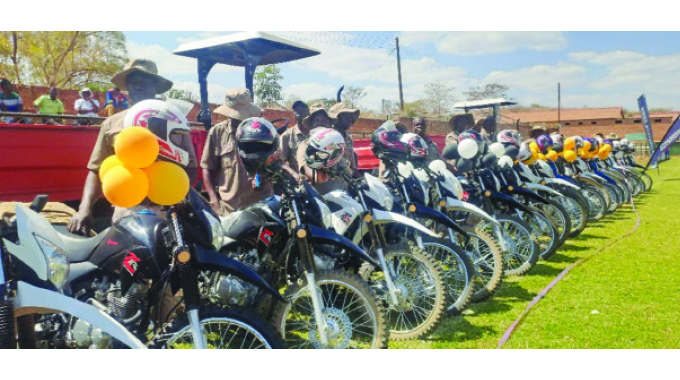
The bikes
The list of new acquisitions reads like a catalogue of transformation.
Two refuse collection tractors with dumper trailers worth US$40 850 were purchased for the Madziwa and Chakonda business centres.
A tractor-loader-backhoe (US$53 475), a tipper truck (US$65 000), three Nissan Navara single-cab vehicles (US$88 200), and a Toyota Fortuner for the chief executive officer (US$75 700) were added to the fleet.
The council chairperson’s office received a Ford Ranger double cab worth US$45 595, while 41 motorbikes were bought at a total cost of US$51 865 to ease councillors’ mobility across far-flung wards.
For local leaders like Councillor Rodwell Chidzungu, who covers a sprawling Ward 6 with 16 villages, the motorbike was a lifeline.
“Travelling from Kasukuwere to Chionde has not been easy,” he said.
“Out of the 16 villages, only nine have access to water. We lost several people to cholera, and I need to be present on the ground as their Councillor. With this motorbike, I can reach them faster.”
Women’s quota representative, Councillor Spiwe Zirori, shared similar relief.
Her role demands constant engagement with communities across the district for issues such as child abuse and gender-based violence.
“The motorbike will make my job easier,” she said.
“When women meet, we reach out and spread awareness about child abuse and gender-based violence.
“We thank the President for providing us with the resources.
“Before, we were limited to the wards where we lived, which left others behind.”
The acquisitions are in line with Vision 2030 and the National Development Strategy 1 (NDS1), which emphasise modern infrastructure and efficient service delivery.
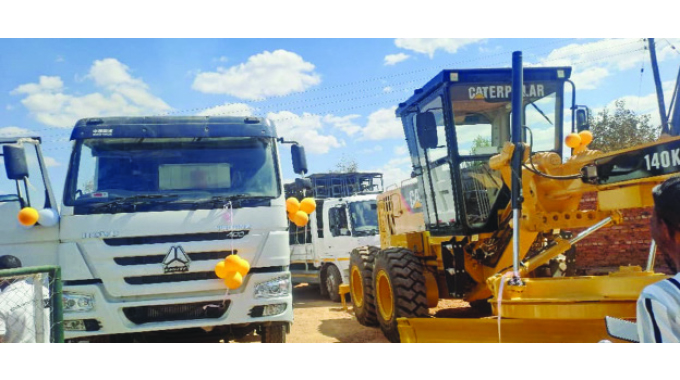
Road maintenance equipment purchased using devolution funds.
They also align with the Minimum Service Delivery Standards launched by President Mnangagwa in June, setting benchmarks in water, sanitation, waste management, roads and environmental health.
Minister of State for Provincial Affairs and Devolution, Christopher Magomo, commended Chaminuka RDC for making the most of limited resources.
“These assets are tools for accelerating progress, enabling effective governance and improving people’s lives,” said Minister Magomo.
“They reflect the core values of the Second Republic under President Mnangagwa’s leadership of transparency, accountability and people-centred service delivery.”
The event also spotlighted the role of public-private partnerships.
Shamva Gold Mine was praised for its corporate social responsibility initiatives in the district, which Minister Magomo said demonstrated the importance of collaboration between Government, local authorities and the private sector.
“This partnership model, where Government, local authorities, and the private sector collaborate, is a hallmark of the Second Republic” said Minister Magomo.
“As the President often reminds us, nyika inovakwa nevene vayo — a country is built by its people.”
Yet, challenges remain.
Chaminuka RDC still grapples with legacy debts, delayed layout plan approvals and inconsistent devolution disbursements.
But council leaders insist that better revenue collection, community engagement and strategic prioritisation will help them bypass these hurdles.
For now, the sight of graders, tippers, fire tenders and motorbikes moving through Shamva has brought a new sense of optimism.
To residents who have endured years of poor roads, erratic refuse collection and limited access to their leaders, these machines are engines of possibility.



 Bongani Ndlovu