

 Online Reporter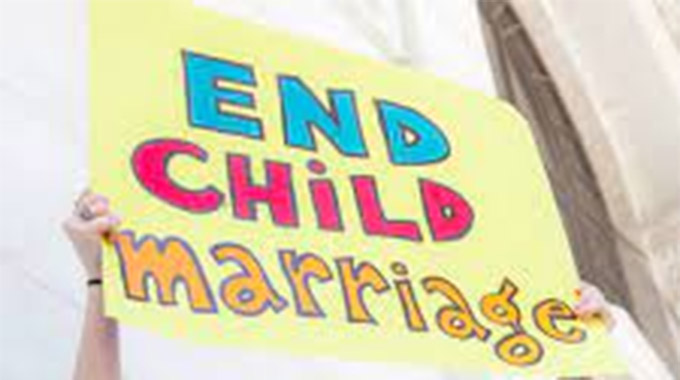
Fungai Lupande
Mashonaland Central Bureau
In Shamva District, where the clang of mining tools and the bustle of tobacco fields often compete with the sound of a school bell, the Not in My Village campaign is steadily pushing back against child marriages, gender-based violence and rising HIV infections among adolescent girls and young women.
For years, the district has grappled with high rates of child marriages, teenage pregnancies and school dropouts, particularly in hotspots such as Mupfure and Chihuri.
Yet, even as the campaign records tangible progress, the reality on the ground remains complex, and school dropouts persist.
During the first term alone this year, 24 learners, mostly girls, dropped out in Shamva District.
The reasons are varied but interconnected, early marriages and teenage pregnancies, absconding from school, involvement in gold panning and engagement in tobacco farming.
Many of the affected learners are beneficiaries of school bursaries, highlighting that financial support alone is not enough to keep children in school.
Gender-based violence and weak parental supervision, especially in resettlement and mining communities, continue to expose girls to risks that derail their education.
At the same time, economic pressures are pushing children out of classrooms and into adult responsibilities far too early.
Child-headed households are also on the rise, as parents migrate to mining areas in search of livelihoods.
However, traditional leaders are no longer standing on the sidelines.
Chief Bushu, born Gracious Mukanwa, says chiefs across Shamva, including Mutumba, Nyamaropa and Madziwa, have intensified efforts to protect the girl child.
The Not in My Village campaign, a community-driven initiative led by traditional leaders in partnership with the National AIDS Council, UNICEF Zimbabwe and various Government departments, is beginning to shift both behaviour and attitudes.
“We are working together to curb child marriages and abolish harmful practices that place girls at risk. Through the Not in My Village campaign, we are seeing change,” said Chief Bushu.
Village heads now convene monthly meetings with Chiefs, councillors and legislators to monitor cases on the ground, ensuring incidents of abuse or early marriages do not go unreported.
Traditional courts have also stepped up enforcement, imposing stiffer penalties on perpetrators, a move that is sending a strong message across communities.
“We are changing mindsets, one village at a time. Beyond enforcement, the campaign is reshaping attitudes,” he said.
Safe spaces for girls have been established through mentorship initiatives such as Nyanga and Tseketsa programmes, where young people receive guidance on life skills, education and health.
In a culturally innovative approach, Chiefs in Shamva have expanded the traditional Zunde raMambo concept to include Zunde reMwanasikana, a dedicated fund supporting girls’ education and facilitating their return to school after dropping out.
Parents are also being drawn into the conversation.
“We are encouraging families to send children to school and report cases of child marriages. Some were previously hidden, but now there is more openness,” said Chief Bushu.
Health-based interventions are reinforcing these efforts. New vending sites have been established away from gold mining areas to reduce children’s exposure to risky environments, while targeted programmes are addressing the health vulnerabilities of adolescent girls.
Despite these gains, the persistence of school dropouts underscores the scale of the challenge.
“Our area is vast, and reaching every corner remains difficult. We need more support to expand these programmes,” Chief Bushu acknowledged.
What is emerging in Shamva is a model of integrated community action, where traditional leadership, health systems and education authorities converge to protect the girl child.
The National AIDS Council, working with UNICEF Zimbabwe and the Ministry of Health and Child Care, has rolled out the Young Mentor Mothers programme in high-volume areas.
District AIDS Coordinator Mr Sheppard Zananwe said the initiative targets adolescent girls and young women, who remain at high risk of HIV infection.
“We have trained 21 young mentor mothers across 19 health facilities. These are young women, some of them survivors of child marriages, who are now helping others with information on HIV prevention, family planning and mental health,” he said.
The programme promotes a combination of prevention strategies, including HIV testing, condom use, STI awareness and Pre-Exposure Prophylaxis (PrEP).
As a result, HIV prevalence in the district has declined from 8.43 percent in 2023 to 6,4 percent in 2025, while new infections have dropped from 0,13 percent to 0,08 percent.
“These interventions are beginning to make a difference, especially in empowering young women with knowledge and choices,” said Mr Zananwe.
For Chief Dotito, the fight is deeply personal. He recalls how his own daughter nearly dropped out of school at 14 after considering early marriage.
“It was unimaginable for me as a Chief while leading this campaign,” he said.
With intervention from the Department of Social Development, she received counselling and returned to school.
Today, she is a medical doctor based in Poland, a powerful testament to what is possible when timely support is provided.
Encouragingly, cases of child marriages, gender-based violence and new HIV infections are beginning to decline, while community awareness continues to rise.
But the battle is far from over.
Across Shamva and other parts of Zimbabwe, the message is growing louder and clearer: “harmful practices are no longer welcome, and keeping every child in school is the next frontier”.




The way we analyse our problems as a country is like we are faced with an invasion by an alien race from another planet that comes and creates havoc within our communities and go back to their planet thereafter. Shouldn’t we remind one another that we are the same people that are creating these problems and then suffer from them? All these problems are created by our failures to do the right things, to hold ourselves accountable and failure to take action. Under age girls are not married off to dogs. They are exploited by old mature men. Truancy by children is a symptom of poor parenting and the reluctance of communities and teachers to take responsibility for nurturing children properly. It is is not the state of the economy that influences children to abandon school and go out to look for money. It is greed and lack of supervision by parents, community and teachers. We can talk about these problems until Jesus Christ returns, but as long as we don’t retake the responsibility for our children,the problems will get worse.