admin
admin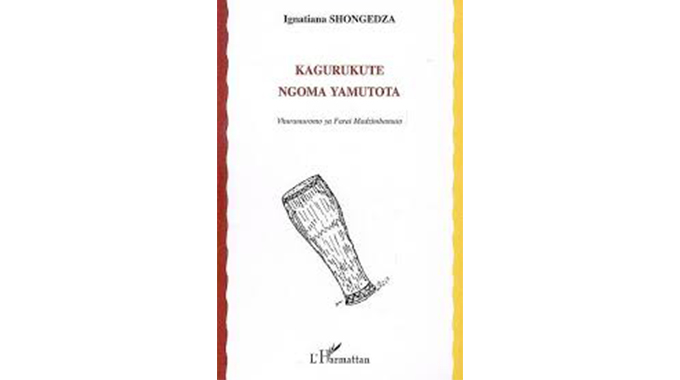
Elliot Ziwira, At the Bookstore
In “Kagurukute Ngoma YaMutota”, Ignatiana Shongedza debunks the weather-beaten notion that African culture is oppressive to women, relegating them to the periphery as child-bearers and cooks, and demystifies perceived bloody succession issues in Africa.
Shongedza’s writing challenges the view that African societies are patriarchal, instead revealing a complex web of relationships where women wield significant influence. However, she also acknowledges the societal pressures that lead to deceit and shame, particularly in cases of pre-marital relationships.
The novel explores themes of succession, death, and the afterlife, offering insights into Shona cultural practices and traditions.
It is a powerful commentary on the social norms and expectations that govern African societies.
The author confronts the Eurocentric viewpoint that Africans discovered God through colonisation, emphasising the importance of indigenous cultural heritage.
Like Crymio Kutyauripo in “Museve Usingapotse” (2014), Shongedza adeptly explores the intricate web of relations within the royal family, highlighting the pivotal role women play in nurturing social cohesion and harmony.
In the historical fiction, the author skilfully examines how death, friendship, humility, culture, religion, and marriage influence the way communities interact and merge.
A reputable academic, who has earned two doctorate degrees through extensively researching on the emancipation of women in Africa, Shongedza answers Chinua Achebe’s call in “African Writers Talking” (1972).
Achebe reasons: “What I think a novelist can teach is something very fundamental, namely to indicate to his readers, to put it crudely that we in Africa did not hear of culture for the first time from Europeans”.
Indeed, Africans have always been proud of the cultural mores and values shaping their world-view since the beginning of time.
It will be trite, therefore, to think that Europeans brought civilisation and cultural etiquette to the African people’s doorsteps.
Riding on the essence of language and its aesthetics, Shongedza explores contemporary issues using lenses from a collective past in which the storyteller is revered.
As Chinweizu et al (1985), posit, the artist in the traditional milieu has always functioned as the custodian of the customs of his people.
She has always come to truth’s defence in the most discerning of ways, through storytelling, singing, miming, and dancing, from one generation to another.
It has to be recalled that in colonial Rhodesia, the government waged a war of cultural suppression, exploiting indigenous languages to perpetuate stereotypes, erode spiritual foundations, and mystify cultural icons.
The Rhodesia Literature Bureau, for instance, acted as a gatekeeper, manufacturing writers who betrayed their own people, sacrificing artistic integrity for publication and fame.
Early African-language literature was a tool of cultural dislocation, designed to sever Africans from their heritage and anaesthetise them to their suffering with fleeting escapes into urban vices.
This toxic narrative portrayed city women as morally bankrupt, and urban men as reckless and pretentious, yet when crisis struck, they fled to their rural roots for solace. Tragically, many Zimbabwean writers have since abandoned their mother tongues, chasing sponsored themes, instead.
It is this gap that Shongedza and other emerging writers in the Shona tradition, like Kutyauripo, Oscar Gwiriri and Obvious Dziwanyika in “Museve Usingapotse (2014), “Hatiponi (2019), and “Chomubako” (2020), respectively, seek to close.
Set in pre-colonial Zimbabwe, “Kagurukute Ngoma YaMutota” delves into the complexities of Shona culture, challenging Eurocentric notions and stereotypes.
Using powerful language, metaphors and symbolism, complemented by vivid prose and dramatic conventions, the artist transports the reader to a world of suspense and intrigue, where women are the unsung heroes.
Although she has spent more than three decades in the Diaspora, Shongedza remains linked to her Zimbabwean roots. A true cultural ambassador, her depth of language and thorough understanding of African culture is astoundingly original.
Somewhere along the historical path, a monstrous barricade was erected to separate the African from his source.
It began with the deliberate clash of Gods; the Christian God and the African God, worshipped through the ancestors, followed by cultural dilution and loss of language.
When language, which is culture’s informant, is lost, then a society’s generational body of wisdom and knowledge disintegrates.
Through VaMakwiradombo, the senior wife of Paramount Chief Nyangu, Shongedza showcases women’s responsibilities in managing households, choosing wives for the chief, and ensuring royal sisters’ behaviour aligns with expectations.
To the reader’s benefit, the Chief reminds VaMakwiradombo of her symbolic role in the running of the state and royal household. Thus, she is held in high regard.
Women are also pivotal in fostering social and political alliances through inter-marriages.
Princesses are expected to embody exemplary behaviour, maintaining the royal family’s reputation.
Aunts and grandmothers play a crucial role in guiding their nieces’ behaviour, and in some cases, shielding the family name from shame.
However, Shongedza does not shy away from exploring the human follies of royalty, including deceit and lust.
Newly married Katoya, and her sister, Mwiti— two of the princesses, are sweet-talked into intimacy by the deceitful Mutambatuvisi, who lies to the former that her husband has died.
He impregnates both of them and later marries Mwiti to raise his social and political bar, as he is also distantly related to VaMakwiradombo.
However, to the Shona people there is no such thing as a distant relationship.
Their aunt, VaNdege, deceitfully forces Katoya’s pregnancy on her unsuspecting husband, Masango, who surprisingly resurfaces.
This scheming disappoints the Chief’s Sahwira and traditional healer, VaMuparadzi, who sees through their folly, and jokingly admonishes it.
However, social cohesion is maintained as both marriages amicably subsist.
Deceit on the part of aunts as depicted in “Kagurukute Ngoma YaMutota”, is not unique.
It is common in African communities, as the need to protect the family name takes precedence over virtue.
Women are expected to remain chaste until they marry at around 20 years, and if they are found wanting, the aunts shoulder the shame.
Also, Shongedza visits the succession issue in Africa believed to leave bloodbaths in its wake.
Feeling incapacitated through old age and illness, Chief Nyangu, the father, is succeeded by his son, Toshefa.
In a society where one’s wealth is determined by the number of wives and cattle he has, and not mineral wealth, Chief Nyangu has many wives befitting his status. Therefore, he offers his younger wives for inheritance to his son, instead of holding on to them.
Appropriately playing her role as a custodian of the customs of her people, Shongedza highlights the significance of culture in moulding the individual, and how African religion can be used in his/her redemption.
She explores the rich African cultural landscape, untainted by foreign influence to demystify the cultural bankruptcy brought by colonialism.
Her world is a true African one whose hope is only manifest in its own sensibilities.
The writer examines how African religion, through the invocation of ancestral spirits, has always been used to bring communion among the living and the dead.
Traditional ceremonies like the burial of a loved one, including chiefs, the rainmaker’s rituals, and rites to bring the spirit of the dead to the fold, play an integral part in establishing this fruitful communion.
Death is revered in African societies, and the dead are respected, since they are believed to join the ancestors and look after their families from the spiritual realm.
The chief’s death and his burial are shrouded in mystery, for he is regarded closest to the ancestors and Mwari-Musikavanhu.
Furthermore, fear of avenging spirits leads to murder being frowned at.
Shongedza also explores the use of the drum in communicating messages of death, war, celebration, and exuberance in the African context.
She lambasts the Eurocentric belief that Africans knew of God for the first time from foreigners through colonisation. Colonisation only brought Christianity and Jesus Christ, and not God, the omniscient, omnipresent and omnipotent force they had always worshipped through their ancestors.
Though she is aware of the moulding potency of culture at the personal, familial, communal and national levels, the author is conscious of the bane of cultural stasis and paralysis.
She advocates for the creation of cultural interfaces for societal regeneration and progress, insisting that not all alien cultural norms are destructive, with the reverse also standing true.
Overall, “Kagurukute Ngoma YaMutota” (2007) testifies to the enduring power of African culture and the importance of preserving traditional values.
Shongedza’s work is a call to action, imploring readers to reclaim their cultural heritage and challenge the dominant narratives that have been imposed upon them.
Her masterful storytelling and meticulous research have resulted in a work that is both entertaining and didactic.
It is a must-read book for serious followers of the historical novel as it contributes immensely to the body of knowledge on the rich Zimbabwean culture, purveyed in powerful and captivating language.



 Online Reporter