


 Online Reporter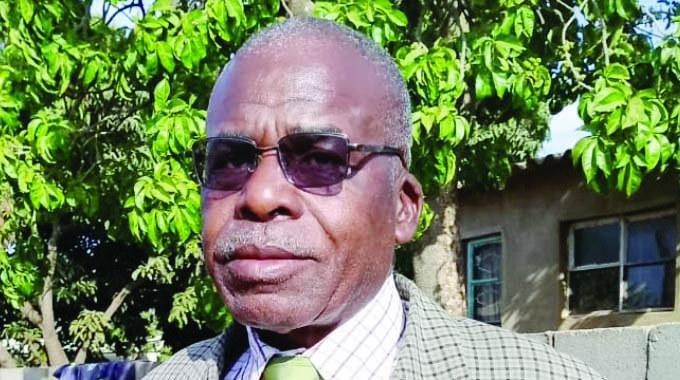
WE conclude our interview with Cde Vivian Viyo Siziba, pseudonym Cde Mangezi. Cde Siziba was initially detained before leaving the country to receive military training as a freedom fighter in Angola. He continues his narration below in a conversation with our Assistant Editor, Mkhululi Sibanda (MS). The following are excerpts from the interview:
MS: You told us last week that you decided to leave the country to join the armed struggle. Please resume your narration from that point.
Cde Siziba: Before I speak about my journey to join the armed struggle, allow me to go back a little. After the ZPRA forces shot down the Rhodesian Viscount on 3 September 1978 using a heat-seeking missile — the Strela — the Rhodesian government initially denied the incident, possibly in an attempt to manage the information or out of embarrassment. They only admitted to it after Dr Joshua Nkomo gave interviews to the foreign press stating that his forces were responsible. However, when asked what type of weapons ZPRA had used, Nkomo sarcastically said they had used stones.
This infuriated the Rhodesians further. Ian Smith, the Rhodesian Prime Minister, then issued a broadcast declaring that there would be no further negotiations with Nkomo or any other nationalist forces. He said he was cutting off all negotiations and later held a press conference where he promised revenge, stating that such retaliation was not going to be a “picnic or a cinema visit” and would require careful planning. This triggered a crackdown on political activities and former detainees, many of whom were rounded up, including Doubt Mabusa, my manager at Sound Credit Stores, who had previously been detained.
MS: Please continue.
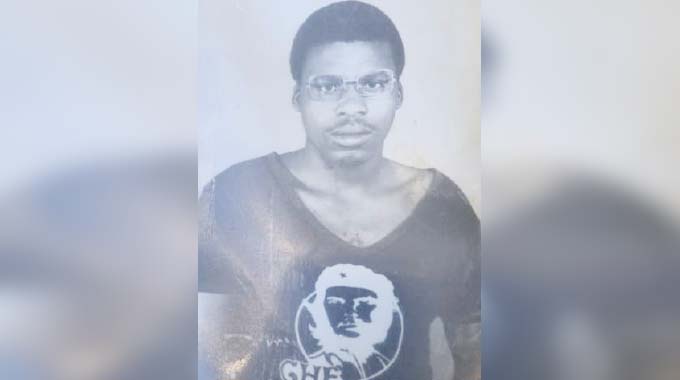
Cde Siziba: I realised I was at risk of being picked up and detained again. Many of those I had been detained with such as now Harare lawyer, Colonel Francis Chirimuuta had already left the country to join the armed struggle. Col Chirimuuta later served in Zapu’s intelligence unit, the National Order and Security (NSO), led by Dumiso Dabengwa. I then arranged with Jethro Ntshimani Gwate, also a former detainee, to leave the country. I was cautious this time to avoid a repeat of what happened in 1975, when I was arrested while trying to cross the border. I reasoned that leaving mid-week might arouse suspicion, especially if my movements were being monitored. So, we decided to leave on a Friday after work. We boarded a Pelandaba bus to Gobatema Mission in the Mkomane area in Gwanda and encountered no problems on the way. We spent the night at the homestead of an ex-detainee, Alfred Gotshani Dube.
MS: When exactly was this?
Cde Siziba: That Friday was 15 September 1978. We stayed at Dube’s homestead until the afternoon. Later that day, we walked towards the Botswana border, crossing it around 6am the following morning. We proceeded to Selepeni and were later transported to Gobajango, where we met others like Thokozani Tengani Ncube. We remained at a homestead there for between five and seven days until a United Nations truck picked us up and transported us to Bonong. From there, we were taken to Selibe-Phikwe Refugee Camp. At that time, many people were leaving the country to join the struggle. It was not easy to be sent to Zambia for training, but those of us who had been previously detained were given priority. While we were still at Phikwe, both ZPRA camps — Mkushi (for women) and Freedom Camp were attacked on the same day, 19 October 1978. This was part of the revenge Smith had spoken about.
MS: How did you and others at Selibe-Phikwe react to the bombings?
Cde Siziba: I won’t lie — the bombings had a significant psychological effect. We had always believed the ZPRA camps in Zambia were impenetrable. Those attacks shattered that belief. Nevertheless, we remained determined to receive training and fight the Smith regime. We eventually left Botswana on a Swaziland Airlines commercial flight.
Upon arriving in Zambia, we were taken to Nampundwe Transit Camp, which by then had relocated to Maheba as a security measure. The old setup — where recruits were taken under the guise of meeting Nkomo — no longer existed. We were initially deployed in the bush near a river before being moved to Maheba. Along the way, we were joined by comrades, who had been at Freedom Camp. We travelled overnight through the Copperbelt and arrived at Maheba around 11am. I was assigned to Base 2. There were three bases in total, with Base One serving as headquarters. Later, a group of 200, including myself, was selected and driven to a base near Ndola, where we were under the care of the Zambian Army. A Zambian officer informed us we were being sent to a distant country. We boarded an Angolan aircraft with the inscription “TAAG”, likely meaning Angolan Airways.
MS: Please tell us about your journey to Angola.
Cde Siziba: We flew from Ndola Airport directly to Luanda, arriving late at night. We spent the night there, vulnerable to mosquitoes. At the time, the airport was in poor condition due to the ongoing conflict between the MPLA government under Neto and Unita led by Jonas Savimbi. The next day around noon, we flew to a place called Saurimo, approximately an hour’s flight from Luanda. We had assumed we were being taken to Ethiopia for training.
At Saurimo, we met the 3rd Group, which had just completed its training in Angola. We were to replace them. Our group of 200 was taken by Russian KrAZ trucks to Boma, near Luene (now called Luso). However, a few of us —myself included, along with someone named Kuda had developed swollen feet. A Cuban doctor advised us not to travel and to remain under observation. The rest of the group proceeded and arrived at the camp at night. The following morning, the camp was bombed.
MS: That was a close call for you.
Cde Siziba: Indeed. The raid took place on 26 February 1979. Despite the damage, where a big number were killed and hundreds injured, comrades, including the newly arrived members of our group escaped, thanks to the rudimentary training we had received in Zambia. We eventually joined them at the camp and began our training. Due to the attack, it was decided that no additional recruits would be sent, so our group remained relatively small, between 150 and 180 trainees compared to earlier intakes of 2 000. We were issued new AK-47 rifles and trained primarily by ZPRA cadres, while Cuban personnel focused on monitoring and evaluation. Each platoon had both a Cuban and a Zimbabwean officer.
MS: Who were your ZPRA instructors?
Cde Siziba: The Camp Commander was Cde Ronald Chogwe, nicknamed “Mbotsheni” due to his flawed SiNdebele. He was fluent in Shona and often mispronounced Ndebele words. He managed all bases alongside his Cuban counterpart. Among our instructors were the late national hero Major-General Sydney Bhebhe, as well as comrades Pleasure, Luladi, Chihota and Jabulani Sibanda, now the Zanu-PF Bulawayo Province Chairman. A few years ago, I was surprised when people, including senior politicians, questioned Jabulani Sibanda’s liberation war credentials. We found him in Angola, already trained and chosen by the Cubans to serve on the camp staff.
MS: What did your training entail?
Cde Siziba: Our training syllabus included:
1. Guerrilla tactics, including hit-and-run strategies and ambushes.
2. Conventional tactics.
3. Basic communication.
4. Military engineering, such as demolitions targeting high-value installations.
We also studied the enemy’s arsenal, including:
FAL/FN rifles — to understand and potentially repurpose captured weapons.
Enemy aircraft: Hawker Hunter jets, Vampires, Canberra bombers and more.
Some crews trained in the use of tanks, mortars and signals, our group concentrated on infantry operations.
After our training, we were joined by more than 2 000 new recruits, many from Mashonaland Central and West, where ZPRA had recruited heavily. I became part of the support staff. That group trained about 60 km from Malanje Town, as we had relocated from Luso. We were still in Angola when independence was achieved. We only returned home in May 1981, along with the new intake and the camp leadership.
MS: What did you do after returning home?
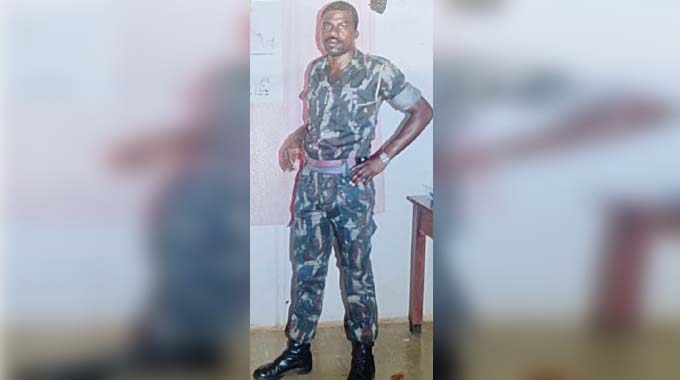
Cde Siziba: I joined the Zimbabwe National Army. I was initially posted to 3.7 Battalion in Nyazura under Officer Commanding Brigadier-General (Rtd) Ben Matiwaza, a Lt-Col then with whom I had worked under in Angola. Later, I was transferred to Army Headquarters and worked in the pay office. By the time I left the army in October 1994, I was serving as an Inpresent Cashier at Imbizo Barracks. I had gone to war with a full O-level certificate and continued my education while serving, completing A-levels and several professional courses. After leaving the army, I transitioned into the insurance industry.


 Bongani Ndlovu