admin
admin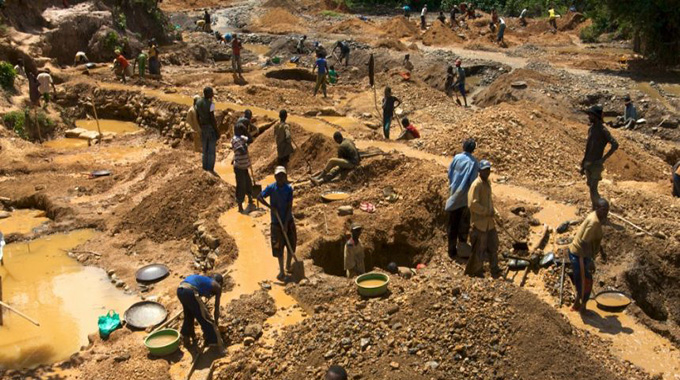
Khumbulani, Nkomo
THIS week’s article is going to look at insights into the potential and positive impact of small-scale mining. Small-scale mining has been a source of livelihood for a significant number of people in Zimbabwe for decades.
The positive impacts linked to small scale mining activities in the country include contribution to employment, development of the area where small-scale mines are conducted, revenue collection at the local and national levels and marketing of the region where the small scale mine activities are being mined for potential future investment.
These collectively enhance the livelihood of the small scale mines operators and their associated local settings and consequently the national economy.
Small-scale mining has considerable potential to reduce poverty and according to national statistics Small Scale Mines communities fare better in terms of poverty levels than other communities.
In addition to being a source of wealth creation, asset accumulation and investment, Small Scale Mining has the potential to increase people’s livelihood security and reduce their vulnerability.
The simplification of the licensing system, coupled with government support of small scale mines has led to the expansion of the small-scale mining sector. Small-scale mining has therefore been a source of livelihood for a significant number of people in Zimbabwe for decades.
The average official contribution of the mining sector in Zimbabwe’s economic growth has increased over the past years making it a good sector to venture into. Small-scale mining has had broad positive benefits which include providing employment where economic alternatives are critically limited, providing an alternative to agriculture in the face of structural adjustment programmes, at the same time as reinvigorating smallholder farming activities.
Small-scale mines can also be a catalyst in the growth of infrastructure, create downstream employment, accommodate a range of occupations such as service people (drivers, cooks, clothing merchants), semi-skilled labourers (machine operators, repairmen) and skilled occupations (bookkeepers, accountants, technicians). Small-scale mines also contribute to economic growth.
Most of the mineral extracting methods used in small-scale mining involve techniques that are manual and labour intensive. Most activities done, however, have to put into consideration the aspect of health, safety and environmental regulatory requirements, or widely accepted good practices and standards. As the mines function, the main aim is to reach efficiency and be able to have sustainable development from what is being exploited.
In summary the small-scale mining has so far showed constant growth and proved itself to be a lucrative business. Not only has it reduced poverty but it has brought about the growth and development of many places.



 Online Reporter