Nyasha Simbisai
Agriculture Correspondent
GOVERNMENT has urged farmers to invest in solar-powered irrigation systems to boost production and ensure national food security.
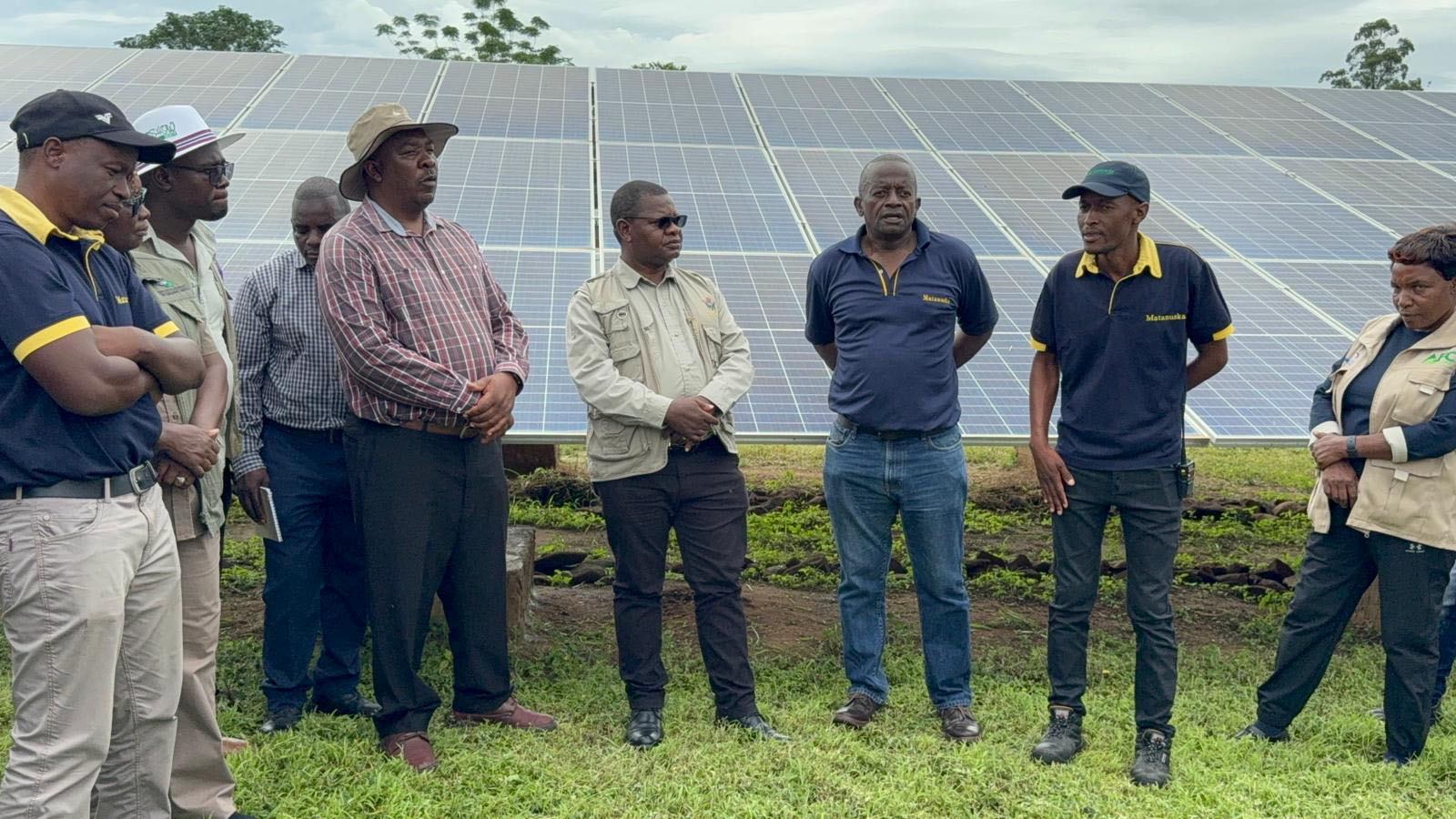
Lands, Agriculture, Fisheries, Water and Rural Development Permanent Secretary Professor Obert Jiri made the remarks at a visit to Matanuska Banana Estates in Manicaland.
The farm invested about US$1,2 million in solar power infrastructure to secure reliable electricity for irrigation and day-to-day operations.
It had been experiencing power shortages, which constrained banana production.
The Permanent Secretary said wider adoption of solar-powered irrigation would strengthen agricultural productivity, reduce dependence on the national grid and improve climate resilience.
“Solar allows farmers to take themselves off the grid, or partly off the grid, and enjoy the benefits that come with reliable power,” said Prof Jiri.
Prof Jiri said farmers had an advantage in transitioning to solar energy because they possess land and basic infrastructure that can be integrated with renewable power systems.
“Farmers already have the land and the infrastructure. If you want to connect to the grid and put smart metering, that infrastructure is already there.
“If you install your own solar, you can always smart meter the excess and trade that power,” he said.
He acknowledged that the initial capital required to set up solar systems can be prohibitive for many farmers, but said the opportunity cost of not investing in renewable energy was far greater.
“When you look at the opportunity cost, you find that it is better to invest in solar energy than not to,” said Prof Jiri.
He said many farmers wrongly assumed that solar irrigation required large and expensive systems, yet most operations only needed modest installations tailored to their irrigation needs.
“Most farmers do not need big systems. They need much smaller ones that meet their production requirements,” he said.
Prof Jiri also challenged financial institutions to recognise solar-powered irrigation as a viable and bankable investment.
“Once you install solar, that power is used for production. That means the money will come back. Our financiers must see the opportunity that exists in the farming community,” he said.
He said access to reliable power was fundamental to irrigation and agricultural output.
“You cannot irrigate if you do not have power. Solar, therefore, becomes a must-have for our farms,” said Prof Jiri.
He said the Government would continue encouraging farmers and financiers to embrace renewable energy as part of efforts to modernise agriculture and secure food production.
Matanuska Farm experienced electricity shortages during the 2019 season, which reduced irrigation time to only six hours a day instead of the 24 hours required by the crop.
The farm official responsible for the solar system, Mr Collins Musekiwa, said between 2019 and 2020, Matanuska installed approximately 870 kilowatts of solar capacity, marginally above its operational requirement of 850 kilowatts, as part of a broader 1,6-megawatt solar project.
“As the business expanded and joint ventures came on board, it became a policy that every new piece of land developed must be supported by solar installations,” said Mr Musekiwa.
The farm has since scaled up its solar capacity to two megawatts, bringing total investment in renewable energy to around US$1,2 million.
Currently, solar power covers about 75 percent of all Matanuska fields.
Mr Musekiwa explained that the solar systems are integrated with variable speed drives (VSDs), which operate irrigation pumps and motors.
The technology prioritises solar energy and automatically blends it with grid power when sunlight is insufficient.
“When the sky is clear, the pumps run entirely on solar power. With partial cloud cover, the system automatically balances the supply between solar and the national grid,” he said.
Matanuska has also installed a 0,25-megawatt solar plant that feeds surplus electricity back into the national grid during periods of excess generation.
The farm is now working towards establishing its own weather station and irrigation monitoring facility to further improve water-use efficiency.
“Banana production is largely about water management. With better monitoring, we can determine precisely how many hours to irrigate, even when rainfall is expected,” said Mr Musekiwa.