Online Reporter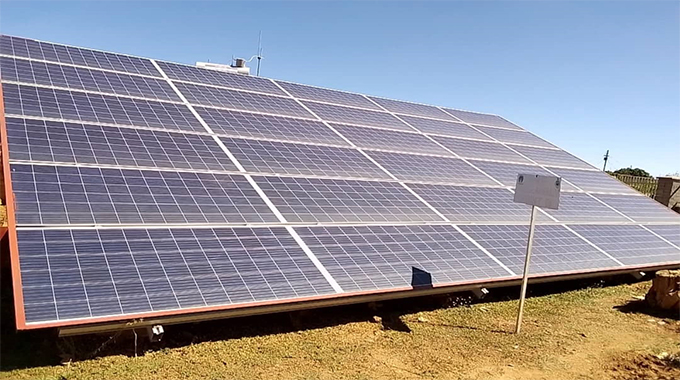
Rumbidzayi Zinyuke in BINGA
THE Second Republic’s mantra of “leaving no one and no place behind” is becoming a reality in remote parts of Binga District, Matabeleland North Province, where solar-powered health facilities are transforming healthcare delivery and improving access to life-saving services.
For many years, communities in the remote district of Zimbabwe have faced challenges accessing quality healthcare due to erratic electricity supplies, long travelling long distances and limited medical infrastructure.
However, the installation and upgrading of solar power systems at health institutions across the district are now ensuring uninterrupted services and improving maternal, neonatal, and emergency healthcare.
The initiative, implemented under the Covid 19 Response Mechanism, which was rolled out by the Ministry of Health and Child Care with financial support from the Global Fund through the United Nations Development Programme, has significantly improved access to quality health care in the district.
Binga District Medical Officer, Dr Sibonginkosi Ncube, said the development had significantly improved service delivery.
“We received a 40kva solar plant that is meant for the whole hospital. It supports all wards, the administrative blocks, theatre and the laboratory.
“The only exception is the X-ray department because the machine is too big for the solar system. We recently upgraded the batteries from gel batteries to lithium batteries and this has improved our solar capacity,” she said.
“Previously, the system used to switch off at night, but now we have power throughout the day and night, which is a major improvement in service delivery.”
The solarisation of the hospital comes at a time when the Government is prioritising equitable access to healthcare services, particularly in remote and marginalised communities.
Binga District Hospital serves a population of about 160 000 people through a network of 23 health facilities. However, some of the patients attended to in various wards travel from other districts and the neighbouring Zambian communities.
Binga district records the highest number of deliveries in Matabeleland North Province, with more than 3 500 births registered across the district last year. Dr Ncube said uninterrupted electricity had become critical in supporting the district’s busy maternity unit and ensuring emergency operations could be conducted at any time.
“Our major service is maternity, so it means our theatre is now functional 24/7 because of the solar system,” she said.
The impact of reliable electricity is also evident in neonatal care, where the hospital recently introduced an Immediate Kangaroo Mother Care (IKMC) unit for premature and low birth-weight babies. Previously, many preterm babies had to be referred to central hospitals in Bulawayo, while many failed to survive due to limited equipment and inconsistent electricity supplies.
“Preterm babies are prone to hypothermia because they cannot regulate their body temperature properly. We need heaters, incubators and phototherapy machines to manage complications such as jaundice,” said Dr Ncube.
“Without electricity, we could not effectively use this machinery, and unfortunately many babies were dying. But now we are seeing an improvement in neonatal survival rates and a reduction in perinatal deaths.”
Inside the hospital’s theatre, the solar system now powers critical equipment including surgical lights, anaesthetic machines, ventilators, defibrillators, ICU recovery beds and refrigeration units used to store temperature-sensitive medicines.
Dr Ncube said the hospital no longer experiences power cuts during operations as all machines require dedicated electricity.
Further inside the district at Simatelele Rural Health Centre, healthcare workers and community leaders say solar energy has also transformed service delivery at the rural clinic.
Nurse-in-charge Mr Witness Ncube said the clinic had benefited from the construction of a pharmacy and the installation of a 5kva solar system, which has improved medicine storage and overall operations.
“The pharmacy is one of the projects that we are benefiting from a lot because our medicines are now properly stored there. Before the pharmacy was built in 2023, we were using a small storeroom that could not accommodate all the medication that we had. But after the pharmacy was built, medications are now kept in good condition,” he said.
Mr Ncube said the solar system, installed in 2022, had greatly improved healthcare delivery.
Community members from Simatelele said the impact of the solar system was immense, especially in maternal healthcare.
Simatelele Health Centre Committee chairperson Mrs Mavis Munkuli said the clinic previously struggled to provide services at night due to lack of electricity.
“We got a solar system here at Simatelele and it really helped us at because we were having challenges in the past when we did not have electricity. We use the solar power especially for pregnant women who give birth during the night,” she said.
Ward 8 councillor Mr Jonas Monzyo said the clinic was originally built without electricity, making the solar installation a major milestone for the community.
“When the solar system was installed it changed the way we received health services, especially for pregnant women. It also helped in the preservation of medicines because Binga is very hot and the refrigerators kept medicines safe. Even the health workers’ homes benefited from the solar power,” he added.
The developments in Binga reflect ongoing Government efforts to strengthen healthcare systems in remote communities and ensure that no area is left behind in national development.
As investments in renewable energy and rural health infrastructure continue, communities in one of Zimbabwe’s most isolated districts are now experiencing improved access to quality healthcare services closer to home.