

 Online Reporter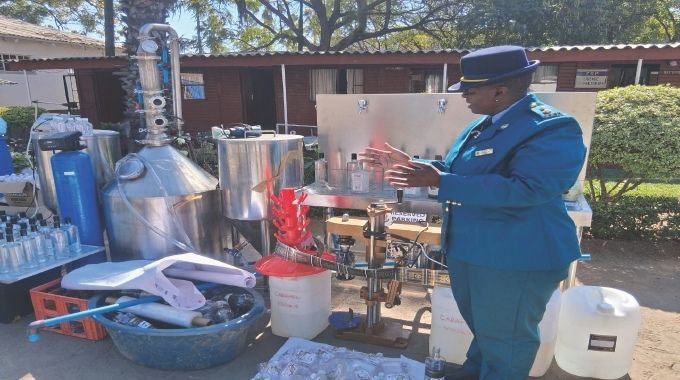
Raymond Jaravaza, [email protected]
A police raid in Bulawayo’s city centre has uncovered what officers say was an illegal alcohol brewing operation, leading to the seizure of large quantities of ethanol, suspected counterfeit liquor and specialised equipment used to produce illicit drinks commonly known as njengu.
The operation, carried out on Wednesday at a flat in the city, resulted in the arrest of two suspects, a man and a woman, who are expected to appear in court today.
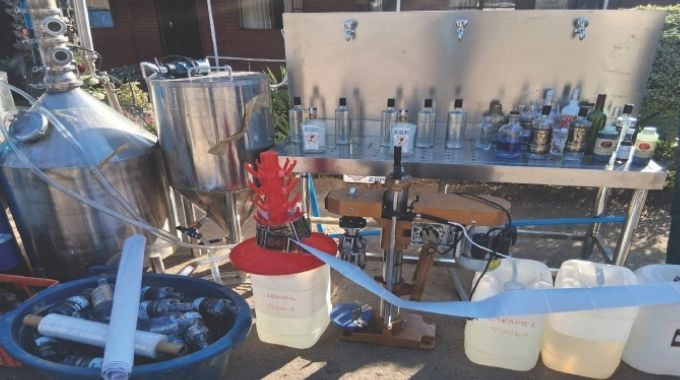
Police recovered about 800 litres of ethanol, hundreds of bottles filled with suspected illicit alcohol, as well as empty bottles, counterfeit labels bearing the names of well-known alcohol brands and a machine used to seal bottles.
The scale of the operation suggests the suspects may have been producing and packaging the alcohol for wider distribution.
Bulawayo provincial police spokesperson, Inspector Nomalanga Msebele, said the raid followed a tip-off from a concerned member of the public.
“Statutory Instrument (SI) 62 of 2025 banned the production of illicit beverages that contain ethanol as the major ingredient and armed with that legislation, ZRP (Zimbabwe Republic Police), Bulawayo Province team received a tip off during their line of duty that there individuals in premises in the city centre involved in the production of illicit alcohol,” said Inspector Msebele.
She said police officers acted swiftly on the information, leading them to the flat where the illegal activities were taking place.
“Police officers acted on the tip off and discovered four plastic drums filled with ethanol, an assortment of alcoholic beverages that include gin as well as equipment that is used in the manufacturing of illicit alcohol popularly known as ‘njengu’,” she said.
According to police, the suspects failed to provide any legal documentation or licences authorising them to produce or distribute alcohol. Insp Msebele said this prompted officers to arrest them on the spot and seize all equipment linked to the operation.
“The two suspects were arrested after they failed to produce the requested documentation and officers proceeded to confiscate the apparatus used in the manufacturing of the illicit alcohol that included distillers,” she said.
Police have since warned members of the public about the dangers and illegality of brewing and distributing unregulated alcohol. Authorities say such activities not only break the law but also pose serious health risks to consumers.
The senior police officer urged residents to remain vigilant and report any suspicious activities in their communities.
“We urge communities to report any suspicious activities that point to the production, distribution and sale of ‘njengu’. Police have noted that the illicit brews are produced at the back of premises that are owned by residents or business persons from our own city,” she said.
Inspector Msebele also warned property owners that they could face legal consequences if they knowingly or unknowingly allow illegal activities to take place on their premises.
“So, we would like to remind them that it is an offence to allow individuals to carry out such activities within their premises. Owners of the premises can be arrested, fined or prosecuted if they fail to report illegal activities taking place in their properties,” said Inspector Msebele.
Police have also cautioned licensed liquor outlets against buying stock from unregistered suppliers, saying this fuels the illegal alcohol trade.
“Our message as ZRP to liquor outlets is that they must not buy alcohol from unlicensed distributors or manufacturers of alcoholic beverages. ZRP is leaving no stone unturned in its fight against drug and substance abuse as evidenced by the arrest of five individuals caught with marijuana along the Bulawayo/Solusi Road and this week we have arrested the two individuals for running an unlicensed illicit brewing plant.”
The police say the fight against drug and substance abuse remains a priority, particularly as communities continue to raise concern over the impact on young people.
Inspector Msebele said the abuse of drugs and illicit substances is causing serious social harm and must be addressed urgently.
She added that law enforcement agencies will continue working closely with the public to combat the problem.
Meanwhile, the case has drawn attention to the recently launched Highlanders African Gin, which has come under scrutiny following the discovery. During the raid, police recovered hundreds of bottles suspected to be ‘counterfeit’ versions of the gin, along with equipment believed to have been used in its illegal production.
The development comes less than two weeks after Highlanders Football Club launched Highlanders African Gin as part of its centenary celebrations, in partnership with Comrades Beverages.
Police have since moved to determine whether the recovered products are indeed counterfeit and potentially dangerous.
Inspector Msebele confirmed that samples of the seized alcohol would undergo laboratory testing.
“The confiscated alcohol will be sent to a laboratory for scientific tests to determine the components used in the manufacturing of the illicit alcohol brew,” said Inspector Msebele.
Authorities say the results of the analysis will help determine the exact nature of the substances involved and whether the products posed a risk to consumers.
The case highlights the ongoing challenge of illicit alcohol production in urban areas, where illegal operations are sometimes run discreetly from residential or commercial properties. Police say continued cooperation between communities and law enforcement is key to stopping such activities and protecting public health.




 Bongani Ndlovu