


 malvernmugadzikwa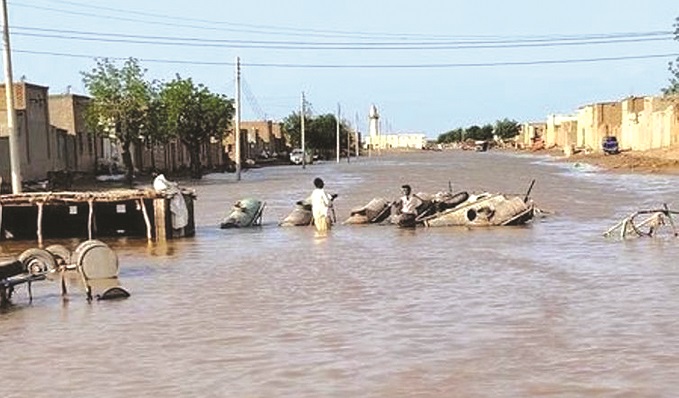
Professor Liz Stephens and Dr Jacob levi
ENORMOUS floods have once again engulfed much of South Sudan, as record water levels in Lake Victoria flow downstream through the Nile.
More than 700 000 people have been affected.
Hundreds of thousands of people there were forced from their homes by huge floods a few years ago and were yet to return before this new threat emerged.
Now, there are concerns that these displaced communities may never be able to return to their lands.
While weather extremes regularly displace whole communities in other parts of the world, this could be the first permanent mass displacement due to climate change.
In the Sudd region of South Sudan, the Nile passes through a vast network of smaller rivers, swamps and floodplains.
It is one of the world’s largest wetlands.
Flood levels vary significantly from year to year, mostly caused by fluctuations in water levels in Lake Victoria and controlled releases from the dam in Uganda, where the lake empties into the Nile.
The Sudd’s unique geography means floods there are very different from elsewhere. Most floodwater cannot freely drain back into the main channel of the White Nile, and water struggles to infiltrate the floodplain’s clay and silt soil.
This means flooding persists for a long time, often only receding as the water evaporates.
People can no longer cope
The communities that live in the Sudd, including the Dinka, Nuer, Anyuak and Shilluk, are well adapted to the usual ebb and flow of seasonal flooding.
Herders move their cattle to higher ground as flood waters rise, while indigenous earth walls made of compressed mud protect houses and infrastructure.
During the flooding season, fishing sustains local communities.
When floods subside, crops like groundnuts, okra, pumpkins, sorghum and other vegetables are planted.
However, the record water levels and long duration of the recent flooding have stretched these indigenous coping mechanisms.
The protracted state of conflict in the country has further reduced their ability to cope.
Community elders who spoke to our colleagues at the medical humanitarian aid charity Médecins Sans Frontières said fear of conflict and violence inhibited them from moving to regions of safe ground they had found during a period of major flooding in the early 1960s.
Around 2,6 million people were displaced in South Sudan between 2020 and 2022 alone, a result of both conflict and violence (1 million) and flooding (1,5 million).
In practice, the two are interlinked, as flooding has caused displaced herders to come into conflict with resident farmers over land.
Stagnant floodwater also leads to a rise in water-borne infections like cholera and hepatitis E, snakebites and vector-borne diseases like malaria.
As people become malnourished, these diseases become more dangerous. Malnutrition is already a big problem, especially for the 800 000 or so people who have fled into South Sudan from Sudan following the start of a separate conflict there in April 2023.
Many people are housed in internal displacement camps like at Bentiu, where close to 100 000 people reside.
Bentiu is now an island in the floodwaters, protected by embankments that require continued maintenance.
As such, there are concerns about the long-term future and sustainability of the camp.
The new record levels in Lake Victoria this May raised the alarm over potential unprecedented flooding in the country this year.
The two-and-a-half months it takes for floodwaters to make their way downstream to South Sudan provides an early warning system for communities and humanitarian agencies to prepare.
However, forecast models are not able to accurately predict if the embankments at camps like Bentiu will hold.
Will people ever return?
Evacuating the camp may be inevitable, some say, because floods seem to be getting worse, likely linked to deforestation and anthropogenic climate change.
However, while there is a clear upward trend to lake levels across East Africa, including Lake Victoria, this could also be down to the way water and land is being managed, as well as changes to precipitation.
Though there have been increases in the rainfall during the region’s short rains in October, November and December, that is balanced out by decreases in the rainfall season between March and May.
However, climate models indicate increases in precipitation in the catchment, as well as more frequent positive phases of the Indian Ocean Dipole (a weather phenomenon similar to El Niño in the Pacific), which caused the record rainfall in 2020 and 2023.
With floods taking a long time to recede, even small increases in the frequency of these positive dipole phases, and small increases in rainfall, could lead to the Sudd wetlands growing — permanently.
Decision-makers in a country affected by conflict are used to uncertain futures, but will also need to consider a scenario in which an irreversible expansion of the Sudd wetlands could make the displacement permanent. Where these communities could be relocated is another question entirely.
Liz Stephens is a professor of climate risks and resilience in the Department of Meteorology at the University of Reading (UK); while Jacob Levi is a medical doctor based in London, with special interests in infectious diseases, planetary health and health justice.



 Bongani Ndlovu
 Online Reporter