admin
admin
Eddie Chikamhi, Harare Bureau
PRESIDENT Mnangagwa has expressed concern on the stadium crisis gripping the country which has seen giants Dynamos and a number of Harare-based teams having to travel to other cities and towns to play their home games.
There are no topflight football games being played in Harare because of lack of suitable stadia.
The President’s comments came as DeMbare, the country’s most successful and one of the most supported clubs, have adopted Barbourfields as their home ground for the first time in the club’s 60 years of existence.
Crosstown rivals Caps United have also been forced to move their home games to newly-refurbished Bata Stadium in Gweru due to the unavailability of functional stadiums in the capital.
DeMbare’s Rufaro home ground, an iconic venue in the heart of Mbare high-density suburb, has been closed for the past four years due to the lack of maintenance and inefficiency in the running of the facility by the Harare City Council.
Addressing a massive gathering of Zanu-PF supporters in Harare yesterday, the President said Government have taken up the responsibility to revamp the ceremonial home of domestic football so that topflight games are played in Harare again.
He was particularly concerned by the Glamour Boys who have been travelling to Bulawayo almost on a weekly basis for the past month for their games.
“It is regrettable that soccer matches have been suspended in Harare as a result of the present state of stadiums. Now, Dynamos DeMbare has to play its home games in other towns and cities.
“I say no; we are going to renovate the stadium so that DeMbare can play here. It must be proud. We cannot allow our DeMbare to suffer,” said President Mnangagwa.
The opposition-led Harare City Council has also failed to maintain one of Harare’s famous football grounds Gwanzura Stadium, which has been lying in a state of ruin for over six years, in a stark reflection of the serious breakdown of sports facilities around the city.
The National Sports Stadium is the only stadium that has been hosting games in Harare until recently when the authorities scaled down operations for refurbishments.
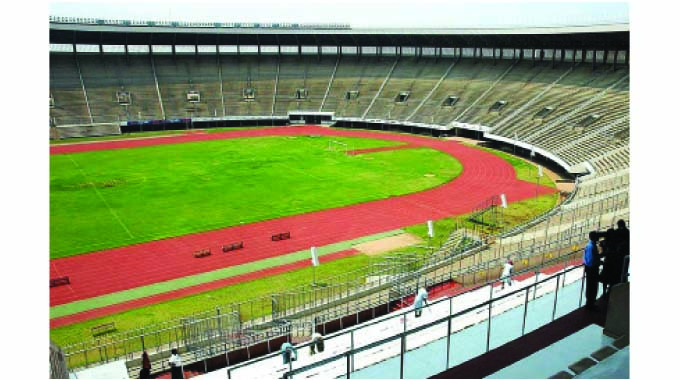
About eight teams were sharing the giant stadium in the first half of the season, leading to the damage to its playing surface.
Apart from bringing back local football games to Harare, the renovation of the National Sports Stadium ranks among the urgent sports projects as Zimbabwe prepare to return to international football following the lifting of the Fifa suspension.
Zimbabwe are set to participate in the Fifa World Cup qualifiers in November but risk playing their home games in a neighbouring country as the National Sports Stadium is banned by the international football governing body.
The facility was flagged down by FIFA and CAF in November 2019 after it failed a series of inspections.
The National Sports Stadium last hosted an international match in November 2021 when Zimbabwe played their last game of the 2022 World Cup qualifying campaign against Ethiopia.
But domestic Premiership matches have continued to be played, even during the time Zimbabwe was under a 16-month FIFA suspension.
Government has also been busy with the National sports Stadium in the last few months, and recently they entered into a partnership with Sakunda Holdings to expedite the refurbishment.
The Minister of Youth, Sport, Arts and Recreation Kirsty Coventry recently gave a positive outlook on the work taking place at the National Sports Stadium.
“There has been ongoing works (at the National Sports Stadium). The electronic ticketing system is now in the country waiting to be installed,” she said during the unveiling of the ZIFA Normalisation Committee
“The water reticulation is in process and the feasibility study for the entire area, not just the National Sports Stadium, but the hockey stadium as well as the grounds around, is being undertaken at the moment. This should be wrapped up in the next two to three weeks,” said Coventry then.
“This has all been explained to FIFA when their representatives were here. They (the FIFA delegation) also went and visited the National Sports Stadium, of which they were under the assumption that it was crumbling and falling to the ground but were quite surprised when they walked in and were shown around the ground that it was not the case.
“So, the works are ongoing, and we will continue with that. We have had some initial conversations with the FIFA representatives in terms of the next steps.
“They would like to see all of those next steps followed up in writing which, as the minister responsible, we will do and will deliver that through the SRC who will then pass it on to FIFA in terms of the commitments that are being made with this feasibility study that is being undertaken.
“This feasibility study is being undertaken with a South African company that built soccer stadiums and renovated soccer stadiums for the World Cup in 2010.
“So that’s where the expertise is coming in and in the next three weeks, we will have more of an update in terms of where this feasibility will see us and the timelines which we will share with the SRC and FIFA.
“We will continue to have the conversations with FIFA, the guarantees of what is happening, which has not been made public, will go to FIFA through the SRC and we remain fully committed to seeing and ensuring that we are playing our games at home,” said Coventry.
The President last week also revealed Government’s plans to renovate Barbourfields in Bulawayo. The ground has also failed to meet FIFA standards although it is currently in use for local football games.
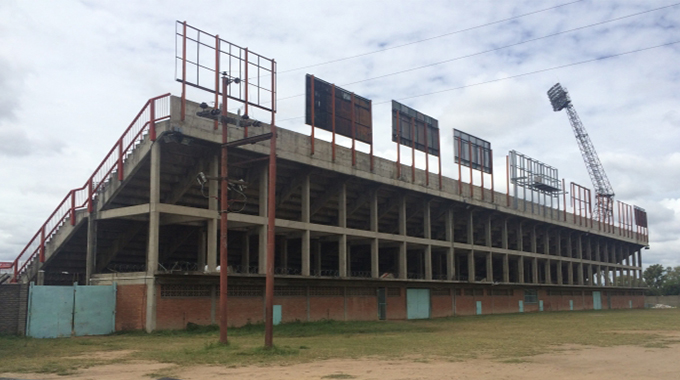
But people have been losing hope on Rufaro until recently when the Harare City Council decided to attend to the facility.
The Council however has been struggling with funding while widespread corruption has pinned back progress, hence the Government’s proposal to intervene.
Harare mayor Jacob Mafume has vowed to commission the stadium today despite the glaring evidence that the facility is not yet ready for reopening.
ZIFA chief operations officer Xolisani Gwesela, who is also the chairman of the stadium inspection committee, the First Instance Body, yesterday said he was unaware of the reopening since his organistaion has to inspect it first and give the greenlight.
Gwesela, who is the country’s only CAF certified stadium inspector, said they were still waiting for the invitation from the local authority.
“We have advised the Harare City Council that Rufaro needs to be homologated. They know what to do and we keep encouraging them that the stadium needs to be fully renovated, get inspected and it meets the requirements then it gets approved.
“So far the stadium has not been inspected and the First Instance Body is still waiting for the invitation,” said Gwesela.
Gwesela refereed to his previous comment when he said FIFA and CAF were not compromising on the quality of stadiums.
“The CAF requirements are a bit stringent. In order for us to host international matches we need to have individual seats; the pitch has quite improved, the gates should be electronic, there should be acceptable media facilities, we should have a media centre, a media tribune, a press conference room; we should have areas that are adaptable for television broadcasting.
“The parking area should be improved. The mayor has already indicated that the parking area has improved. So, the areas that need immediate attention for us to host international matches is the issue of bucket seats,” said Gwesela.


 Online Reporter