

 admin
admin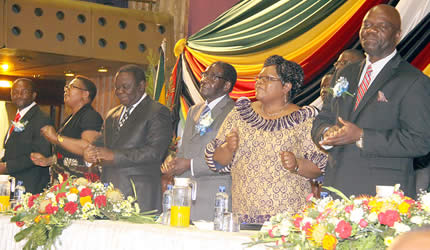
was attended by 1 300 delegates from the country’s 10 provinces.
Zanu-PF Secretary for Information and Publicity Cde Rugare Gumbo said they were pleased with the way the process was conducted and expressed optimism that their views would be considered.
“We are very happy with the way the conference was held, the deliberations were very good and there was robust debate on a number of issues.
“We managed to put across our views and they were well received by many delegates. We are also happy with the tone that was set by the principals and we now await them to lead us on the way forward,” he said.
MDC-T spokesperson Mr Douglas Mwonzora said his party was happy that people managed to speak openly.
“We are very happy with the way the conference was conducted and that people were allowed to speak freely.
“We believe what is important is that people were allowed to talk freely because that is what we have always been calling for,” Mr Mwonzora said.
MDC spokesperson Mr Kurauone Chihwayi echoed similar sentiments.
“As the MDC, we are happy with the deliberations on the draft. What we believe is that people were given the opportunity to speak and we now want to see the Select Committee consider the views raised by the people.
“In our view, everyone who participated came out a winner. We do not think it was a voting exercise but an opportunity to discuss ideas,” he said.
Mr Chihwayi, however, said his party was not happy with the inclusion of Deputy Prime Minister Arthur Mutambara on the programme for the official opening.
MDC delegates boycotted the official opening ceremony that was addressed by President Mugabe, Prime Minister Morgan Tsvangirai and DPM Mutambara.
Political analyst Mr Goodwine Mureriwa said he was also satisfied with the manner the conference was conducted and particularly commended the President for setting the record straight on the whole process.
“Obviously, the conference was peaceful and people deliberated freely, but what I also found important was the President’s speech, where he made it clear that as principals they would have the final say on the process.
“I think this will ensure that there would be no delays in completing the whole process so that elections are held as soon as possible,” he said.
University of Zimbabwe analyst Dr Charity Manyeruke commended Zimbabweans for the maturity they exhibited during the conference.
“That maturity in conducting the discussions was commendable, despite the differences in opinions.
“It showed that as Zimbabweans, we can organise ourselves without outside intervention. It was also good that our leaders also addressed delegates and what is left now is to ensure that the recommendations that came out are considered for inclusion in the draft,” she said.
Copac is expected to compile a report on the conference deliberations in the coming week to determine the way forward following various recommendations by participants.
Meanwhile, Zimbabwe could hold a referendum by the end of December or in January next year if the remaining processes move smoothly, Copac co-chairperson Cde Munyaradzi Paul Mangwana told New Ziana.
He said a technical team was compiling a report on the Second All Stakeholders’ Conference to be released next Monday.
“The different views expressed by delegates need to be ironed out before going to Parliament for debate and that process is what can delay the holding of the referendum,” he said.
“By my own judgment, we can vote for the referendum end of December or early January,” he said.
Copac, which is now left with ensuring that all Zimbabweans know the contents of the draft constitution through publicity campaigns, will scrutinise the thematic reports and incorporate them into the draft.
Where Copac fails to agree, it will refer the issues to the management committee, who would negotiate and where they fail to agree, they would refer to the principals, who will have the final word.
After compiling input from the Second All Stakeholders’ Conference, Copac will produce an overall report of the constitution-making process, which includes the draft, for debate in Parliament.
After the debate, the draft will be taken for a vote in a referendum to decide whether it should be adopted as the new Constitution for the land.
The Zimbabwe Election Commission said it needs about $104 million for the referendum. — (Additional reporting by New Ziana).



 leeroy
 Online Reporter