daniel chigunwe
Standard Bank Group, Africa’s biggest lender by assets, plans to raise as much as R300 billion (US$20 billion) by 2026 to help fund renewable energy projects, even as it remains open to supporting fossil fuels.
The Johannesburg-based lender pledged to achieve a net zero carbon emissions target in its own operations by 2040 and from its portfolio of financed emissions by 2050, in line with the Paris Agreement, the company said in a statement yesterday outlining its climate goals.
Banks across the world are slowly adjusting their business models after decades spent enabling some of the world’s worst emitters of greenhouse gases.
Still, Standard Bank’s pledges are less ambitious when compared with smaller rival Nedbank Group, which vowed last year not to fund new oil and gas exploration and promised to end support for new thermal-coal mines in 2025.
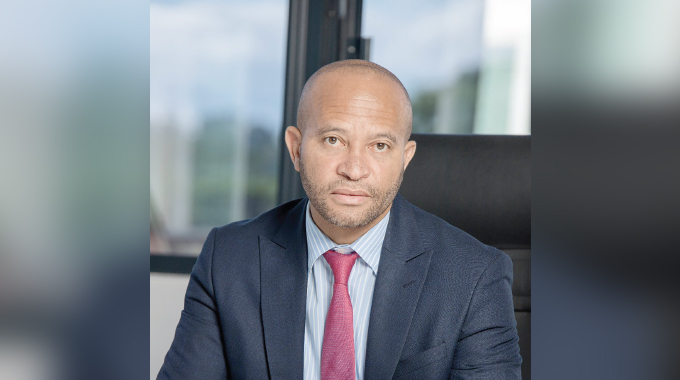
“Over the past several centuries, Africa has borne very considerable economic and human costs for other regions,” Standard Bank chief executive officer Sim Tshabalala said in the statement. “A total or immediate ban on further transitional projects in Africa in order to help reduce environmental pressure in much richer regions would be a cost too far.”
Some of the pledges made by Standard Bank include:
Reduce group advances to upstream oil by 5 percent by 2030
Limit exposure to thermal coal to 0,7 percent of group loans and advances in 2021 and to 0,5 percent by 2030
Finance new coal mines only in the southern African region and only when there is an overall positive environmental impact
Reduce exposure to gas by 2045
No funding for the deforestation of natu
al forests and indigenous trees
Standard Bank’s shares rose as much as 2,9 percent as of 11:30 am in Johannesburg, the biggest intra-day gain in a week.
In May last year, a group of investors including Abax Investments Ltd., Aeon Investment Management Ltd. and Visio Capital Management Ltd. had sought a non-binding resolution that would push the lender to set short-, medium- and long-term goals to reduce its exposure to fossil fuels.
“I do think it is balanced,” said Warwick Bam, head of research at Avior Capital Markets Ltd.
“We know we just can’t wean ourselves off oil, and there’s a view that it would be irresponsible to sort of pull the plug on capital to these businesses that whole economies are dependent on.”
Bankers and policy makers in Africa want to ensure funding for fossil fuels such as natural gas, which they say is key to the continent’s energy security.
In countries including Mozambique and Tanzania, more than US$$50 billion-worth of gas projects are being discussed with companies including TotalEnergies and Equinor. — Bloomberg.


 Online Reporter